Clinical Knowledge › Internal medicine › Haematology and oncology › Clinical problems
Raised haemoglobin (erythrocytosis): approach to the patient
Erythrocytosis is a haemoglobin or haematocrit above the reference range – in practice a persistently raised haematocrit above about 0.52 in men or 0.48 in women (BSH), or haemoglobin above 165 g/L in men and 160 g/L in women (WHO 2022 polycythaemia vera criteria). It may be apparent (relative), from a reduced plasma volume due to dehydration, diuretics, alcohol, smoking or obesity, or absolute, from a true increase in red cell mass. Absolute erythrocytosis is primary when the marrow itself is clonal or hypersensitive – polycythaemia vera (PV, JAK2-mutated) or EPO receptor mutations – or secondary when erythropoietin is driven by hypoxia (COPD, sleep apnoea, cyanotic heart disease, altitude, smoking), an erythropoietin-secreting tumour or kidney lesion, or drugs such as testosterone, ESAs and SGLT2 inhibitors. The approach is to repeat the count, review drugs and smoking, test JAK2 V617F (then exon 12) and serum erythropoietin, and search for hypoxia or a tumour. PV needs venesection to a haematocrit below 0.45 and aspirin; secondary erythrocytosis is managed by treating the cause.
Patient case, mechanism, investigations, management, flashcards and exam-style questions.Open the lesson →
Key facts
- Investigate a haematocrit persistently above 0.52 (men) or 0.48 (women) for more than about 2 months; Hct above 0.60 in men or 0.56 in women can be assumed to be absolute erythrocytosis
- WHO 2022 PV thresholds: Hb >165 g/L (16.5 g/dL) men, >160 g/L women, or Hct >0.49 men, >0.48 women
- JAK2 V617F is present in about 95–97% of PV; most of the rest have JAK2 exon 12 mutations, which often cause isolated erythrocytosis
- Serum erythropoietin: low in PV and EPOR mutation; normal or high in secondary erythrocytosis
- Commonest secondary causes: smoking (carboxyhaemoglobin), COPD, obstructive sleep apnoea and obesity hypoventilation, testosterone therapy, SGLT2 inhibitors, post-renal-transplant erythrocytosis
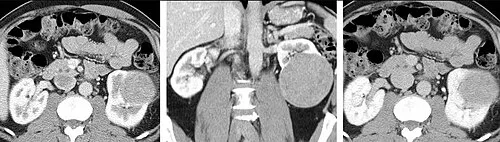
- EPO-secreting tumours: renal cell carcinoma, hepatocellular carcinoma, cerebellar haemangioblastoma, uterine fibroids, phaeochromocytoma, meningioma
- Iron deficiency can mask PV: a normal Hb with microcytosis and high red cell count may still be PV
- PV: venesection to Hct <0.45 plus low-dose aspirin; cytoreduction if high risk (age over 60–65 depending on the guideline, or previous thrombosis)
Differential diagnosis
| Condition | Clues | Key test |
|---|---|---|
| Polycythaemia vera | Aquagenic itch, erythromelalgia, splenomegaly, raised platelets or neutrophils, thrombosis | JAK2 V617F (then exon 12), low EPO, marrow |
| Apparent (relative) erythrocytosis | Diuretics, dehydration, alcohol, smoking, obesity, hypertension; normal red cell mass | Repeat FBC when euvolaemic; red cell mass rarely needed |
| Hypoxic lung disease or sleep apnoea | COPD, obesity, snoring, daytime sleepiness, low SpO₂ | Arterial blood gas, overnight oximetry or polysomnography |
| Smoker's erythrocytosis | Heavy smoking; normal SpO₂ by pulse oximetry but raised carboxyhaemoglobin | Co-oximetry carboxyhaemoglobin |
| Drug-induced (testosterone, anabolic steroids, ESAs, SGLT2 inhibitors) | Temporal relationship with starting or increasing the drug | Drug history; stop or reduce and repeat |
| EPO-secreting tumour or renal lesion | Haematuria, flank mass, hepatic mass, cerebellar signs, fibroids | Raised EPO; renal and abdominal ultrasound or CT; MRI brain if neurological |
| Post-renal-transplant erythrocytosis | First 2 years after kidney transplant | History; responds to ACE inhibitor or ARB |
| High-oxygen-affinity haemoglobin or congenital erythrocytosis | Young patient, lifelong raised Hb, family history | P50 measurement, haemoglobin studies, genetic panel (EPOR, VHL, EGLN1, EPAS1) |
Exam pearls
Guideline
BSH guideline for the diagnosis and management of polycythaemia vera (2019), BSH guideline on specific situations in PV and secondary erythrocytosis (2019) and WHO-HAEM5 (2022) / ICC 2022 PV criteria
References
- McMullin MF, Harrison CN, Ali S, et al.. A guideline for the diagnosis and management of polycythaemia vera. A British Society for Haematology Guideline. Br J Haematol 2019.
- McMullin MF, Mead AJ, Ali S, et al.. A guideline for the management of specific situations in polycythaemia vera and secondary erythrocytosis: A British Society for Haematology Guideline. Br J Haematol 2019.
- Mithoowani S, Laureano M, Crowther MA, Hillis CM.. Investigation and management of erythrocytosis. CMAJ 2020.
- Gangat N, Szuber N, Tefferi A.. JAK2 unmutated erythrocytosis: 2023 update on diagnosis and management. Am J Hematol 2023.
- Khoury JD, Solary E, Abla O, et al.. The 5th edition of the World Health Organization Classification of Haematolymphoid Tumours: Myeloid and Histiocytic/Dendritic Neoplasms. Leukemia 2022.
- Arber DA, Orazi A, Hasserjian RP, et al.. International Consensus Classification of Myeloid Neoplasms and Acute Leukemias: integrating morphologic, clinical, and genomic data. Blood 2022.
Related topics
By Dr Khalid Seidi (B.Sc., M.D.) · MedEd World Clinical Knowledge library. Original teaching content checked against current guidelines (November 2026); confirm the latest local guidance before clinical use. Not a substitute for clinical judgement.