Clinical Knowledge › Internal medicine › Haematology and oncology › Clinical problems
Thrombocytosis: approach to the patient
Thrombocytosis is a platelet count above 450 ×10⁹/L (some laboratories flag above 400). About 80–90% of adult cases are reactive: infection, inflammation, iron deficiency, blood loss, cancer, surgery or trauma, haemolysis and hyposplenism. A minority are clonal, caused by essential thrombocythaemia, polycythaemia vera, primary myelofibrosis, chronic myeloid leukaemia or some myelodysplastic syndromes. The approach is to confirm the count on a film (excluding spurious counts), seek a reactive cause with history, examination, CRP and ferritin, and repeat the count once the trigger settles. Persistent unexplained thrombocytosis needs JAK2, CALR and MPL testing, BCR::ABL1 to exclude CML, and a bone marrow trephine. In adults over 40 a raised count is also a cancer risk marker, especially for lung and colorectal cancer. Reactive thrombocytosis rarely causes clots; clonal disease carries thrombotic and, above about 1000 ×10⁹/L, bleeding risk.
Patient case, mechanism, investigations, management, flashcards and exam-style questions.Open the lesson →
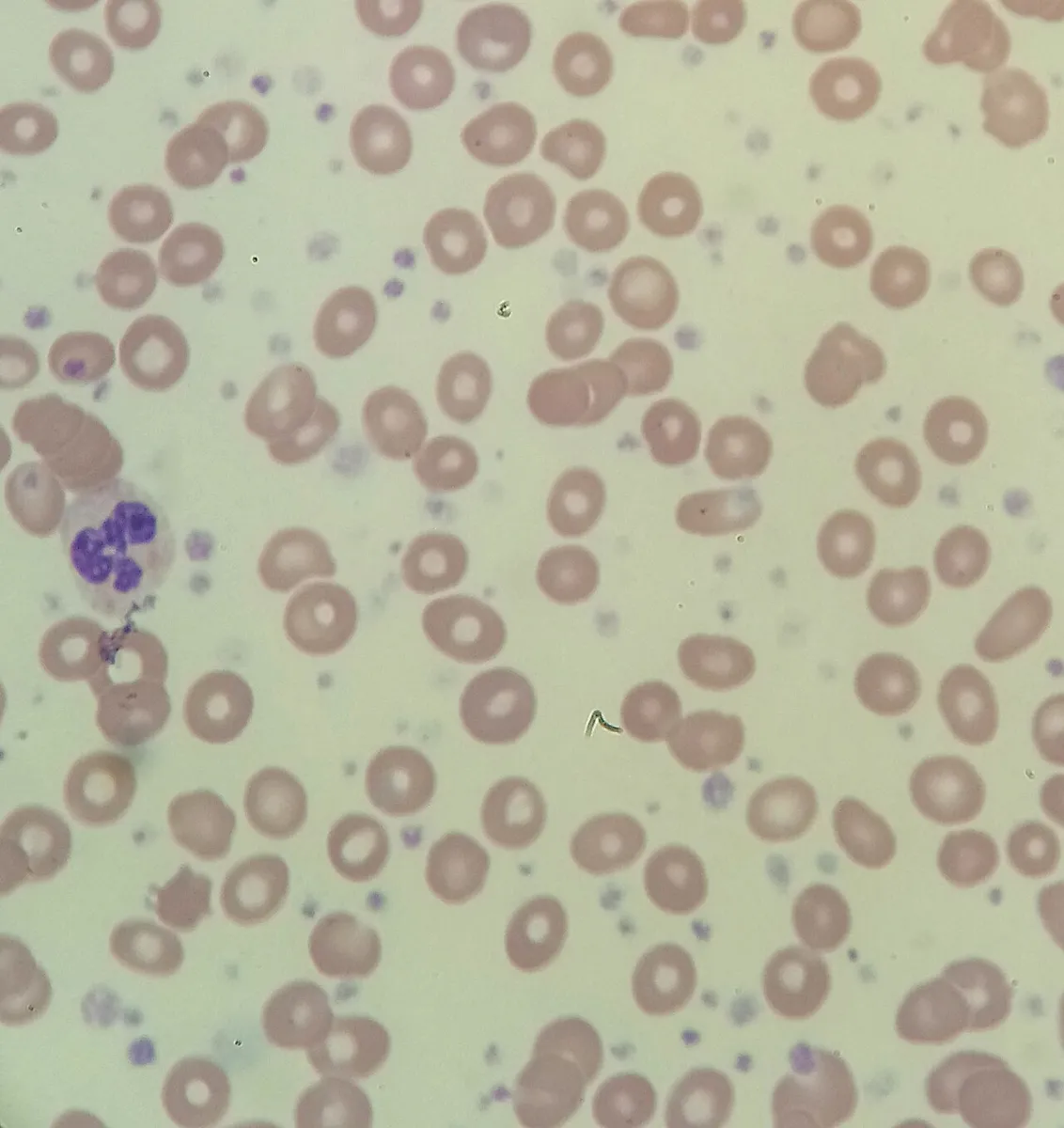
Key facts
- Thrombocytosis: platelets above 450 ×10⁹/L (WHO threshold for essential thrombocythaemia); many laboratories flag above 400 ×10⁹/L
- About 80–90% of adult and nearly all childhood thrombocytosis is reactive (secondary)
- Commonest reactive causes: infection, inflammatory disease, iron deficiency, blood loss, cancer, surgery or trauma, and hyposplenism
- Clonal causes: essential thrombocythaemia, polycythaemia vera, primary myelofibrosis, CML, MDS with del(5q) and MDS/MPN with SF3B1 mutation and thrombocytosis
- Driver mutations in essential thrombocythaemia: JAK2 V617F about 55–60%, CALR about 20–25%, MPL about 3–5%; about 10–15% are triple-negative
- Always exclude CML with BCR::ABL1 testing before diagnosing essential thrombocythaemia
- In adults aged 40 or over, platelets above 400 ×10⁹/L carry a 1-year cancer incidence of about 12% in men and 6% in women in UK primary care data
- Platelets above about 1000 ×10⁹/L can cause acquired von Willebrand syndrome and bleeding, especially with aspirin
Differential diagnosis
| Condition | Clues | Key test |
|---|---|---|
| Reactive thrombocytosis (infection or inflammation) | Raised CRP/ESR, fever or active inflammatory disease; count falls as illness settles | CRP, ESR, repeat FBC after recovery |
| Iron deficiency anaemia | Microcytic anaemia with raised platelets; often occult GI blood loss | Ferritin, transferrin saturation |
| Post-splenectomy or functional hyposplenism | Howell–Jolly bodies and target cells on film; history of splenectomy, coeliac or sickle disease | Blood film |
| Essential thrombocythaemia | Persistent platelets above 450 with no reactive cause; erythromelalgia, thrombosis; mild splenomegaly | JAK2, CALR, MPL; bone marrow trephine |
| Polycythaemia vera | High haematocrit, aquagenic pruritus, plethora | Hb/haematocrit, JAK2 V617F (exon 12 if negative) |
| Chronic myeloid leukaemia | Raised neutrophils with left shift, basophilia, splenomegaly | BCR::ABL1 by PCR or FISH |
| Primary myelofibrosis (early) | Teardrop cells, leucoerythroblastic film, raised LDH, splenomegaly | Bone marrow trephine with reticulin stain |
| Spurious thrombocytosis | Red-cell fragments, microspherocytes or cryoglobulin particles counted as platelets | Blood film and optical or immunological platelet count |
Exam pearls
Guideline
BSH guideline for investigation and management of adults and children presenting with thrombocytosis (2010), WHO 5th edition (2022) and International Consensus Classification (ICC, 2022) of myeloid neoplasms, and NICE NG12 Suspected cancer: recognition and referral (2015, with later updates)
References
- Harrison CN, Bareford D, Butt N, et al.. Guideline for investigation and management of adults and children presenting with a thrombocytosis. Br J Haematol 2010.
- Khoury JD, Solary E, Abla O, et al.. The 5th edition of the World Health Organization Classification of Haematolymphoid Tumours: Myeloid and Histiocytic/Dendritic Neoplasms. Leukemia 2022.
- Arber DA, Orazi A, Hasserjian RP, et al.. International Consensus Classification of Myeloid Neoplasms and Acute Leukemias: integrating morphologic, clinical, and genomic data. Blood 2022.
- National Institute for Health and Care Excellence (NICE). Suspected cancer: recognition and referral (NG12). NICE guideline 2015.
- Bailey SE, Ukoumunne OC, Shephard EA, Hamilton W.. Clinical relevance of thrombocytosis in primary care: a prospective cohort study of cancer incidence using English electronic medical records and cancer registry data. Br J Gen Pract 2017.
- Tefferi A, Vannucchi AM, Barbui T.. Essential thrombocythemia: 2024 update on diagnosis, risk stratification, and management. Am J Hematol 2024.
Related topics
By Dr Khalid Seidi (B.Sc., M.D.) · MedEd World Clinical Knowledge library. Original teaching content checked against current guidelines (November 2026); confirm the latest local guidance before clinical use. Not a substitute for clinical judgement.