Clinical Knowledge › Internal medicine › Infectious diseases › HIV and opportunistic infections
AIDS-defining illnesses
AIDS-defining illnesses are opportunistic infections and cancers that occur when HIV has destroyed cellular immunity, usually with a CD4 count below 200 cells/microlitre. Their presence defines AIDS (CDC stage 3) or WHO clinical stage 4 whatever the CD4 count. The CD4 count predicts which illness is likely: tuberculosis, recurrent bacterial pneumonia and Kaposi sarcoma occur at any level; Pneumocystis pneumonia and oesophageal candidiasis below 200; cerebral toxoplasmosis and cryptococcal meningitis below 100; and cytomegalovirus retinitis and disseminated Mycobacterium avium complex below 50. Many people present late with no previous HIV diagnosis, so every patient with one of these illnesses needs an HIV test. Management has three parts: treat the opportunistic illness, start antiretroviral therapy at the right time (within 2 weeks for most infections, but delayed 4–6 weeks in cryptococcal meningitis because of the risk of immune reconstitution inflammatory syndrome), and give primary or secondary prophylaxis such as co-trimoxazole until immune recovery.
Patient case, mechanism, investigations, management, flashcards and exam-style questions.Open the lesson →
Key facts
- AIDS = HIV with CD4 below 200 cells/microlitre (or below 14% of lymphocytes) or any AIDS-defining illness (CDC stage 3; WHO clinical stage 4)
- Below 200: Pneumocystis pneumonia, oesophageal candidiasis; below 100: cerebral toxoplasmosis, cryptococcal meningitis; below 50: CMV retinitis, disseminated MAC, primary CNS lymphoma
- Tuberculosis is the leading cause of death in people with HIV worldwide and occurs at any CD4 count
- WHO advanced HIV disease = CD4 below 200, WHO stage 3–4, or any child under 5 years; offer the package of CrAg screening, TB LAM testing and co-trimoxazole
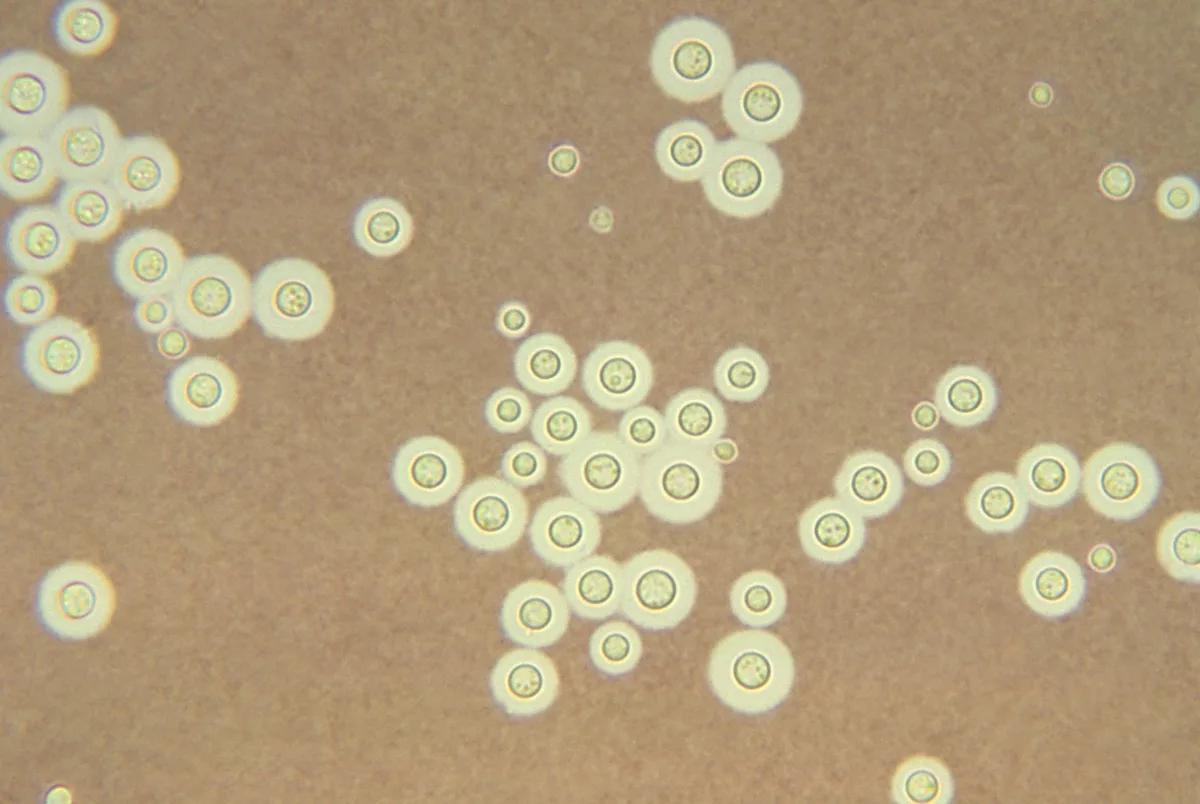
- Cryptococcal meningitis: WHO 2022 induction is one dose of liposomal amphotericin B 10 mg/kg plus 14 days of flucytosine and fluconazole; manage raised opening pressure with repeated lumbar punctures
- Start ART within 2 weeks of most opportunistic infections (including TB), but defer for 4–6 weeks in cryptococcal meningitis and in TB meningitis follow specialist advice
- Co-trimoxazole prophylaxis below a CD4 of 200 prevents Pneumocystis pneumonia and toxoplasmosis
- AIDS-defining cancers: Kaposi sarcoma (HHV-8), aggressive B-cell non-Hodgkin lymphoma (including primary CNS lymphoma, EBV) and invasive cervical cancer (HPV)
Differential diagnosis
| Condition | Clues | Key test |
|---|---|---|
| Cerebral toxoplasmosis | Multiple ring-enhancing lesions at grey–white junction or basal ganglia, CD4 below 100 | Toxoplasma IgG positive; response to treatment in 10–14 days |
| Primary CNS lymphoma | Single periventricular enhancing lesion, CD4 below 50, no response to anti-toxoplasma therapy | CSF EBV DNA PCR; brain biopsy |
| Progressive multifocal leukoencephalopathy | Subacute focal deficits, non-enhancing white-matter lesions without mass effect | CSF JC virus PCR; MRI |
| Cryptococcal meningitis | Subacute headache, fever, raised intracranial pressure, minimal neck stiffness | Serum or CSF cryptococcal antigen; high opening pressure |
| Tuberculous meningitis | Subacute meningitis with cranial nerve palsies and hydrocephalus | CSF lymphocytes, low glucose, high protein; Xpert MTB/RIF Ultra |
| Pneumocystis pneumonia | Dry cough, exertional desaturation, bilateral interstitial shadowing | Induced sputum or BAL PCR/immunofluorescence |
| Disseminated MAC | Fever, sweats, weight loss, diarrhoea, anaemia, hepatosplenomegaly, CD4 below 50 | Mycobacterial blood culture |
| CMV retinitis | Floaters and painless visual loss; 'pizza-pie' haemorrhagic retinitis | Dilated fundoscopy by an ophthalmologist |
Exam pearls
Guideline
NIH/CDC/HIVMA-IDSA Guidelines for the Prevention and Treatment of Opportunistic Infections in Adults and Adolescents with HIV (living guideline, updated 2024–2025); WHO Guidelines for cryptococcal disease in people with HIV (2022); WHO consolidated HIV guidelines (2021) advanced HIV disease package; EACS Guidelines (version 12, 2023)
References
- Centers for Disease Control and Prevention. 1993 revised classification system for HIV infection and expanded surveillance case definition for AIDS among adolescents and adults. MMWR Recomm Rep 1992.
- Centers for Disease Control and Prevention. Revised surveillance case definition for HIV infection — United States, 2014. MMWR Recomm Rep 2014.
- Panel on Guidelines for the Prevention and Treatment of Opportunistic Infections in Adults and Adolescents with HIV (NIH, CDC, HIVMA of IDSA). Guidelines for the prevention and treatment of opportunistic infections in adults and adolescents with HIV. clinicalinfo.hiv.gov 2024.
- World Health Organization. Guidelines for diagnosing, preventing and managing cryptococcal disease among adults, adolescents and children living with HIV. WHO, Geneva 2022.
- World Health Organization. Consolidated guidelines on HIV prevention, testing, treatment, service delivery and monitoring: recommendations for a public health approach. WHO, Geneva 2021.
- Jarvis JN, Lawrence DS, Meya DB, et al.. Single-dose liposomal amphotericin B treatment for cryptococcal meningitis. N Engl J Med 2022.
Related topics
By Dr Khalid Seidi (B.Sc., M.D.) · MedEd World Clinical Knowledge library. Original teaching content checked against current guidelines (November 2026); confirm the latest local guidance before clinical use. Not a substitute for clinical judgement.