Clinical Knowledge › Internal medicine › Infectious diseases › HIV and opportunistic infections
Cerebral toxoplasmosis
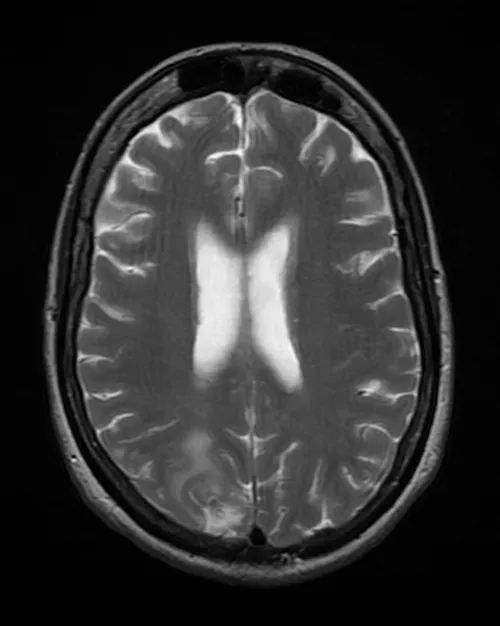
Cerebral toxoplasmosis (toxoplasmic encephalitis) is a focal necrotising brain infection caused by reactivation of tissue cysts of Toxoplasma gondii in people with severe loss of cell-mediated immunity. It is the commonest cause of brain mass lesions in untreated advanced HIV, typically with a CD4 count below 100 cells/microlitre and positive Toxoplasma IgG, and also occurs after organ or stem cell transplantation. Patients present over days to weeks with headache, confusion, fever, focal deficits, seizures and sometimes movement disorders. MRI shows multiple ring-enhancing lesions with oedema, favouring the basal ganglia and corticomedullary junction. Because brain biopsy is invasive, the standard approach in a seropositive patient with typical imaging is empirical treatment with pyrimethamine, sulfadiazine and folinic acid (or high-dose co-trimoxazole) and repeat assessment: clinical improvement within 10–14 days supports the diagnosis, while failure to improve should prompt biopsy for primary CNS lymphoma. ART is started within about 2 weeks, maintenance therapy continues until sustained immune recovery, and co-trimoxazole prophylaxis prevents most cases.
Patient case, mechanism, investigations, management, flashcards and exam-style questions.Open the lesson →
Key facts
- Reactivation of latent T. gondii bradyzoite cysts when the CD4 count falls below 100 cells/microlitre
- Nearly all patients are Toxoplasma IgG positive; a negative IgG makes the diagnosis unlikely
- Classic MRI: multiple ring-enhancing lesions with oedema in the basal ganglia, thalamus and corticomedullary junction
- Main differential is primary CNS lymphoma (often single, periventricular, EBV DNA in CSF, hot on thallium SPECT or FDG-PET)
- Empirical pyrimethamine + sulfadiazine + folinic acid for at least 6 weeks; improvement within 10–14 days supports the diagnosis
- Folinic acid (not folic acid) prevents pyrimethamine marrow toxicity; sulfadiazine causes crystalluria, so keep the patient well hydrated
- Start ART within about 2 weeks; continue maintenance therapy until CD4 above 200 for more than 6 months
- Co-trimoxazole 960 mg daily for seropositive patients with CD4 below 100 prevents both toxoplasmosis and Pneumocystis pneumonia
Differential diagnosis
| Condition | Clues | Key test |
|---|---|---|
| Primary CNS lymphoma | Often single, periventricular or crossing the corpus callosum; CD4 below 50; no response to anti-Toxoplasma therapy | CSF EBV PCR, FDG-PET or thallium SPECT, stereotactic biopsy |
| Progressive multifocal leukoencephalopathy | Subacute deficits, no fever; white-matter lesions without mass effect or enhancement | CSF JC virus PCR |
| Tuberculoma or TB abscess | TB contacts or endemic area; basal meningitis, chest X-ray changes | CSF Xpert MTB/RIF Ultra, chest imaging, biopsy |
| Cryptococcoma | Cryptococcal meningitis features, dilated perivascular spaces | Serum and CSF cryptococcal antigen |
| Bacterial brain abscess | Single lesion, dental, sinus or cardiac source, high CRP | Aspiration and culture, echocardiography |
| Neurocysticercosis | Endemic region; lesions with scolex, calcified lesions; seizures | CT/MRI scolex sign, cysticercal serology |
| Chagas reactivation (T. cruzi) | Latin American origin, ring lesions mimicking toxoplasmosis | Trypomastigotes in CSF or blood, T. cruzi serology |
Exam pearls
Guideline
NIH/CDC/HIVMA-IDSA Guidelines for the Prevention and Treatment of Opportunistic Infections in Adults and Adolescents With HIV, Toxoplasma gondii section (living guideline, current online version); EACS Guidelines (version 12, 2023, or later edition); WHO consolidated HIV guidelines (2021)
References
- Panel on Guidelines for the Prevention and Treatment of Opportunistic Infections in Adults and Adolescents With HIV (NIH, CDC, HIVMA of IDSA). Guidelines for the prevention and treatment of opportunistic infections in adults and adolescents with HIV: Toxoplasma gondii encephalitis. ClinicalInfo.HIV.gov 2025.
- European AIDS Clinical Society. EACS Guidelines version 12.0. European AIDS Clinical Society 2023.
- World Health Organization. Consolidated guidelines on HIV prevention, testing, treatment, service delivery and monitoring: recommendations for a public health approach. World Health Organization, Geneva 2021.
- Montoya JG, Liesenfeld O. Toxoplasmosis. Lancet 2004.
- Luft BJ, Remington JS. Toxoplasmic encephalitis in AIDS. Clin Infect Dis 1992.
- Dunay IR, Gajurel K, Dhakal R, Liesenfeld O, Montoya JG. Treatment of toxoplasmosis: historical perspective, animal models, and current clinical practice. Clin Microbiol Rev 2018.
Related topics
By Dr Khalid Seidi (B.Sc., M.D.) · MedEd World Clinical Knowledge library. Original teaching content checked against current guidelines (November 2026); confirm the latest local guidance before clinical use. Not a substitute for clinical judgement.