Clinical Knowledge › Internal medicine › Infectious diseases › HIV and opportunistic infections
Mycobacterium avium complex
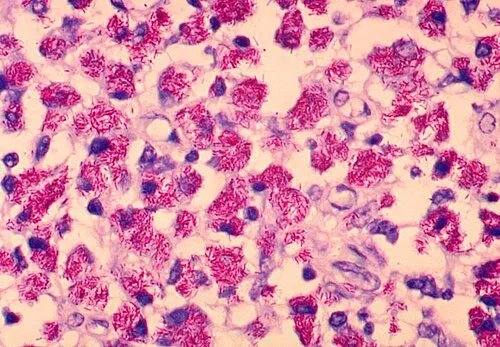
Mycobacterium avium complex (MAC) is a group of slow-growing environmental non-tuberculous mycobacteria, mainly M. avium and M. intracellulare, acquired from water, soil and aerosols rather than from other people. It causes three main patterns of disease. Disseminated MAC is an AIDS-defining illness of profound immunosuppression (CD4 below 50 cells/microlitre), presenting with fever, night sweats, weight loss, diarrhoea, anaemia, raised alkaline phosphatase, hepatosplenomegaly and abdominal lymphadenopathy; it is diagnosed by mycobacterial blood culture. Cervicofacial lymphadenitis affects young, otherwise healthy children and is best treated by complete surgical excision. Chronic pulmonary disease affects people with COPD or bronchiectasis and slender older women, and is covered in the NTM lung disease article. Treatment of disseminated disease combines a macrolide (clarithromycin or azithromycin) with ethambutol, with or without rifabutin, for at least 12 months and until immune recovery on ART, which should start within 2 weeks. Macrolide monotherapy breeds resistance, and drug interactions with ART need careful review.
Patient case, mechanism, investigations, management, flashcards and exam-style questions.Open the lesson →
Key facts
- MAC = M. avium, M. intracellulare and related species; environmental, no person-to-person spread, no need for isolation
- Disseminated MAC occurs with CD4 below 50 cells/microlitre and is AIDS-defining
- Typical picture: fever, sweats, weight loss, diarrhoea, anaemia, raised ALP, hepatosplenomegaly and intra-abdominal nodes
- Diagnosis: mycobacterial blood culture (or culture of bone marrow, node or liver)
- Treatment: clarithromycin or azithromycin + ethambutol (± rifabutin) for at least 12 months and until CD4 above 100 for 6 months on ART
- Never use a macrolide alone for active disease: 23S rRNA mutations cause macrolide resistance
- Childhood cervical MAC lymphadenitis: complete surgical excision; IGRA negative because MAC lacks ESAT-6 and CFP-10
- Routine primary prophylaxis is no longer recommended when ART is started immediately
Differential diagnosis
| Condition | Clues | Key test |
|---|---|---|
| Disseminated tuberculosis | Fever, weight loss, lymphadenopathy at any CD4 count; caseating granulomas | Xpert MTB/RIF Ultra, urine LAM, culture |
| Disseminated histoplasmosis | Endemic area, pancytopenia, skin lesions, very high ferritin, hepatosplenomegaly | Urine Histoplasma antigen, blood culture, marrow |
| HIV-associated lymphoma | B symptoms, rapidly enlarging nodes, high LDH | Lymph node or tissue biopsy |
| Disseminated CMV | Fever, colitis, cytopenias, retinitis | CMV PCR, fundoscopy, biopsy |
| Whipple disease | Diarrhoea, arthralgia; PAS-positive macrophages in small bowel | Tropheryma whipplei PCR; macrophages not acid-fast |
| Bacterial (scrofula) or TB cervical lymphadenitis in children | Systemic symptoms, TB contact, bilateral nodes | IGRA, Xpert on aspirate, culture |
| Talaromycosis (Southeast Asia) | Umbilicated skin papules, fever, anaemia in advanced HIV | Blood culture, skin smear |
Exam pearls
Guideline
NIH/CDC/HIVMA-IDSA Guidelines for the Prevention and Treatment of Opportunistic Infections in Adults and Adolescents With HIV, disseminated MAC section (living guideline, current online version); ATS/ERS/ESCMID/IDSA NTM pulmonary disease guideline (2020); EACS Guidelines (version 12, 2023, or later edition)
References
- Panel on Guidelines for the Prevention and Treatment of Opportunistic Infections in Adults and Adolescents With HIV (NIH, CDC, HIVMA of IDSA). Guidelines for the prevention and treatment of opportunistic infections in adults and adolescents with HIV: disseminated Mycobacterium avium complex disease. ClinicalInfo.HIV.gov 2025.
- Daley CL, Iaccarino JM, Lange C, et al.. Treatment of nontuberculous mycobacterial pulmonary disease: an official ATS/ERS/ESCMID/IDSA clinical practice guideline. Clin Infect Dis 2020.
- Haworth CS, Banks J, Capstick T, et al.. British Thoracic Society guidelines for the management of non-tuberculous mycobacterial pulmonary disease (NTM-PD). Thorax 2017.
- Griffith DE, Aksamit T, Brown-Elliott BA, et al.. An official ATS/IDSA statement: diagnosis, treatment, and prevention of nontuberculous mycobacterial diseases. Am J Respir Crit Care Med 2007.
- Benson CA, Williams PL, Currier JS, et al.. A prospective, randomized trial examining the efficacy and safety of clarithromycin in combination with ethambutol, rifabutin, or both for the treatment of disseminated Mycobacterium avium complex disease in persons with acquired immunodeficiency syndrome. Clin Infect Dis 2003.
- Lindeboom JA, Kuijper EJ, Bruijnesteijn van Coppenraet ES, Lindeboom R, Prins JM. Surgical excision versus antibiotic treatment for nontuberculous mycobacterial cervicofacial lymphadenitis in children: a multicenter, randomized, controlled trial. Clin Infect Dis 2007.
Related topics
By Dr Khalid Seidi (B.Sc., M.D.) · MedEd World Clinical Knowledge library. Original teaching content checked against current guidelines (November 2026); confirm the latest local guidance before clinical use. Not a substitute for clinical judgement.