Clinical Knowledge › Internal medicine › Infectious diseases › HIV and opportunistic infections
Progressive multifocal leukoencephalopathy (PML)
Progressive multifocal leukoencephalopathy (PML) is a demyelinating brain infection caused by JC polyomavirus (JCV). Most adults carry JCV silently after childhood infection, with latency in the kidney and lymphoid tissue; when cellular immunity fails, a neurotropic rearranged virus infects and lyses oligodendrocytes, producing expanding areas of demyelination. Advanced HIV remains the commonest setting, but PML also follows haematological malignancy, transplantation and immunomodulatory drugs, especially natalizumab for multiple sclerosis and rituximab. Patients develop subacute, progressive focal deficits over weeks: weakness, visual field loss, ataxia, speech and cognitive change, usually without fever or headache. MRI shows asymmetric subcortical white-matter lesions that are bright on T2/FLAIR and dark on T1, involve the U-fibres, and have little mass effect or enhancement. JCV DNA in CSF by PCR, or brain biopsy, confirms the diagnosis. There is no proven antiviral drug, so treatment means restoring immunity: prompt ART in HIV, and stopping or reversing the offending immunosuppressant. Recovery of immunity can trigger PML-IRIS. Mortality is high and survivors often have permanent deficits.
Patient case, mechanism, investigations, management, flashcards and exam-style questions.Open the lesson →
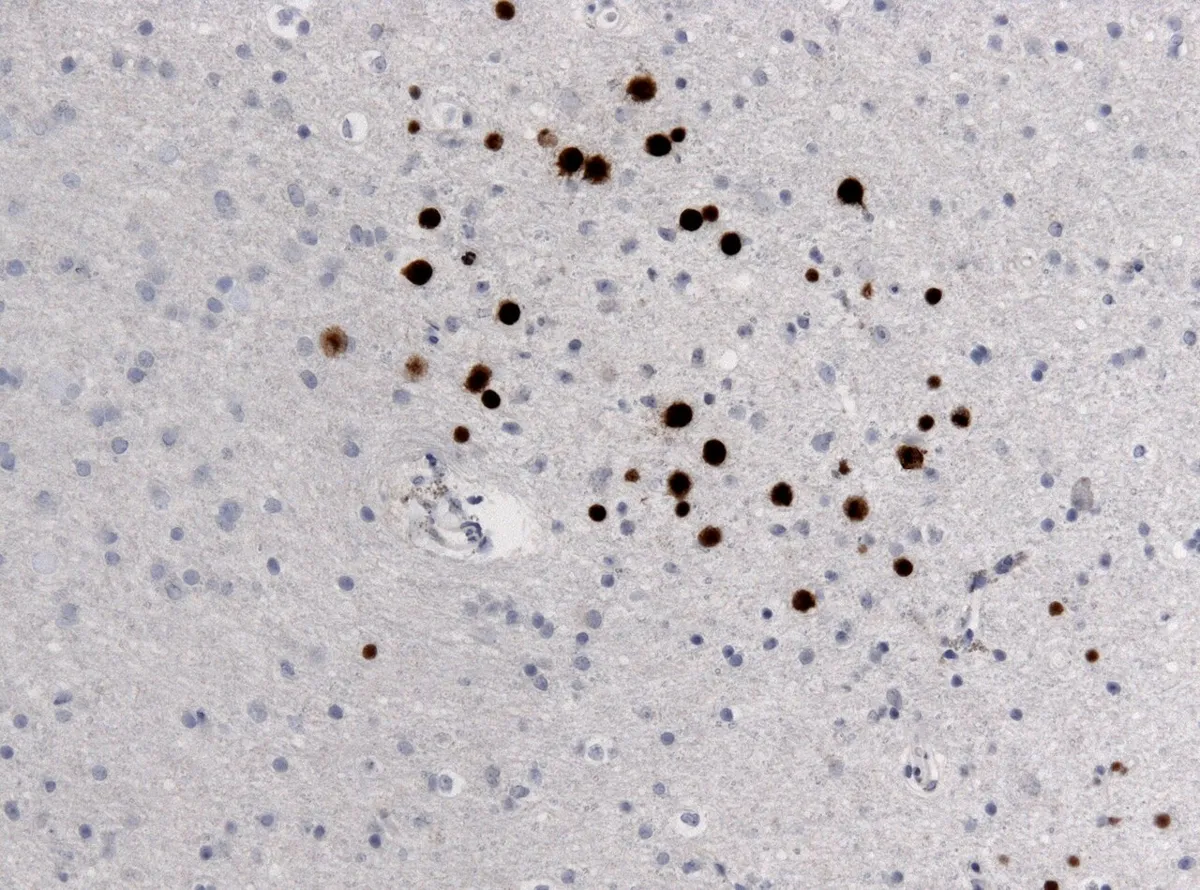
Key facts
- Caused by JC polyomavirus (non-enveloped double-stranded DNA); 50–80% of adults are seropositive
- Lytic infection of oligodendrocytes causes demyelination; astrocytes become bizarre and enlarged
- Settings: advanced HIV (usually CD4 below 200), haematological malignancy, transplant, natalizumab, rituximab and other immunotherapies
- Subacute focal deficits over weeks; fever and headache are unusual; optic nerves and spinal cord are spared
- MRI: asymmetric subcortical white-matter T2/FLAIR lesions involving U-fibres, T1 hypointense, no mass effect, usually no enhancement
- CSF JCV PCR is highly specific; a negative test does not exclude PML (repeat or biopsy)
- No effective antiviral: start or optimise ART in HIV; stop natalizumab (plasma exchange can speed its removal)
- Natalizumab PML risk rises with anti-JCV antibodies, treatment over 2 years and previous immunosuppressants
Differential diagnosis
| Condition | Clues | Key test |
|---|---|---|
| HIV-associated neurocognitive disorder (HIV encephalopathy) | Slow global cognitive and motor slowing; symmetric periventricular white-matter change with atrophy | MRI pattern, CSF HIV RNA, JCV PCR negative |
| Cerebral toxoplasmosis | Fever, headache, ring-enhancing lesions with mass effect | MRI, Toxoplasma IgG, response to therapy |
| Primary CNS lymphoma | Enhancing periventricular mass with mass effect | CSF EBV PCR, PET, biopsy |
| Multiple sclerosis relapse | Young adult, periventricular ovoid lesions, spinal cord and optic nerve involvement, enhancing lesions | MRI pattern, oligoclonal bands; JCV PCR negative |
| CMV or VZV encephalitis/vasculopathy | Ventriculitis or infarcts, fever, CSF pleocytosis | CSF CMV or VZV PCR |
| Acute disseminated encephalomyelitis (ADEM) | Monophasic, post-infectious, encephalopathy, multifocal enhancing lesions | Clinical course, MRI |
| Posterior reversible encephalopathy syndrome | Headache, seizures, hypertension, posterior oedema on calcineurin inhibitors | MRI reversibility, blood pressure |
Exam pearls
Guideline
AAN Neuroinfectious Disease Section PML diagnostic criteria (2013); NIH/CDC/HIVMA-IDSA Guidelines for the Prevention and Treatment of Opportunistic Infections in Adults and Adolescents With HIV, PML/JC virus section (living guideline, current online version); EACS Guidelines (version 12.0, 2023, or any later edition)
References
- Berger JR, Aksamit AJ, Clifford DB, et al.. PML diagnostic criteria: consensus statement from the AAN Neuroinfectious Disease Section. Neurology 2013.
- Panel on Guidelines for the Prevention and Treatment of Opportunistic Infections in Adults and Adolescents With HIV (NIH, CDC, HIVMA of IDSA). Guidelines for the prevention and treatment of opportunistic infections in adults and adolescents with HIV: progressive multifocal leukoencephalopathy/JC virus infection. ClinicalInfo.HIV.gov 2025.
- Cortese I, Muranski P, Enose-Akahata Y, et al.. Pembrolizumab treatment for progressive multifocal leukoencephalopathy. N Engl J Med 2019.
- Tan CS, Koralnik IJ. Progressive multifocal leukoencephalopathy and other disorders caused by JC virus: clinical features and pathogenesis. Lancet Neurol 2010.
- Cortese I, Reich DS, Nath A. Progressive multifocal leukoencephalopathy and the spectrum of JC virus-related disease. Nat Rev Neurol 2021.
- Bloomgren G, Richman S, Hotermans C, et al.. Risk of natalizumab-associated progressive multifocal leukoencephalopathy. N Engl J Med 2012.
Related topics
By Dr Khalid Seidi (B.Sc., M.D.) · MedEd World Clinical Knowledge library. Original teaching content checked against current guidelines (November 2026); confirm the latest local guidance before clinical use. Not a substitute for clinical judgement.