Clinical Knowledge › Internal medicine › Rheumatology and immunology › Allergy and hypersensitivity disorders
Allergic rhinitis
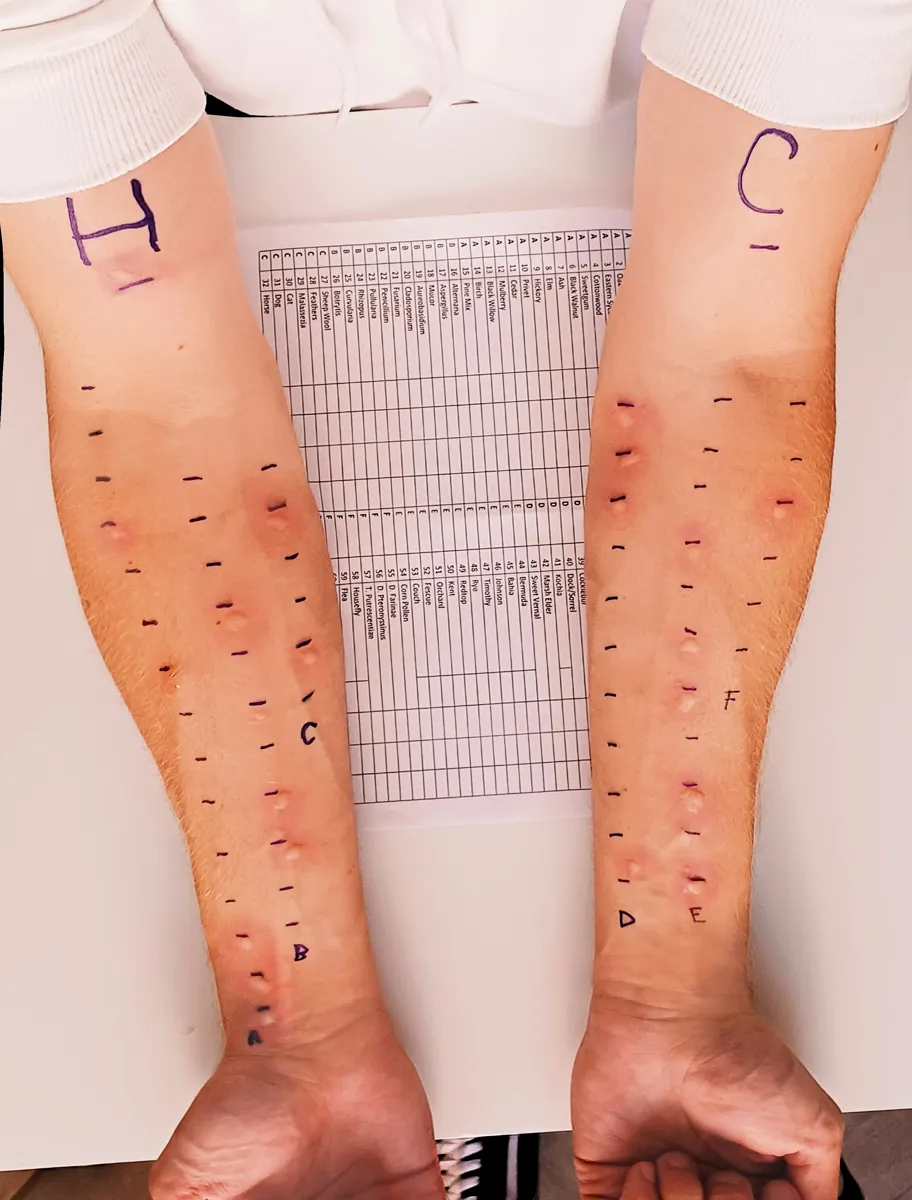
Allergic rhinitis is IgE-mediated inflammation of the nasal mucosa causing sneezing, itching, clear rhinorrhoea and nasal blockage, often with itchy watery eyes. It affects 10–30% of adults and up to 40% of children worldwide, driven by pollens, house dust mite, animal dander and moulds. The ARIA classification describes it as intermittent or persistent and mild or moderate–severe according to effects on sleep, daily activities, work or school. Although rarely dangerous, it impairs sleep, learning and productivity, and it is closely linked with asthma: the 'united airway'. Diagnosis is clinical, supported by skin prick or specific IgE tests; unilateral symptoms, bleeding, pain or crusting are red flags for other disease. Treatment combines allergen avoidance where practical, saline irrigation, second-generation oral or intranasal antihistamines and intranasal corticosteroids, with fixed combinations for more severe disease. Allergen immunotherapy, by tablet or injection, is the only disease-modifying option and is offered when symptoms remain uncontrolled.
Patient case, mechanism, investigations, management, flashcards and exam-style questions.Open the lesson →
Key facts
- Classic symptoms: sneezing, nasal itch, watery rhinorrhoea and congestion, often with itchy red eyes (rhinoconjunctivitis)
- ARIA: intermittent (<4 days/week or <4 consecutive weeks) vs persistent; mild vs moderate–severe (sleep, daily activities, work/school, troublesome symptoms)
- Signs: pale, swollen ('boggy') inferior turbinates, transverse nasal crease, allergic shiners, mouth breathing
- Intranasal corticosteroids are the most effective single drug, especially for congestion; full effect takes days
- Second-generation antihistamines (cetirizine, loratadine, fexofenadine) are preferred; first-generation sedating drugs should be avoided
- Topical decongestants for more than 5–7 days cause rebound congestion (rhinitis medicamentosa)
- Allergic rhinitis is present in up to 80% of people with asthma; poorly controlled rhinitis worsens asthma
- Allergen immunotherapy (SLIT tablets or SCIT) for at least 3 years modifies disease and is indicated when drugs fail
Differential diagnosis
| Condition | Clues | Key test |
|---|---|---|
| Infectious (viral) rhinitis | Acute, self-limiting, fever, coloured discharge, contacts | Clinical; resolves within 10 days |
| Non-allergic (vasomotor) rhinitis | Triggered by cold air, odours, alcohol; no itch | Negative skin prick and sIgE tests |
| Rhinitis medicamentosa | Rebound blockage after weeks of decongestant spray | Drug history |
| Drug-induced rhinitis | Beta-blockers, alpha-blockers, PDE5 inhibitors, NSAIDs (AERD), oral contraceptives | Medication review |
| Chronic rhinosinusitis with nasal polyps | Anosmia, facial pressure, polyps; asthma and NSAID sensitivity | Nasal endoscopy, CT sinuses |
| Granulomatosis with polyangiitis | Crusting, bloody discharge, saddle nose, renal or lung disease | ANCA (PR3), urinalysis, biopsy |
| CSF rhinorrhoea | Unilateral clear watery drip after trauma or surgery | Beta-2 transferrin in fluid |
| Sinonasal tumour or foreign body | Unilateral obstruction, bleeding, foul discharge (child with foreign body) | Endoscopy; imaging |
Exam pearls
Guideline
ARIA–EAACI guidelines 2024–2025 revision (Part I intranasal and Part II oral and ocular treatments), with the AAAAI/ACAAI Rhinitis 2020 practice parameter
References
- Sousa-Pinto B, Bousquet J, et al.. Allergic Rhinitis and Its Impact on Asthma (ARIA)-EAACI Guidelines-2024-2025 Revision: Part I-Guidelines on Intranasal Treatments. Allergy 2026.
- Vieira RJ, Sousa-Pinto B, et al.. Allergic Rhinitis and Its Impact on Asthma (ARIA)-EAACI Guidelines-2024-2025 Revision: Part II-Guidelines on Oral and Ocular Treatments. Allergy 2026.
- Dykewicz MS, Wallace DV, Amrol DJ, et al.. Rhinitis 2020: a practice parameter update. J Allergy Clin Immunol 2020.
- Scadding GK, Kariyawasam HH, Scadding G, et al.. BSACI guideline for the diagnosis and management of allergic and non-allergic rhinitis (revised edition 2017). Clin Exp Allergy 2017.
- Roberts G, Pfaar O, Akdis CA, et al.. EAACI guidelines on allergen immunotherapy: allergic rhinoconjunctivitis. Allergy 2018.
- Bousquet J, Khaltaev N, Cruz AA, et al.. Allergic Rhinitis and its Impact on Asthma (ARIA) 2008 update (in collaboration with the World Health Organization, GA2LEN and AllerGen). Allergy 2008.
Related topics
By Dr Khalid Seidi (B.Sc., M.D.) · MedEd World Clinical Knowledge library. Original teaching content checked against current guidelines (November 2026); confirm the latest local guidance before clinical use. Not a substitute for clinical judgement.