Clinical Knowledge › Internal medicine › Rheumatology and immunology › Allergy and hypersensitivity disorders
Food allergy
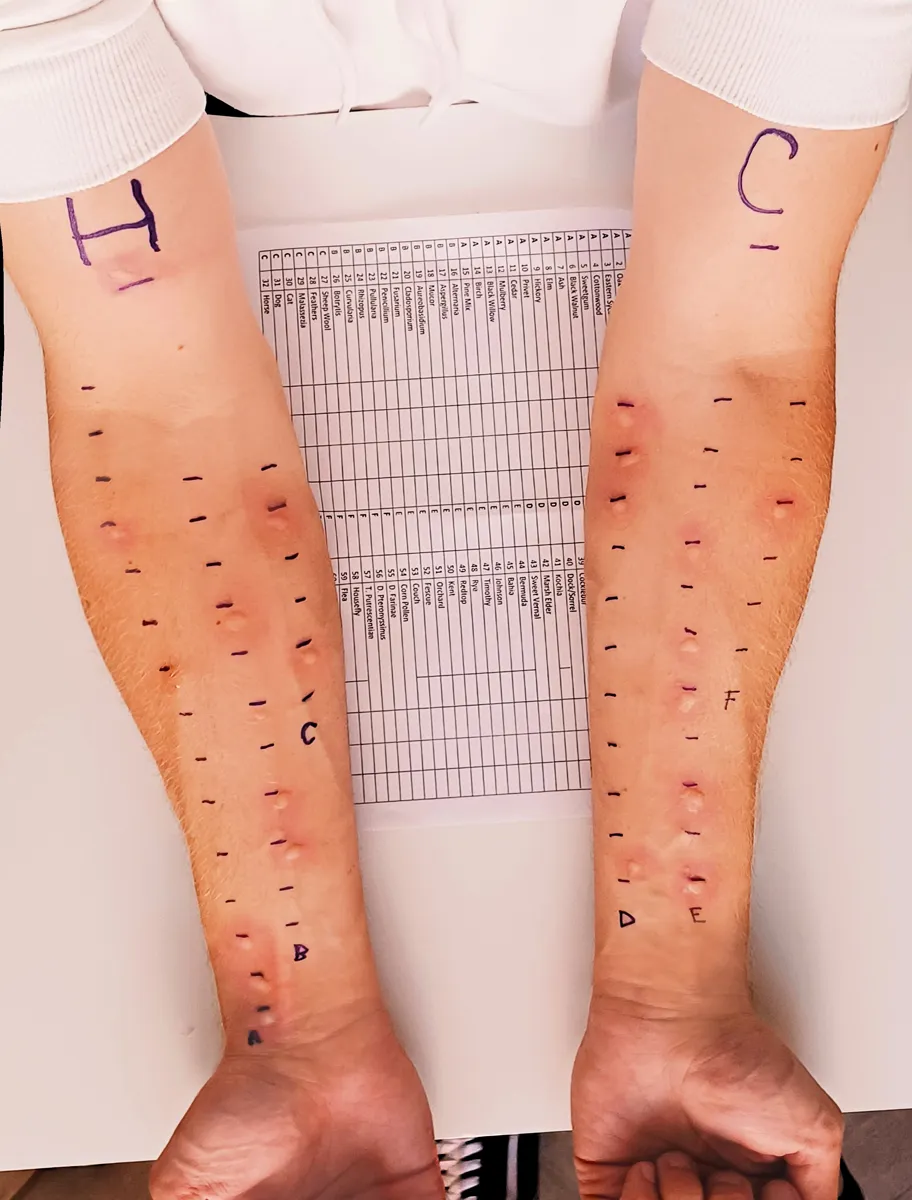
Food allergy is a reproducible adverse immune response to a food protein. IgE-mediated allergy causes urticaria, angioedema, vomiting, wheeze or anaphylaxis within minutes to 2 hours; non-IgE disorders such as food protein-induced enterocolitis syndrome (FPIES) and proctocolitis cause delayed gut symptoms. It affects about 5–8% of young children and 1–4% of adults, with cow's milk, egg, peanut, tree nuts, sesame, fish and shellfish the leading triggers. Early severe eczema is the strongest risk factor, supporting the dual-allergen exposure hypothesis. Diagnosis starts with a focused history, then skin prick or specific IgE tests, component testing (such as Ara h 2 for peanut) and, when uncertain, a supervised oral food challenge; sensitisation alone is not allergy. Management is avoidance with dietetic support, label reading, a written action plan and adrenaline for those at risk of anaphylaxis. Peanut oral immunotherapy and omalizumab now raise reaction thresholds, and early introduction of peanut and egg in infancy prevents allergy.
Patient case, mechanism, investigations, management, flashcards and exam-style questions.Open the lesson →
Key facts
- IgE-mediated reactions start within minutes to 2 hours: urticaria, angioedema, vomiting, wheeze, hypotension
- Commonest triggers: children – cow's milk, egg, peanut, tree nuts, sesame; adults – shellfish, fish, peanut, tree nuts, pollen-related fruits
- Most milk and egg allergy resolves by school age; peanut (about 80%), tree nut, fish and shellfish allergy usually persist
- Sensitisation (positive skin prick test or sIgE) without symptoms on eating is not allergy; never diagnose on tests alone
- EAACI 2023: use Ara h 2 sIgE for suspected peanut allergy; the oral food challenge remains the reference test
- FPIES: repetitive vomiting 1–4 hours after the food, pallor and lethargy; treat with fluids and ondansetron, not adrenaline
- Prescribe two adrenaline auto-injectors to patients at risk of anaphylaxis, with a written plan; poorly controlled asthma raises fatality risk
- LEAP trial: early peanut introduction in high-risk infants reduced peanut allergy by about 80%; introduce egg and peanut from around 4–6 months
Differential diagnosis
| Condition | Clues | Key test |
|---|---|---|
| Food intolerance (lactose, FODMAP) | Bloating and diarrhoea, dose-related, no urticaria or wheeze | Clinical; hydrogen breath test; negative allergy tests |
| Scombroid (histamine) fish poisoning | Flushing, headache and urticaria in several diners after spoiled fish | Clinical; history of shared meal |
| Chronic spontaneous urticaria | Daily wheals regardless of diet | History; food diary shows no link |
| Coeliac disease | Chronic diarrhoea, weight loss, anaemia with gluten | tTG-IgA with total IgA; duodenal biopsy |
| Eosinophilic oesophagitis | Dysphagia, food bolus impaction in an atopic man | Endoscopy with biopsies (≥15 eosinophils/hpf) |
| Infant gastro-oesophageal reflux or colic | Regurgitation, crying, thriving infant | Clinical; trial of measures |
| Vasovagal or panic reaction | Pallor, bradycardia, no skin signs or wheeze | Normal tryptase; history |
| Mastocytosis or mast cell activation | Recurrent anaphylaxis with no clear food trigger | Baseline serum tryptase; KIT D816V |
Exam pearls
Guideline
EAACI guidelines on the diagnosis of IgE-mediated food allergy (2023) and GA²LEN guideline on managing food allergy (2022)
References
- Santos AF, Riggioni C, Agache I, et al.. EAACI guidelines on the diagnosis of IgE-mediated food allergy. Allergy 2023.
- Muraro A, de Silva D, Halken S, et al.. Managing food allergy: GA2LEN guideline 2022. World Allergy Organ J 2022.
- Wood RA, Togias A, Sicherer SH, et al.. Omalizumab for the treatment of multiple food allergies. N Engl J Med 2024.
- Du Toit G, Roberts G, Sayre PH, et al.. Randomized trial of peanut consumption in infants at risk for peanut allergy. N Engl J Med 2015.
- PALISADE Group of Clinical Investigators; Vickery BP, Vereda A, et al.. AR101 oral immunotherapy for peanut allergy. N Engl J Med 2018.
- Riggioni C, Ricci C, Moya B, et al.. Systematic review and meta-analyses on the accuracy of diagnostic tests for IgE-mediated food allergy. Allergy 2024.
Related topics
By Dr Khalid Seidi (B.Sc., M.D.) · MedEd World Clinical Knowledge library. Original teaching content checked against current guidelines (November 2026); confirm the latest local guidance before clinical use. Not a substitute for clinical judgement.