Clinical Knowledge › Internal medicine › Rheumatology and immunology › Allergy and hypersensitivity disorders
Anaphylaxis
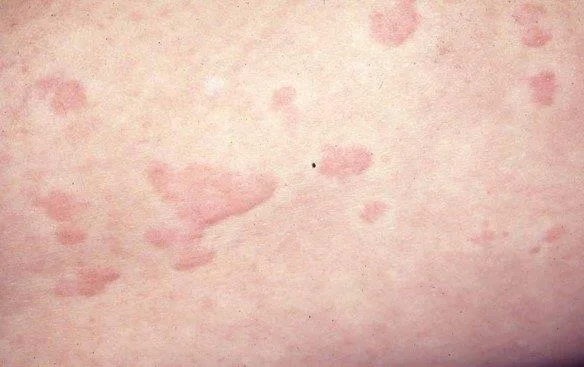
Anaphylaxis is a severe, life-threatening systemic hypersensitivity reaction that develops rapidly and causes airway, breathing or circulation problems, usually with skin or mucosal changes. Most cases are IgE-mediated mast-cell degranulation triggered by foods (commonest in children), drugs such as antibiotics, neuromuscular blockers and NSAIDs (commonest in adults and in hospital) and insect venom; some are non-IgE (direct mast-cell activation, contrast media) or idiopathic. Histamine, tryptase, leukotrienes and platelet-activating factor cause vasodilatation, capillary leak, bronchospasm and angioedema. Diagnosis is clinical, and up to 1 in 10 patients have no skin features. The immediate treatment is intramuscular adrenaline into the anterolateral thigh (adult 500 micrograms), repeated after 5 minutes if needed, with lying flat, high-flow oxygen and intravenous fluids. Refractory reactions need an adrenaline infusion. Antihistamines and steroids are not first-line. Mast cell tryptase supports the diagnosis. Every patient needs observation, two adrenaline auto-injectors (or nasal adrenaline where licensed), training and allergy referral.
Patient case, mechanism, investigations, management, flashcards and exam-style questions.Open the lesson →
Key facts
- Anaphylaxis = sudden Airway and/or Breathing and/or Circulation problems, usually with skin or mucosal changes, after a likely trigger
- Adrenaline 1:1000 IM into the anterolateral thigh is first-line: adult and child over 12 years 500 micrograms, 6–12 years 300 micrograms, under 6 years 150 micrograms
- Repeat IM adrenaline after 5 minutes if there is no improvement; after two doses with ongoing problems, start a low-dose IV adrenaline infusion (refractory anaphylaxis)
- Commonest triggers: foods in children; drugs (antibiotics, NMBAs, NSAIDs) and venom in adults; perioperative anaphylaxis is often due to NMBAs, antibiotics or chlorhexidine
- Up to 10–20% have no skin signs; isolated hypotension after exposure to a known allergen is anaphylaxis
- Mast cell tryptase: first sample as soon as possible after resuscitation starts, second at 1–2 hours (no later than 4 hours), baseline at least 24 hours later
- Antihistamines treat skin symptoms only; corticosteroids are no longer routinely recommended in the acute phase
- Discharge with two adrenaline auto-injectors, training, a written action plan and specialist allergy referral
Differential diagnosis
| Condition | Clues | Key test |
|---|---|---|
| Vasovagal syncope | Pallor, bradycardia, nausea, rapid recovery lying flat; no urticaria or wheeze | Normal tryptase; clinical |
| Acute severe asthma | Wheeze without hypotension, rash or angioedema; known asthma trigger | Peak flow; absence of systemic features |
| Panic attack | Hyperventilation, tingling, sense of throat tightness without objective signs | Normal BP, saturations and tryptase |
| Hereditary or ACE-inhibitor angioedema | Swelling without urticaria or itch; slow onset; no response to adrenaline | C4, C1-inhibitor; drug history |
| Septic shock | Fever, source of infection, slower onset | Lactate, cultures; no allergen exposure |
| Scombroid fish poisoning | Flushing and headache after spoiled tuna or mackerel; several diners affected | History; tryptase normal |
| Systemic mastocytosis or mast cell activation | Recurrent episodes, flushing, hypotension with insect stings | Raised baseline tryptase, KIT D816V |
| Cardiogenic shock or arrhythmia | Chest pain, ECG changes, no allergic features | ECG, troponin, echo |
Exam pearls
Guideline
Resuscitation Council UK Emergency treatment of anaphylaxis (2021), WAO anaphylaxis guidance (2020), EAACI anaphylaxis guideline (2021 update) and AAAAI/ACAAI anaphylaxis practice parameter (2023)
References
- Resuscitation Council UK. Emergency treatment of anaphylaxis: guidelines for healthcare providers. Resuscitation Council UK 2021.
- Cardona V, Ansotegui IJ, Ebisawa M, et al.. World Allergy Organization anaphylaxis guidance 2020. World Allergy Organ J 2020.
- Muraro A, Worm M, Alviani C, et al.. EAACI guidelines: anaphylaxis (2021 update). Allergy 2022.
- National Institute for Health and Care Excellence. Anaphylaxis: assessment and referral after emergency treatment (CG134; since updated as NG258). NICE 2011.
- Golden DBK, Wang J, Waserman S, et al.. Anaphylaxis: a 2023 practice parameter update. Ann Allergy Asthma Immunol 2024.
- Shaker MS, Wallace DV, Golden DBK, et al.. Anaphylaxis—a 2020 practice parameter update, systematic review, and Grading of Recommendations, Assessment, Development and Evaluation (GRADE) analysis. J Allergy Clin Immunol 2020.
Related topics
By Dr Khalid Seidi (B.Sc., M.D.) · MedEd World Clinical Knowledge library. Original teaching content checked against current guidelines (November 2026); confirm the latest local guidance before clinical use. Not a substitute for clinical judgement.