Clinical Knowledge › Internal medicine › Rheumatology and immunology › Allergy and hypersensitivity disorders
Insect venom allergy
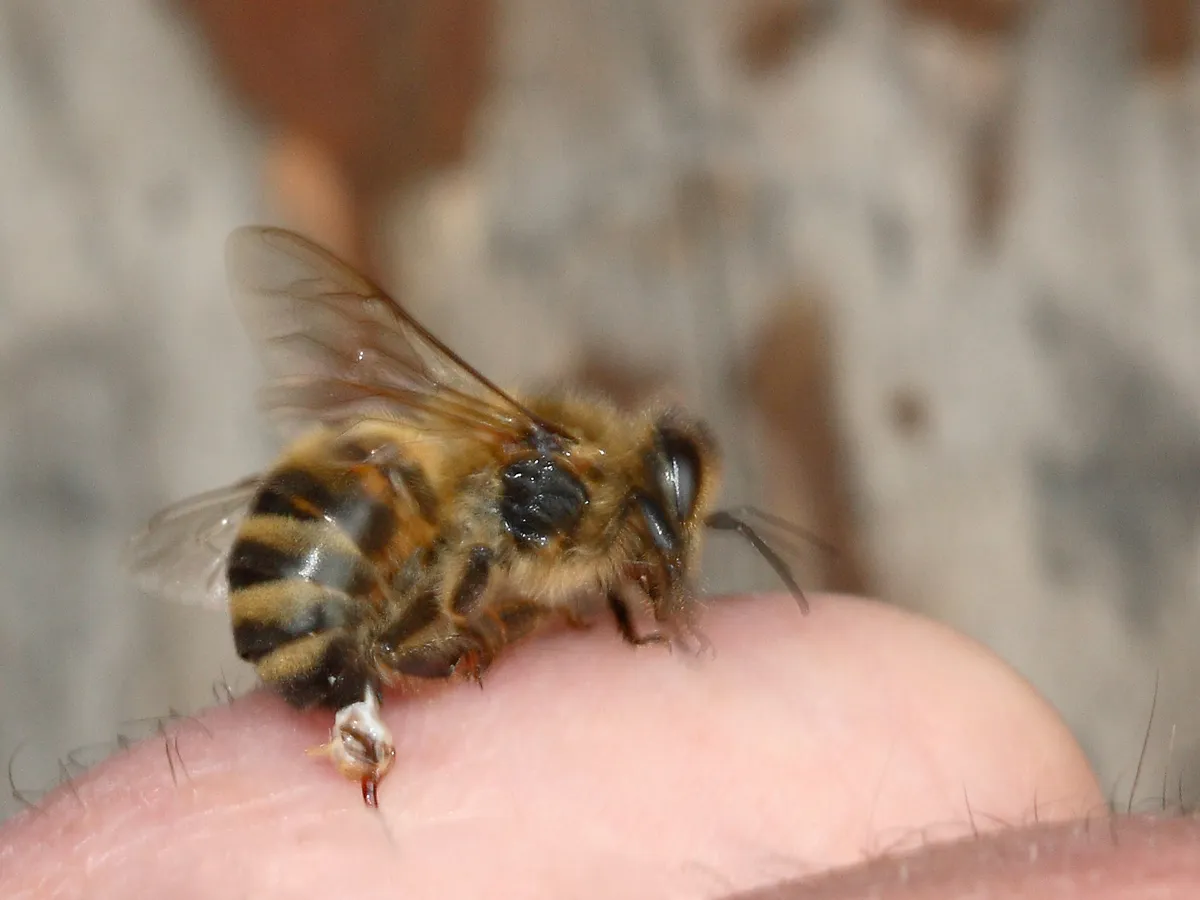
Insect venom allergy is an IgE-mediated reaction to stings of Hymenoptera: honeybees, bumblebees, wasps and yellow jackets, hornets, paper wasps and fire ants. Reactions range from normal local pain and swelling, through large local reactions more than 10 cm across that peak at 24–48 hours, to systemic reactions with generalised urticaria, angioedema, bronchospasm or hypotension. Systemic sting reactions affect up to 3–7% of adults and under 1% of children, and venom is a leading cause of anaphylaxis in adults. Older age, cardiovascular disease, previous severe reactions and clonal mast cell disease, signalled by a raised baseline serum tryptase, predict severe reactions. Acute treatment follows anaphylaxis protocols with intramuscular adrenaline. Diagnosis combines a clear history with venom skin tests and specific IgE, including component tests to separate bee from wasp allergy. Venom immunotherapy for 3–5 years protects more than 90% of wasp-allergic and about 80% of bee-allergic patients, transforms quality of life, and is the key long-term intervention.
Patient case, mechanism, investigations, management, flashcards and exam-style questions.Open the lesson →
Key facts
- Main culprits: honeybee (leaves barbed sting), wasps/yellow jackets (Vespula, the commonest in Europe), hornets, Polistes wasps and fire ants
- Large local reaction: swelling >10 cm, peaks at 24–48 h, lasts up to a week; future systemic reaction risk only about 5–10%
- Systemic reactions occur in up to 3–7% of adults; untreated adults with a previous systemic reaction have about a 30–60% risk on re-sting
- Measure baseline serum tryptase in every patient with a systemic sting reaction; >11.4 µg/L (ng/mL) suggests mastocytosis or hereditary alpha-tryptasaemia
- Hypotension without urticaria after a sting is a strong clue to clonal mast cell disease
- Diagnose with skin prick then intradermal venom tests and venom sIgE, at least 2 weeks after the reaction; components (Api m 1, Api m 10, Ves v 1, Ves v 5) resolve double positivity
- Venom immunotherapy (maintenance 100 µg every 4–8 weeks) for at least 3–5 years protects about 77–84% (bee) and 91–96% (wasp)
- Prescribe two adrenaline auto-injectors to patients with systemic reactions while awaiting or during VIT
Differential diagnosis
| Condition | Clues | Key test |
|---|---|---|
| Cellulitis | Spreading erythema with fever and rising pain days after the sting | Clinical; CRP; usually no antibiotics needed for a large local reaction |
| Toxic reaction to multiple stings | Dozens to hundreds of stings, haemolysis, rhabdomyolysis, AKI | CK, haemolysis screen, creatinine |
| Vasovagal syncope | Pallor, bradycardia, rapid recovery lying flat, no skin signs | Normal tryptase; history |
| Mastocytosis presenting as sting anaphylaxis | Hypotension without urticaria, raised baseline tryptase | Baseline tryptase, KIT D816V in blood, bone marrow |
| Arrhythmia or myocardial infarction (Kounis syndrome) | Chest pain or ECG changes during allergic reaction | ECG, troponin |
| Anxiety or panic attack | Tingling, breathlessness, no objective signs | Normal observations and tryptase |
| Spider or scorpion envenomation | Different creature, neurotoxic or local necrotic features | History and local signs |
Exam pearls
Guideline
EAACI guidelines on allergen immunotherapy: Hymenoptera venom allergy (2018) and AAAAI/ACAAI Stinging insect hypersensitivity practice parameter update (2016)
References
- Sturm GJ, Varga EM, Roberts G, et al.. EAACI guidelines on allergen immunotherapy: Hymenoptera venom allergy. Allergy 2018.
- Golden DBK, Demain J, Freeman T, et al.. Stinging insect hypersensitivity: a practice parameter update 2016. Ann Allergy Asthma Immunol 2017.
- Krishna MT, Ewan PW, Diwakar L, et al.. Diagnosis and management of hymenoptera venom allergy: British Society for Allergy and Clinical Immunology (BSACI) guidelines. Clin Exp Allergy 2011.
- Golden DB, Kagey-Sobotka A, Norman PS, Hamilton RG, Lichtenstein LM. Outcomes of allergy to insect stings in children, with and without venom immunotherapy. N Engl J Med 2004.
- Hunt KJ, Valentine MD, Sobotka AK, et al.. A controlled trial of immunotherapy in insect hypersensitivity. N Engl J Med 1978.
- Golden DBK, Wang J, Waserman S, et al.. Anaphylaxis: a 2023 practice parameter update. Ann Allergy Asthma Immunol 2024.
Related topics
By Dr Khalid Seidi (B.Sc., M.D.) · MedEd World Clinical Knowledge library. Original teaching content checked against current guidelines (November 2026); confirm the latest local guidance before clinical use. Not a substitute for clinical judgement.