Clinical Knowledge › Neurology › Dementia and cognitive disorders
Alzheimer disease
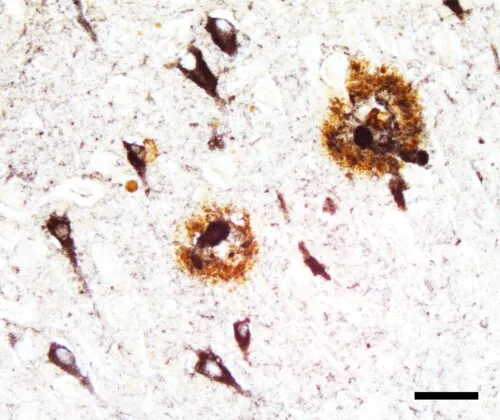
Alzheimer disease (AD) causes 60–70% of the 57 million cases of dementia worldwide. It is defined pathologically by amyloid-beta plaques and tau neurofibrillary tangles, with synaptic and neuronal loss beginning in the entorhinal cortex and hippocampus and a cholinergic deficit. The 2024 Alzheimer's Association criteria define AD biologically by core biomarkers (amyloid PET, CSF or validated plasma p-tau217) with biological and clinical staging. Typical AD presents after 65 with insidious episodic memory loss, then language, visuospatial, executive and functional decline and neuropsychiatric symptoms; atypical forms include posterior cortical atrophy and logopenic aphasia. Age is the main risk factor; APOE ε4 raises risk and APP, PSEN1 and PSEN2 mutations cause early-onset familial AD. Assessment combines informant history, cognitive testing, bloods for reversible causes and MRI, with biomarkers in specialist care. Cholinesterase inhibitors and memantine give modest benefit; anti-amyloid antibodies (lecanemab, donanemab) modestly slow early AD, with ARIA risk and variable national approval.
Patient case, mechanism, investigations, management, flashcards and exam-style questions.Open the lesson →
Key facts
- Commonest dementia (60–70%); prevalence doubles every 5 years after 65
- Pathology: amyloid-beta plaques, tau neurofibrillary tangles, neuronal loss starting in entorhinal cortex and hippocampus, cholinergic deficit (nucleus basalis of Meynert)
- Genetics: APOE ε4 increases risk (about 3-fold heterozygous, 8–12-fold homozygous); APP, PSEN1, PSEN2 cause autosomal dominant early-onset AD; Down syndrome (APP on chromosome 21)
- Typical presentation: gradual episodic memory loss (impaired encoding, repeating questions, misplacing items) progressing to language, visuospatial, executive and functional decline
- 2024 NIA-AA criteria: biological definition by core biomarkers (amyloid PET, CSF Aβ42/40 or p-tau ratios, accurate plasma p-tau217) with biological (A–D) and clinical (0–6) staging
- Work-up: informant history, cognitive testing (MoCA, ACE-III, MMSE), bloods (FBC, U&E, calcium, LFTs, TSH, B12, folate, HbA1c), structural MRI (medial temporal atrophy)
- Symptomatic drugs: donepezil, rivastigmine or galantamine for mild–moderate AD; memantine for moderate (if AChEI unsuitable) or severe AD, or as add-on (NICE NG97)
- Lecanemab and donanemab: early symptomatic AD with confirmed amyloid; MRI monitoring for ARIA; APOE genotyping; approved in USA and EU (restricted), not recommended for routine NHS use by NICE
Differential diagnosis
| Condition | Clues | Key test |
|---|---|---|
| Delirium | Acute onset, fluctuating attention and consciousness | 4AT, infection and metabolic screen |
| Depression (pseudodementia) | Low mood, 'don't know' answers, subjective complaints exceed deficits | Mood assessment, response to treatment |
| Vascular dementia | Stepwise course, focal signs, vascular risk, executive slowing | MRI white matter and infarcts |
| Dementia with Lewy bodies | Fluctuations, visual hallucinations, parkinsonism, RBD | Clinical, DaT-SPECT |
| Frontotemporal dementia | Younger, behavioural or language change, memory relatively spared | MRI frontal/temporal atrophy |
| Normal pressure hydrocephalus | Gait disturbance and urinary incontinence early | MRI ventriculomegaly, CSF tap test |
| Reversible causes | Hypothyroidism, B12 deficiency, neurosyphilis, subdural haematoma, drugs (anticholinergics) | Bloods, imaging, medication review |
| Mild cognitive impairment | Cognitive decline without loss of independence | Functional assessment |
Exam pearls
Guideline
Alzheimer's Association revised criteria for diagnosis and staging of AD (2024); NICE NG97 Dementia (2018) and NICE appraisal of lecanemab and donanemab (2025); Alzheimer's Association blood-biomarker guideline (2025)
References
- Jack CR Jr, Andrews JS, Beach TG, et al.. Revised criteria for diagnosis and staging of Alzheimer's disease: Alzheimer's Association Workgroup. Alzheimers Dement 2024.
- National Institute for Health and Care Excellence. Dementia: assessment, management and support for people living with dementia and their carers (NG97). NICE 2018.
- Palmqvist S, Whitson HE, Allen LA, et al.. Clinical practice guideline for blood-based biomarkers in the diagnostic workup of Alzheimer's disease within specialized care settings. Alzheimers Dement 2025.
- van Dyck CH, Swanson CJ, Aisen P, et al.. Lecanemab in early Alzheimer's disease. N Engl J Med 2023.
- Sims JR, Zimmer JA, Evans CD, et al.. Donanemab in early symptomatic Alzheimer disease: the TRAILBLAZER-ALZ 2 randomized clinical trial. JAMA 2023.
- Livingston G, Huntley J, Liu KY, et al.. Dementia prevention, intervention, and care: 2024 report of the Lancet standing Commission. Lancet 2024.
Related topics
By Dr Khalid Seidi (B.Sc., M.D.) · MedEd World Clinical Knowledge library. Original teaching content checked against current guidelines (November 2026); confirm the latest local guidance before clinical use. Not a substitute for clinical judgement.