Clinical Knowledge › Neurology › Dementia and cognitive disorders
Vascular dementia
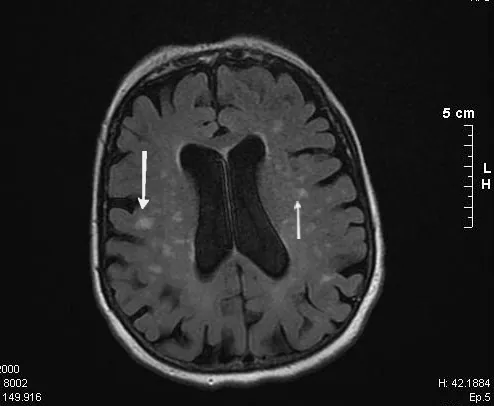
Vascular dementia is the second commonest cause of dementia (about 15–20%) and the severe end of vascular cognitive impairment, in which cerebrovascular disease causes or contributes to cognitive decline. Mechanisms include multiple cortical infarcts, strategic infarcts (thalamus, angular gyrus), subcortical small vessel disease with lacunes and white matter hyperintensities, haemorrhage (including amyloid angiopathy) and CADASIL; mixed Alzheimer pathology is common. Typical features are slowed processing, executive dysfunction, apathy and depression with relatively preserved recognition memory, often with gait disturbance, urinary urgency or focal deficits; the course may be stepwise or gradual. Diagnosis (VASCOG 2014, VICCCS 2018) requires cognitive decline plus imaging evidence of sufficient cerebrovascular disease. Management centres on vascular risk control, stroke secondary prevention, treating depression and rehabilitation. Cholinesterase inhibitors and memantine are not recommended for pure vascular dementia.
Patient case, mechanism, investigations, management, flashcards and exam-style questions.Open the lesson →
Key facts
- Second commonest dementia (about 15–20%); mixed Alzheimer–vascular pathology is common in older adults
- Subtypes: post-stroke dementia, multi-infarct (cortical), strategic infarct (thalamus, angular gyrus), subcortical ischaemic small vessel disease, haemorrhagic (including CAA), hereditary (CADASIL)
- Cognitive profile: slowed processing, executive dysfunction, attention problems, apathy, depression; memory retrieval impaired but recognition relatively preserved
- Associated signs: gait disturbance (small-stepped, 'lower-body parkinsonism'), urinary urgency, pseudobulbar palsy, emotional lability, focal neurological signs
- Course: stepwise after clinical strokes or insidious with small vessel disease
- Diagnosis needs cognitive decline plus imaging evidence of sufficient cerebrovascular disease (MRI preferred: infarcts, lacunes, white matter hyperintensities, microbleeds)
- Management: control hypertension, diabetes, lipids, smoking; antiplatelet after ischaemic stroke; anticoagulate AF; treat depression; rehabilitation and support
- NICE NG97: do not offer cholinesterase inhibitors or memantine for pure vascular dementia (only if comorbid AD, DLB or PD dementia)
Differential diagnosis
| Condition | Clues | Key test |
|---|---|---|
| Alzheimer disease | Insidious amnestic onset, hippocampal atrophy, cues do not aid recall | MRI, biomarkers |
| Mixed dementia | Features of both; common in older people | MRI plus biomarkers |
| Dementia with Lewy bodies | Fluctuations, visual hallucinations, parkinsonism, RBD | Clinical, DaT-SPECT |
| Normal pressure hydrocephalus | Gait, incontinence, cognitive decline; ventriculomegaly | MRI, CSF tap test |
| Depression | Low mood, apathy, slowed thinking, may coexist | Mood assessment |
| CADASIL | Younger, migraine with aura, family history, anterior temporal pole and external capsule lesions | NOTCH3 testing |
| Chronic subdural haematoma | Fluctuating cognition, headache, falls | CT/MRI |
Exam pearls
Guideline
VASCOG criteria (2014) and VICCCS consensus (2018); AHA/ASA statement on vascular contributions to cognitive impairment and dementia (2011); NICE NG97 Dementia (2018); STRIVE-2 neuroimaging standards (2023)
References
- Sachdev P, Kalaria R, O'Brien J, et al.. Diagnostic criteria for vascular cognitive disorders: a VASCOG statement. Alzheimer Dis Assoc Disord 2014.
- Skrobot OA, Black SE, Chen C, et al.. Progress toward standardized diagnosis of vascular cognitive impairment: guidelines from the Vascular Impairment of Cognition Classification Consensus Study. Alzheimers Dement 2018.
- Gorelick PB, Scuteri A, Black SE, et al.. Vascular contributions to cognitive impairment and dementia: a statement for healthcare professionals. Stroke 2011.
- National Institute for Health and Care Excellence. Dementia: assessment, management and support for people living with dementia and their carers (NG97). NICE 2018.
- Duering M, Biessels GJ, Brodtmann A, et al.. Neuroimaging standards for research into small vessel disease – advances since 2013. Lancet Neurol 2023.
- SPRINT MIND Investigators for the SPRINT Research Group. Effect of intensive vs standard blood pressure control on probable dementia: a randomized clinical trial. JAMA 2019.
Related topics
By Dr Khalid Seidi (B.Sc., M.D.) · MedEd World Clinical Knowledge library. Original teaching content checked against current guidelines (November 2026); confirm the latest local guidance before clinical use. Not a substitute for clinical judgement.