Clinical Knowledge › Neurology › Dementia and cognitive disorders
Dementia with Lewy bodies
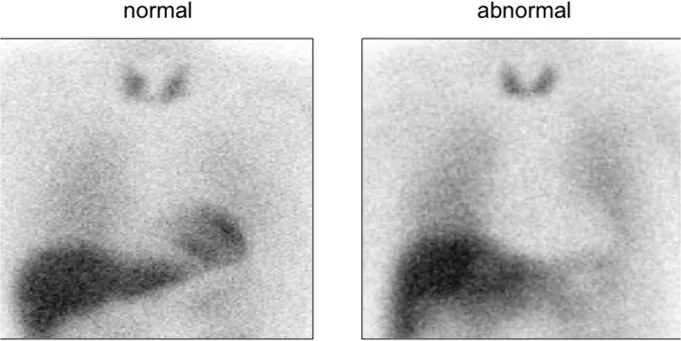
Dementia with Lewy bodies (DLB) is the second commonest neurodegenerative dementia (about 5–10%) and an alpha-synucleinopathy related to Parkinson disease, in which attention, executive and visuospatial deficits are more prominent than early memory loss. The 2017 DLB Consortium criteria list four core features – fluctuating cognition, recurrent well-formed visual hallucinations, REM sleep behaviour disorder and parkinsonism – and indicative biomarkers: reduced dopamine transporter uptake on SPECT or PET, low cardiac MIBG uptake and REM sleep without atonia on polysomnography. Probable DLB needs two core features, or one plus an indicative biomarker. Dementia beginning before or within a year of parkinsonism is DLB; later dementia in established Parkinson disease is Parkinson disease dementia. Severe antipsychotic sensitivity, falls and autonomic dysfunction are common. Cholinesterase inhibitors are first line, levodopa is used cautiously, and typical antipsychotics must be avoided. Prognosis is worse than in Alzheimer disease.
Patient case, mechanism, investigations, management, flashcards and exam-style questions.Open the lesson →
Key facts
- Second commonest neurodegenerative dementia (about 5–10%); alpha-synucleinopathy with cortical and brainstem Lewy bodies
- Core features (2017): fluctuating cognition/alertness, recurrent well-formed visual hallucinations, REM sleep behaviour disorder, parkinsonism
- Indicative biomarkers: reduced DaT uptake (SPECT/PET), low cardiac 123I-MIBG uptake, REM sleep without atonia on polysomnography
- Probable DLB: at least two core features, or one core feature plus at least one indicative biomarker
- One-year rule: dementia before or within 1 year of parkinsonism = DLB; dementia more than 1 year after established PD = Parkinson disease dementia
- Early deficits in attention, executive and visuospatial function (poor clock and pentagon copying); memory relatively preserved early; medial temporal lobes relatively preserved on MRI
- Severe neuroleptic sensitivity: typical antipsychotics (haloperidol) can cause irreversible parkinsonism, NMS-like reactions and death
- First line: donepezil or rivastigmine (cognition, hallucinations, fluctuations); memantine if AChEIs not tolerated; cautious levodopa for motor symptoms
Differential diagnosis
| Condition | Clues | Key test |
|---|---|---|
| Alzheimer disease | Amnestic onset, no early hallucinations or parkinsonism, hippocampal atrophy | DaT-SPECT normal; amyloid/tau biomarkers |
| Parkinson disease dementia | Dementia over 1 year after established PD | Clinical timeline |
| Delirium | Acute onset, inattention, identifiable cause | Infection, metabolic and drug screen |
| Vascular dementia | Stepwise, vascular risk, focal signs | MRI |
| Creutzfeldt–Jakob disease | Rapid decline, myoclonus, ataxia | MRI DWI, CSF RT-QuIC, EEG |
| Charles Bonnet syndrome | Visual hallucinations with visual loss, insight, no dementia | Ophthalmology |
| Late-onset psychosis | Auditory hallucinations, delusions, no cognitive or motor decline | Psychiatric assessment |
Exam pearls
Guideline
Fourth consensus report of the DLB Consortium (2017) and prodromal DLB research criteria (2020); NICE NG97 Dementia (2018)
References
- McKeith IG, Boeve BF, Dickson DW, et al.. Diagnosis and management of dementia with Lewy bodies: fourth consensus report of the DLB Consortium. Neurology 2017.
- McKeith IG, Ferman TJ, Thomas AJ, et al.. Research criteria for the diagnosis of prodromal dementia with Lewy bodies. Neurology 2020.
- Taylor JP, McKeith IG, Burn DJ, et al.. New evidence on the management of Lewy body dementia. Lancet Neurol 2020.
- National Institute for Health and Care Excellence. Dementia: assessment, management and support for people living with dementia and their carers (NG97). NICE 2018.
- Simuni T, Chahine LM, Poston K, et al.. A biological definition of neuronal α-synuclein disease: towards an integrated staging system for research. Lancet Neurol 2024.
- Ropper AH, Samuels MA, Klein JP, Prasad S.. Adams and Victor's Principles of Neurology. 2023.
Related topics
By Dr Khalid Seidi (B.Sc., M.D.) · MedEd World Clinical Knowledge library. Original teaching content checked against current guidelines (November 2026); confirm the latest local guidance before clinical use. Not a substitute for clinical judgement.