Clinical Knowledge › Neurology › Dementia and cognitive disorders
Wernicke encephalopathy and Korsakoff syndrome
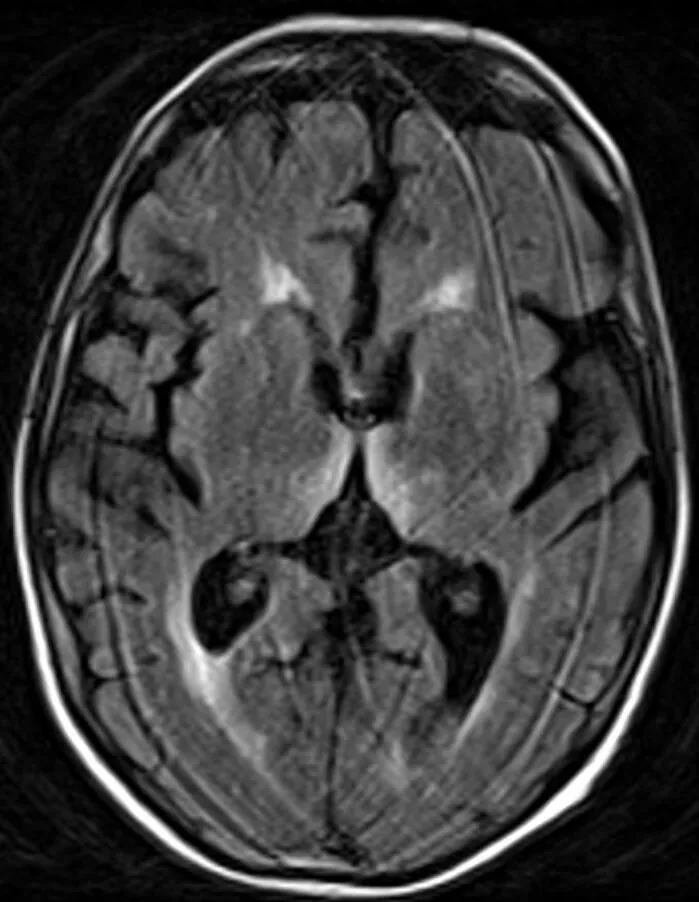
Wernicke encephalopathy (WE) is an acute neurological emergency caused by thiamine (vitamin B1) deficiency, classically presenting with confusion, ophthalmoplegia (usually nystagmus and lateral rectus weakness) and gait ataxia, although the full triad is present in only a minority. Alcohol use disorder is the commonest setting, but WE also follows hyperemesis gravidarum, bariatric surgery, malnutrition, cancer, refeeding and prolonged vomiting. Thiamine pyrophosphate is a cofactor for pyruvate dehydrogenase, alpha-ketoglutarate dehydrogenase and transketolase; deficiency causes energy failure in the mammillary bodies, medial thalami, periaqueductal grey and tectal plate. Diagnosis is clinical, supported by the Caine criteria and MRI showing symmetrical hyperintensity in these regions; treatment must never wait for tests. High-dose intravenous thiamine (for example 500 mg three times daily) is given before or with glucose. Untreated WE can be fatal or progress to Korsakoff syndrome, a chronic amnestic disorder with severe anterograde and retrograde memory loss and confabulation.
Patient case, mechanism, investigations, management, flashcards and exam-style questions.Open the lesson →
Key facts
- Classic triad: confusion, ophthalmoplegia/nystagmus and ataxia; all three present in only about 10–20% at presentation
- Caine criteria (2 of 4): dietary deficiency, eye signs, cerebellar dysfunction, altered mental state or mild memory impairment; improves sensitivity in alcohol misuse
- Lesions: mammillary bodies, medial thalami, periaqueductal grey, floor of fourth ventricle and tectal plate
- Give high-dose IV thiamine (for example 500 mg three times daily for 2–3 days, then 250 mg daily) before or with glucose
- Glucose loading without thiamine can precipitate or worsen WE
- Korsakoff syndrome: severe anterograde amnesia, retrograde amnesia and confabulation with preserved alertness and working memory
- Non-alcohol causes include hyperemesis gravidarum, bariatric surgery, malignancy, dialysis, anorexia nervosa and refeeding
- Measuring thiamine levels should never delay treatment; MRI is normal in about 40%
Differential diagnosis
| Condition | Clues | Key test |
|---|---|---|
| Alcohol intoxication or withdrawal | Recent drinking, tremor, autonomic features, no ophthalmoplegia | Blood alcohol; CIWA-Ar; response to benzodiazepines |
| Hepatic encephalopathy | Asterixis, jaundice, ascites, raised ammonia | Liver function tests, ammonia |
| Posterior circulation stroke | Abrupt onset, crossed or asymmetric signs | MRI DWI and vascular imaging |
| Hypoglycaemia | Sweating, rapid onset, reversible with glucose | Capillary glucose |
| Subdural haematoma | Falls, headache, fluctuating consciousness | CT head |
| Osmotic demyelination syndrome | Recent rapid sodium correction, quadriparesis, dysarthria | MRI pontine and extrapontine lesions |
| Miller Fisher syndrome | Ophthalmoplegia, ataxia, areflexia, alert | Anti-GQ1b antibodies; nerve conduction |
Exam pearls
Guideline
EFNS guidelines for Wernicke encephalopathy (2010) and NICE CG100 Alcohol-use disorders: physical complications (2010, updated 2017)
References
- Galvin R, Bråthen G, Ivashynka A, et al.. EFNS guidelines for diagnosis, therapy and prevention of Wernicke encephalopathy. Eur J Neurol 2010.
- Sechi G, Serra A. Wernicke's encephalopathy: new clinical settings and recent advances in diagnosis and management. Lancet Neurol 2007.
- Caine D, Halliday GM, Kril JJ, et al.. Operational criteria for the classification of chronic alcoholics: identification of Wernicke's encephalopathy. J Neurol Neurosurg Psychiatry 1997.
- National Institute for Health and Care Excellence. Alcohol-use disorders: diagnosis and management of physical complications (CG100). NICE 2010.
- Penman ID, Ralston SH, Strachan MWJ, Hobson RP, eds.. Davidson's Principles and Practice of Medicine. 2022.
- Loscalzo J, Fauci AS, Kasper DL, et al., eds.. Harrison's Principles of Internal Medicine. 2022.
Related topics
By Dr Khalid Seidi (B.Sc., M.D.) · MedEd World Clinical Knowledge library. Original teaching content checked against current guidelines (November 2026); confirm the latest local guidance before clinical use. Not a substitute for clinical judgement.