Clinical Knowledge › Neurology › Dementia and cognitive disorders
Reversible causes of cognitive impairment
Reversible or potentially treatable causes of cognitive impairment are conditions whose correction can halt or reverse cognitive decline. Although fully reversible dementia is uncommon (under 1–2% in pooled studies), treatable contributors are found in many people presenting with memory or cognitive problems. The main groups are drugs (anticholinergics, sedatives, opioids), psychiatric illness (depression), metabolic and endocrine disorders (hypothyroidism, hypercalcaemia, hyponatraemia, hypoglycaemia, hepatic or uraemic encephalopathy), nutritional deficiency (vitamin B12, thiamine, folate), infections (neurosyphilis, HIV), structural lesions (normal pressure hydrocephalus, chronic subdural haematoma, tumours), autoimmune encephalitis, obstructive sleep apnoea, alcohol and non-convulsive seizures. Assessment combines an informant history, medication review, examination, a standard blood screen (FBC, electrolytes, calcium, glucose, liver tests, TSH, B12, folate) and neuroimaging. Rapid progression, young onset or focal signs demand fuller investigation.
Patient case, mechanism, investigations, management, flashcards and exam-style questions.Open the lesson →
Key facts
- Fully reversible dementia is rare (about 1% or less in modern series), but partially treatable contributors are common
- Medication toxicity is the commonest reversible cause in older adults, especially anticholinergic and sedative drugs
- Standard dementia blood screen: FBC, U&E, calcium, glucose, liver function, TSH, vitamin B12 and folate
- Test syphilis and HIV serology when there are risk factors, atypical features or young onset
- Depression causes reversible cognitive impairment but also predicts later dementia in older adults
- NPH, chronic subdural haematoma and frontal tumours are structural causes detected by CT or MRI
- Thiamine must be given before glucose in malnourished or alcohol-dependent patients to prevent Wernicke encephalopathy
- Rapid progression, onset under 65, seizures or focal signs warrant MRI, CSF and EEG to look for autoimmune, infective or neoplastic causes
Differential diagnosis
| Condition | Clues | Key test |
|---|---|---|
| Delirium | Acute fluctuating attention and altered arousal | 4AT or CAM; search for precipitant |
| Depression | Low mood, apathy, poor effort, subjective complaints exceed findings | PHQ-9 or Geriatric Depression Scale |
| Hypothyroidism | Fatigue, weight gain, cold intolerance, slowed reflex relaxation | TSH and free T4 |
| Vitamin B12 deficiency | Macrocytosis, neuropathy, dorsal column signs | Serum B12, methylmalonic acid, homocysteine |
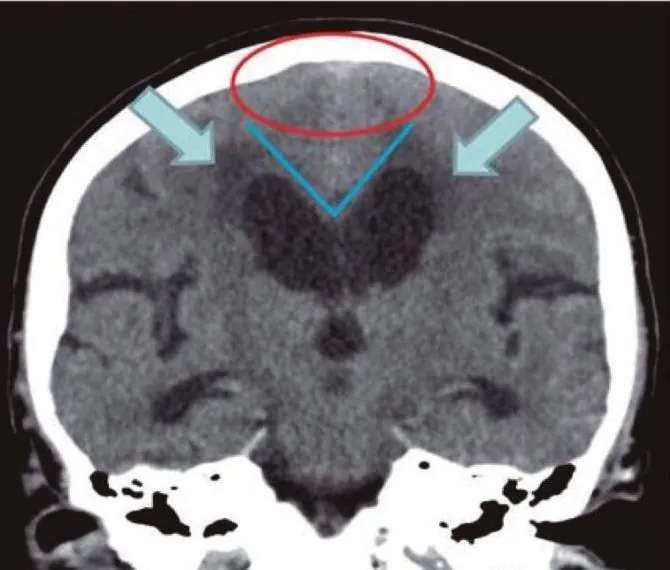
| Normal pressure hydrocephalus | Gait disturbance and urinary incontinence | CT or MRI with ventriculomegaly; tap test |
| Chronic subdural haematoma | Falls, anticoagulants, fluctuating confusion, headache | CT head |
| Neurosyphilis | Personality change, Argyll Robertson pupils, tabes | Serum treponemal test then CSF VDRL |
| Autoimmune encephalitis | Subacute memory loss, seizures, psychiatric change | MRI, CSF and neuronal antibodies |
Exam pearls
Guideline
NICE NG97 Dementia (2018), NICE NG239 Vitamin B12 deficiency (2024), AAN MCI guideline (2018) and DSM-5-TR (2022)
References
- Clarfield AM. The decreasing prevalence of reversible dementias: an updated meta-analysis. Arch Intern Med 2003.
- National Institute for Health and Care Excellence. Dementia: assessment, management and support for people living with dementia and their carers (NG97). NICE 2018.
- National Institute for Health and Care Excellence. Vitamin B12 deficiency in over 16s: diagnosis and management (NG239). NICE 2024.
- Petersen RC, Lopez O, Armstrong MJ, et al.. Practice guideline update summary: Mild cognitive impairment [RETIRED]: Report of the Guideline Development, Dissemination, and Implementation Subcommittee of the American Academy of Neurology. Neurology 2018.
- American Psychiatric Association. Diagnostic and Statistical Manual of Mental Disorders, Fifth Edition, Text Revision (DSM-5-TR). 2022.
- Penman ID, Ralston SH, Strachan MWJ, Hobson RP, eds.. Davidson's Principles and Practice of Medicine. 2022.
Related topics
By Dr Khalid Seidi (B.Sc., M.D.) · MedEd World Clinical Knowledge library. Original teaching content checked against current guidelines (November 2026); confirm the latest local guidance before clinical use. Not a substitute for clinical judgement.