Clinical Knowledge › Neurology › Movement disorders and ataxias
Ataxia telangiectasia
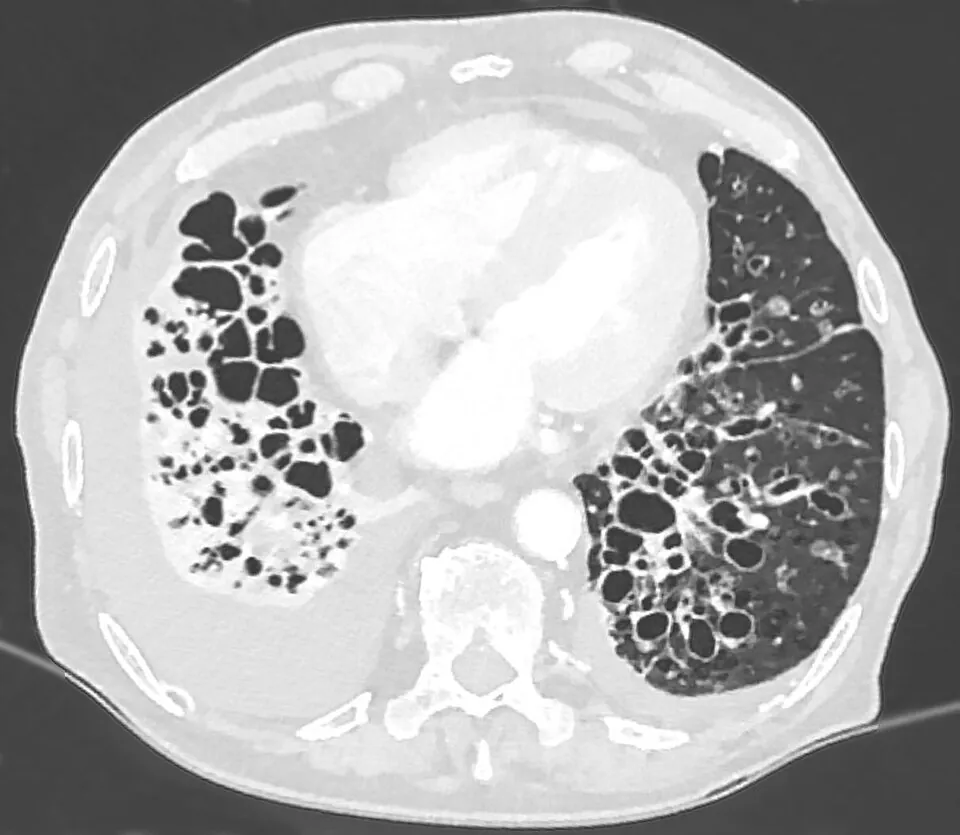
Ataxia telangiectasia (A-T) is an autosomal recessive multisystem disorder caused by biallelic mutations in ATM on chromosome 11q22–23. ATM coordinates the response to DNA double-strand breaks, so its loss causes genomic instability, cerebellar degeneration, immunodeficiency, cancer predisposition and extreme radiosensitivity. Truncal ataxia develops in the toddler years, then oculomotor apraxia, dysarthria and choreoathetosis; most need a wheelchair by about 10. Oculocutaneous telangiectasias appear at 3–6 years. Combined immunodeficiency (low IgA, IgG2 and IgE, lymphopenia) causes sinopulmonary infections and bronchiectasis, and about a quarter develop malignancy, mainly lymphoma and leukaemia. Serum alpha-fetoprotein is raised in over 95% and is the key screening test; ATM genetic testing confirms. Management minimises radiation, prevents infection (antibiotics, immunoglobulin), supports nutrition and lungs and monitors for cancer. Median survival is about 25 years.
Patient case, mechanism, investigations, management, flashcards and exam-style questions.Open the lesson →
Key facts
- Autosomal recessive; ATM gene (chromosome 11q22–23) encodes a kinase that senses DNA double-strand breaks
- Progressive cerebellar ataxia from 1–3 years, often first labelled as clumsiness or ataxic cerebral palsy
- Oculocutaneous telangiectasias (bulbar conjunctiva, ears, cheeks) appear later, typically at 3–6 years
- Oculomotor apraxia (head thrusts to initiate saccades), dysarthria, choreoathetosis, drooling, neuropathy
- Immunodeficiency: low IgA, IgG2, IgE, lymphopenia; recurrent sinopulmonary infections and bronchiectasis
- Raised serum alpha-fetoprotein in over 95% (after about 2 years) is the best screening test
- Cancer risk about 25% lifetime (lymphoma, leukaemia in childhood; solid tumours in adults); heterozygous carriers have increased breast cancer risk
- Radiosensitivity: avoid unnecessary X-rays and CT; radiotherapy and some chemotherapy doses must be modified
Differential diagnosis
| Condition | Clues | Key test |
|---|---|---|
| Friedreich ataxia | Onset later (5–15), areflexia with extensor plantars, cardiomyopathy, normal AFP | FXN testing |
| Ataxic cerebral palsy | Non-progressive, perinatal history | Clinical course, MRI |
| Ataxia with oculomotor apraxia type 1 and 2 | Oculomotor apraxia; AOA2 has raised AFP but no immunodeficiency | Genetic testing, albumin, cholesterol |
| Nijmegen breakage syndrome | Microcephaly, immunodeficiency, radiosensitivity, no ataxia | NBN testing |
| Acute post-infectious cerebellitis | Acute onset after infection, recovers | Clinical course |
| Posterior fossa tumour | Progressive ataxia with headache, vomiting, papilloedema | MRI |
| Primary immunodeficiencies (CVID, SCID) | Infections without ataxia | Immunology work-up |
Exam pearls
Guideline
Ataxia-telangiectasia recommendations for multidisciplinary treatment (2017) and clinical review (2016); primary immunodeficiency management principles
References
- Rothblum-Oviatt C, Wright J, Lefton-Greif MA, et al.. Ataxia telangiectasia: a review. Orphanet J Rare Dis 2016.
- van Os NJH, Haaxma CA, van der Flier M, et al.. Ataxia-telangiectasia: recommendations for multidisciplinary treatment. Dev Med Child Neurol 2017.
- Ropper AH, Samuels MA, Klein JP, Prasad S.. Adams and Victor's Principles of Neurology. 2023.
- Jankovic J, Mazziotta JC, Pomeroy SL, Newman NJ, eds.. Bradley and Daroff's Neurology in Clinical Practice. 2022.
- Papadakis MA, Rabow MW, McQuaid KR, eds.. CURRENT Medical Diagnosis & Treatment 2026. 2026.
- de Silva RN, Vallortigara J, Greenfield J, et al.. Diagnosis and management of progressive ataxia in adults. Pract Neurol 2019.
Related topics
By Dr Khalid Seidi (B.Sc., M.D.) · MedEd World Clinical Knowledge library. Original teaching content checked against current guidelines (November 2026); confirm the latest local guidance before clinical use. Not a substitute for clinical judgement.