Clinical Knowledge › Internal medicine › Gastroenterology and hepatology › Diseases of the small intestine
Chronic mesenteric ischaemia
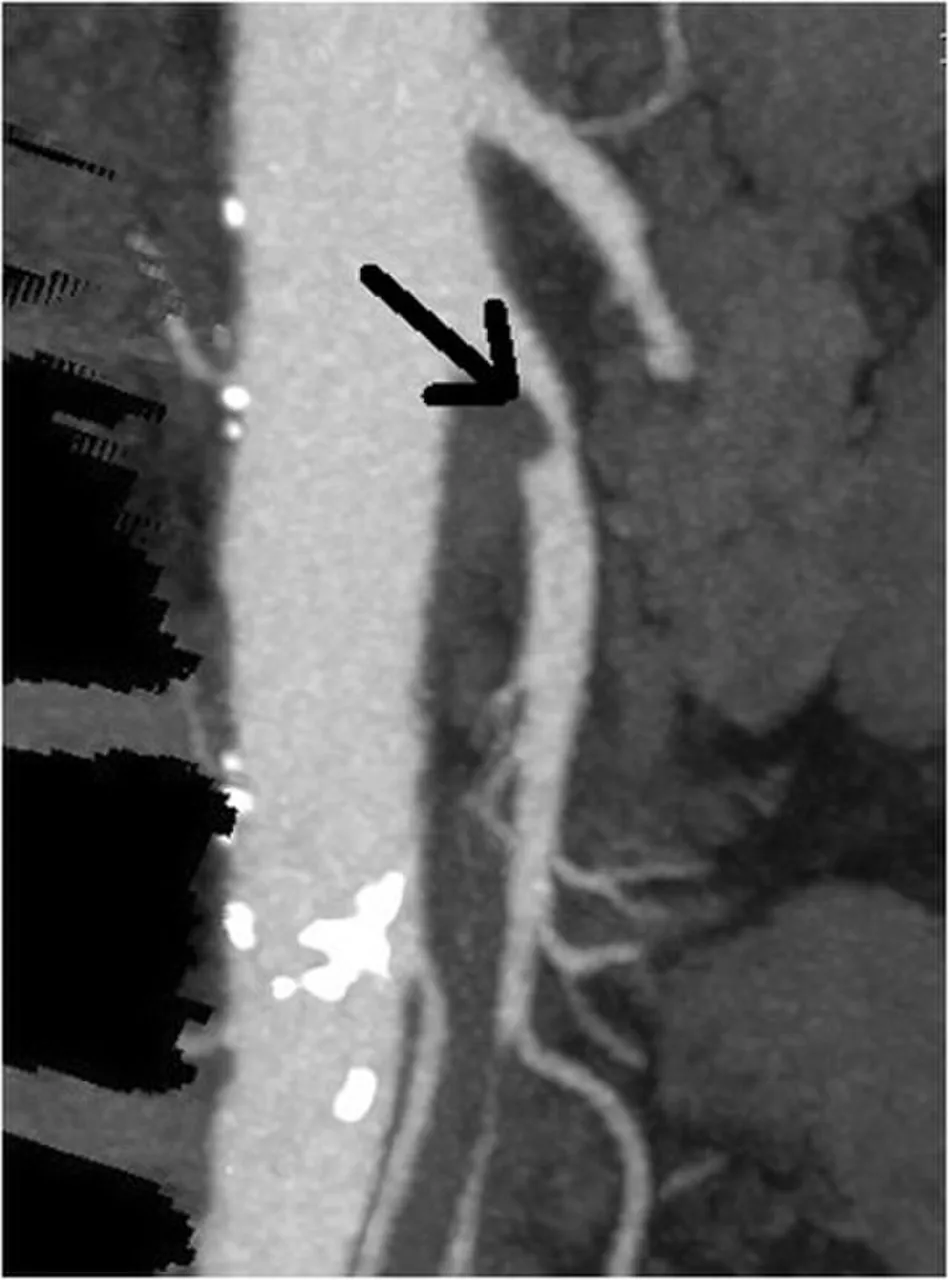
Chronic mesenteric ischaemia (CMI) is recurrent intestinal hypoperfusion that appears when gut blood flow cannot rise to meet the demand of digestion. Almost all cases are due to atherosclerosis at the origins of the coeliac trunk and superior mesenteric artery (SMA). Vasculitis and ligament compression are rare causes.Because collaterals are rich, symptoms usually need severe disease in two or more vessels or a critical SMA lesion. The classic patient is an older smoker, more often a woman, with cramping pain 15–60 minutes after meals, fear of eating and marked weight loss. The diagnosis is often delayed for months while cancer is sought. CT angiography is the main test, and duplex ultrasound is a useful screen in experienced hands. Symptoms plus significant stenosis, agreed by a multidisciplinary team, establish the diagnosis. Treatment is revascularisation, with endovascular stenting of the SMA first-line and open bypass for selected patients. Antiplatelets, a statin and stopping smoking are also needed. Untreated CMI can progress to fatal acute mesenteric thrombosis.
Patient case, mechanism, investigations, management, flashcards and exam-style questions.Open the lesson →
Key facts
- CMI is postprandial intestinal ischaemia, usually from atherosclerotic stenosis or occlusion at the origins of the coeliac trunk and SMA
- Classic triad: postprandial abdominal pain (15–60 minutes after eating), fear of food and unintentional weight loss
- Rich collaterals (pancreaticoduodenal arcades, marginal artery, arc of Riolan) mean symptoms usually require severe disease in two or more vessels or a critical SMA lesion
- Typical patient: woman in her sixties or older who smokes and has other atherosclerotic disease; abdominal bruit may be heard
- CT angiography is the main diagnostic test; duplex ultrasound (SMA peak systolic velocity about 275 cm/s or more suggests at least 70% stenosis) is a screening tool
- Diagnosis needs compatible symptoms plus significant stenosis, after other causes such as malignancy and peptic ulcer are excluded, ideally by multidisciplinary consensus
- Endovascular revascularisation of the SMA with a balloon-expandable (covered) stent is first-line; open bypass or endarterectomy suits selected fit or anatomically unsuitable patients
- Untreated symptomatic CMI risks acute-on-chronic mesenteric thrombosis with bowel infarction, which carries a high mortality
Differential diagnosis
| Condition | Clues | Key test |
|---|---|---|
| Gastric or pancreatic cancer | Weight loss, anorexia, early satiety; mass or obstructive jaundice | Upper endoscopy and contrast CT of the pancreas |
| Peptic ulcer disease | Epigastric pain related to meals, NSAID use, H. pylori; weight usually preserved | Upper endoscopy; H. pylori testing |
| Biliary colic or chronic cholecystitis | Right upper quadrant pain after fatty meals, lasting hours | Abdominal ultrasound |
| Median arcuate ligament syndrome | Young, thin woman; coeliac compression worse in expiration; SMA normal | Duplex or CT angiography in inspiration and expiration |
| Superior mesenteric artery syndrome | Postprandial vomiting after major weight loss; duodenum compressed between aorta and SMA | CT showing narrow aortomesenteric angle and dilated proximal duodenum |
| Functional dyspepsia or gastroparesis | Postprandial fullness without weight loss or vascular disease | Endoscopy normal; gastric emptying study |
| Crohn disease of the small bowel | Younger patient, diarrhoea, raised CRP and faecal calprotectin | Ileocolonoscopy and MR enterography |
Exam pearls
Guideline
ESVS 2025 clinical practice guidelines on diseases of the mesenteric and renal arteries and veins, SVS clinical practice guidelines on chronic mesenteric ischaemia (2021), joint European (UEG/ESGAR/CIRSE and others) CMI guideline (2020) and ACR Appropriateness Criteria on radiologic management of mesenteric ischaemia (2022 update)
References
- Koelemay MJ, Geelkerken RH, Kärkkäinen J, et al.. European Society for Vascular Surgery (ESVS) 2025 Clinical Practice Guidelines on the Management of Diseases of the Mesenteric and Renal Arteries and Veins. Eur J Vasc Endovasc Surg 2025.
- Huber TS, Björck M, Chandra A, et al.. Chronic mesenteric ischemia: clinical practice guidelines from the Society for Vascular Surgery. J Vasc Surg 2021.
- Terlouw LG, Moelker A, Abrahamsen J, et al.. European guidelines on chronic mesenteric ischaemia – joint United European Gastroenterology, European Association for Gastroenterology, Endoscopy and Nutrition, European Society of Gastrointestinal and Abdominal Radiology, Netherlands Association of Hepatogastroenterologists, Hellenic Society of Gastroenterology, Cardiovascular and Interventional Radiological Society of Europe, and Dutch Mesenteric Ischemia Study group clinical guidelines on the diagnosis and treatment of patients with chronic mesenteric ischaemia. United European Gastroenterol J 2020.
- Lam A, Kim YJ, Fidelman N, et al.. ACR Appropriateness Criteria Radiologic Management of Mesenteric Ischemia: 2022 Update. J Am Coll Radiol 2022.
- Björck M, Koelemay M, Acosta S, et al.. Management of the Diseases of Mesenteric Arteries and Veins: Clinical Practice Guidelines of the European Society of Vascular Surgery (ESVS). Eur J Vasc Endovasc Surg 2017.
- Mazzolai L, Teixido-Tura G, Lanzi S, et al.. 2024 ESC Guidelines for the management of peripheral arterial and aortic diseases. Eur Heart J 2024.
Related topics
By Dr Khalid Seidi (B.Sc., M.D.) · MedEd World Clinical Knowledge library. Original teaching content checked against current guidelines (November 2026); confirm the latest local guidance before clinical use. Not a substitute for clinical judgement.