Clinical Knowledge › Internal medicine › Gastroenterology and hepatology › Diseases of the small intestine
Gastrointestinal neuroendocrine tumours (carcinoid)
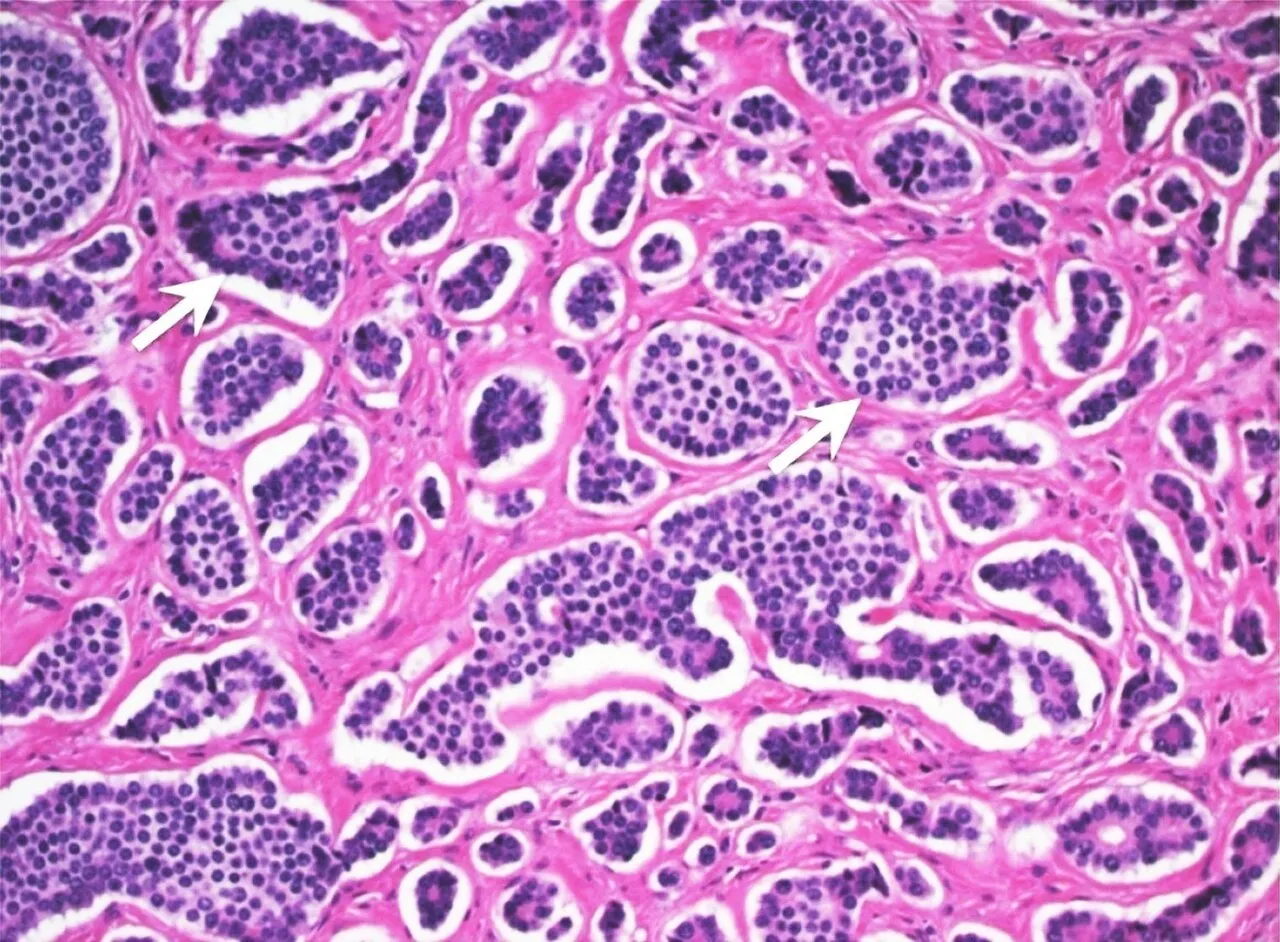
Gastrointestinal neuroendocrine neoplasms (NENs) arise from enteroendocrine cells. Most are well-differentiated neuroendocrine tumours (NETs), the lesions once called carcinoids, and they are graded G1 to G3 by Ki-67 index and mitotic count. Poorly differentiated neuroendocrine carcinomas are aggressive and treated like small cell cancer. Common sites are the small intestine (mainly the ileum), rectum, appendix and stomach.Small-intestinal NETs grow slowly but often spread to mesenteric nodes, with fibrosis, and to the liver. Once liver metastases let serotonin and other amines bypass hepatic breakdown, about a third of patients develop carcinoid syndrome: flushing, diarrhoea, bronchospasm and right-sided valve disease. Diagnosis rests on histology (synaptophysin, chromogranin A, Ki-67), urinary or plasma 5-HIAA, cross-sectional imaging and somatostatin receptor PET. Localised tumours are resected with lymphadenectomy. Advanced disease is treated with somatostatin analogues, radioligand therapy with lutetium-177 dotatate, everolimus or cabozantinib, liver-directed therapy and symptom control.
Patient case, mechanism, investigations, management, flashcards and exam-style questions.Open the lesson →
Key facts
- NENs are divided into well-differentiated NETs (G1 Ki-67 below 3%, G2 3–20%, G3 above 20%) and poorly differentiated neuroendocrine carcinomas (NECs), following the WHO/IARC framework
- Common GI sites: small intestine (mostly distal ileum, often multifocal), rectum, appendix, stomach and duodenum; pancreatic NETs are considered separately
- Carcinoid syndrome (flushing, secretory diarrhoea, bronchospasm, right-heart valve disease) occurs in about 30% of small-intestinal NETs, usually with liver metastases
- Best biochemical test for carcinoid syndrome: 24-hour urinary (or plasma) 5-HIAA; chromogranin A is non-specific and falsely raised by PPIs, atrophic gastritis and renal failure
- Somatostatin receptor PET-CT (gallium-68 or copper-64 labelled DOTA peptides) is the preferred functional imaging for well-differentiated NETs
- Localised small-intestinal NET: segmental resection with systematic mesenteric lymphadenectomy and palpation of the whole small bowel for multifocal tumours
- Advanced well-differentiated NETs: somatostatin analogues (octreotide LAR, lanreotide) first-line; lutetium-177 dotatate (NETTER-1, NETTER-2), everolimus and cabozantinib (CABINET) later or in selected patients
- Carcinoid crisis (hypotension, flushing, bronchospasm) can follow anaesthesia, surgery or tumour manipulation; prevent and treat with octreotide
Differential diagnosis
| Condition | Clues | Key test |
|---|---|---|
| Irritable bowel syndrome | Chronic intermittent diarrhoea and pain without flushing, weight loss or liver lesions | Normal 5-HIAA, calprotectin and imaging |
| Menopausal or idiopathic flushing | Flushing without diarrhoea; dry heat in perimenopause | Clinical context; normal 5-HIAA |
| Systemic mastocytosis | Flushing, urticaria pigmentosa, anaphylaxis | Serum tryptase; skin or bone marrow biopsy |
| Phaeochromocytoma | Paroxysmal pallor (not flushing), headache, hypertension | Plasma or urine metanephrines |
| Medullary thyroid cancer | Diarrhoea and flushing with a thyroid nodule | Calcitonin; thyroid ultrasound and FNA |
| VIPoma | Profuse watery diarrhoea, hypokalaemia, achlorhydria | Fasting VIP level; pancreatic imaging |
| Small-bowel adenocarcinoma or lymphoma | Obstruction, bleeding, weight loss; no carcinoid features | CT or MR enterography and biopsy |
| Crohn disease | Terminal ileal disease with diarrhoea and pain | Raised calprotectin; ileocolonoscopy and biopsy |
Exam pearls
Guideline
ENETS 2024 guidance paper for well-differentiated small intestine NETs (with the ENETS 2023 guidance papers for other digestive NENs), ESMO Clinical Practice Guideline for gastroenteropancreatic NENs (2020), NCCN Neuroendocrine and Adrenal Tumors guideline (current version) and the WHO/IARC NEN classification framework (2018–2019)
References
- Lamarca A, Bartsch DK, Caplin M, et al.. European Neuroendocrine Tumor Society (ENETS) 2024 guidance paper for the management of well-differentiated small intestine neuroendocrine tumours. J Neuroendocrinol 2024.
- Pavel M, Öberg K, Falconi M, et al.. Gastroenteropancreatic neuroendocrine neoplasms: ESMO Clinical Practice Guidelines for diagnosis, treatment and follow-up. Ann Oncol 2020.
- Rindi G, Klimstra DS, Abedi-Ardekani B, et al.. A common classification framework for neuroendocrine neoplasms: an International Agency for Research on Cancer (IARC) and World Health Organization (WHO) expert consensus proposal. Mod Pathol 2018.
- Strosberg J, El-Haddad G, Wolin E, et al.. Phase 3 Trial of 177Lu-Dotatate for Midgut Neuroendocrine Tumors. N Engl J Med 2017.
- Singh S, Halperin D, Myrehaug S, et al.. [177Lu]Lu-DOTA-TATE plus long-acting octreotide versus high-dose long-acting octreotide for the treatment of newly diagnosed, advanced grade 2-3, well-differentiated, gastroenteropancreatic neuroendocrine tumours (NETTER-2): an open-label, randomised, phase 3 study. Lancet 2024.
- Chan JA, Geyer S, Zemla T, et al.. Phase 3 Trial of Cabozantinib to Treat Advanced Neuroendocrine Tumors. N Engl J Med 2025.
Related topics
By Dr Khalid Seidi (B.Sc., M.D.) · MedEd World Clinical Knowledge library. Original teaching content checked against current guidelines (November 2026); confirm the latest local guidance before clinical use. Not a substitute for clinical judgement.