Clinical Knowledge › Internal medicine › Rheumatology and immunology › Immunodeficiency
Complement deficiencies
Complement deficiencies are inherited or acquired losses of complement proteins or their regulators. The phenotype depends on where the cascade breaks. Deficiency of early classical components (C1q, C1r/s, C4, C2) causes lupus-like autoimmunity, with C1q deficiency carrying the highest risk; C2 deficiency is the commonest inherited form in people of European descent. C3 deficiency, or secondary C3 depletion from factor H or factor I deficiency, causes severe pyogenic infections and glomerulonephritis. Terminal pathway (C5–C9) and properdin deficiencies cause recurrent or unusual-serogroup meningococcal disease. Regulator defects cause hereditary angioedema and atypical haemolytic uraemic syndrome. The commonest acquired deficiency today is drug-induced: C5 and proximal complement inhibitors greatly increase meningococcal risk. Screening uses CH50 and AP50, then individual components. Management is vaccination against meningococcus, pneumococcus and Haemophilus, antibiotic plans, family testing and treatment of autoimmunity.
Patient case, mechanism, investigations, management, flashcards and exam-style questions.Open the lesson →
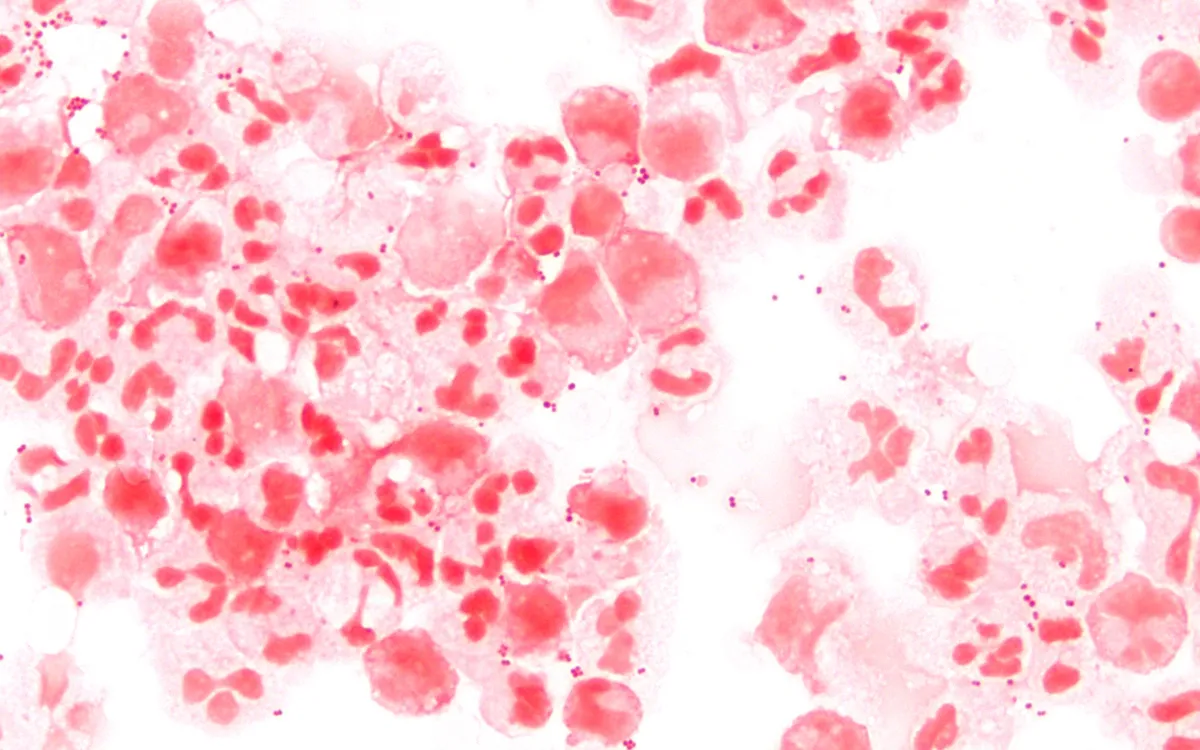
Key facts
- Early classical deficiency (C1q, C1r/s, C4, C2) → SLE-like disease; risk about 90% with C1q, about 75% with C4, 10–30% with C2
- C2 deficiency is the commonest inherited complement deficiency in Europeans (about 1 in 20 000 homozygous)
- C3 deficiency (or factor H/factor I deficiency causing C3 consumption) → severe recurrent pyogenic infection and membranoproliferative glomerulonephritis
- Terminal component (C5–C9) deficiency raises meningococcal risk up to several thousand-fold; infections recur and involve uncommon serogroups (Y, W, X, E)
- Properdin deficiency is X-linked and can cause fulminant, often fatal, meningococcal disease in boys
- Screen with CH50 (classical) and AP50 (alternative); both low suggests C3 or C5–C9; CH50 low alone suggests C1, C4 or C2
- C5 inhibitors (eculizumab, ravulizumab) and factor B/D or C3 inhibitors cause an acquired deficiency: vaccinate at least 2 weeks before starting
- Vaccinate with MenACWY and MenB (with boosters), pneumococcal and Hib vaccines; give an emergency antibiotic plan and test relatives
Differential diagnosis
| Condition | Clues | Key test |
|---|---|---|
| Asplenia or hyposplenism | Howell–Jolly bodies; pneumococcal sepsis; normal complement | Blood film, ultrasound spleen; CH50/AP50 normal |
| Antibody deficiency (CVID, XLA) | Recurrent sinopulmonary infection; low globulin | Immunoglobulins and vaccine responses |
| Consumption in active SLE or cryoglobulinaemia | Low C3 and C4 that recover with treatment; anti-dsDNA or cryoglobulins | Repeat complement in remission; autoantibodies |
| Hereditary angioedema | Swelling without urticaria; low C4 with normal C3 | C1-inhibitor level and function |
| Sporadic meningococcal disease | First episode with serogroup B in an infant or adolescent | Serogroup; complement screen if recurrent or uncommon serogroup |
| C3 nephritic factor (acquired C3 consumption) | C3 glomerulopathy, partial lipodystrophy; low C3, normal C4 | C3NeF assay, factor H, renal biopsy |
| Atypical HUS from factor H/I/MCP variants | Haemolysis, low platelets, AKI without diarrhoea | Complement genetics, ADAMTS13 to exclude TTP |
Exam pearls
Guideline
ACIP meningococcal vaccination recommendations (2020, with 2023–2026 updates on pentavalent MenABCWY vaccines) and IUIS classification of inborn errors of immunity (2024 update)
References
- Mbaeyi SA, Bozio CH, Duffy J, et al.. Meningococcal vaccination: recommendations of the Advisory Committee on Immunization Practices, United States, 2020. MMWR Recomm Rep 2020.
- Poli MC, Aksentijevich I, Bousfiha AA, et al.. Human inborn errors of immunity: 2024 update on the classification from the International Union of Immunological Societies Expert Committee. J Hum Immun 2025.
- Skattum L, van Deuren M, van der Poll T, Truedsson L. Complement deficiency states and associated infections. Mol Immunol 2011.
- Ram S, Lewis LA, Rice PA. Infections of people with complement deficiencies and patients who have undergone splenectomy. Clin Microbiol Rev 2010.
- Bonilla FA, Khan DA, Ballas ZK, et al.. Practice parameter for the diagnosis and management of primary immunodeficiency. J Allergy Clin Immunol 2015.
- Abbas AK, Lichtman AH, Pillai S. Cellular and Molecular Immunology. 2021.
Related topics
By Dr Khalid Seidi (B.Sc., M.D.) · MedEd World Clinical Knowledge library. Original teaching content checked against current guidelines (November 2026); confirm the latest local guidance before clinical use. Not a substitute for clinical judgement.