Clinical Knowledge › Internal medicine › Rheumatology and immunology › Immunodeficiency
Hyper-IgE syndrome (Job syndrome)
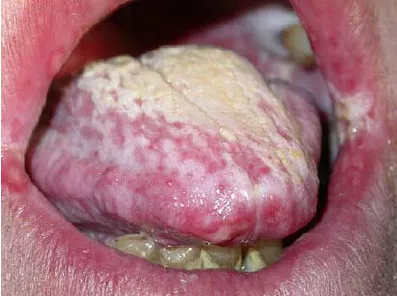
Hyper-IgE syndromes combine very high IgE, eczema and recurrent skin and lung infection. The classic autosomal dominant form, Job syndrome, is caused by dominant-negative STAT3 variants. Defective STAT3 signalling prevents Th17 differentiation, so IL-17 and IL-22 fail to recruit neutrophils and induce antimicrobial peptides in skin and airway. Patients have a newborn rash, eczema, 'cold' staphylococcal abscesses with little fever or redness, recurrent Staphylococcus aureus pneumonia that heals with pneumatoceles later colonised by Aspergillus and Pseudomonas, and chronic mucocutaneous candidiasis. Connective tissue and skeletal features are distinctive: retained primary teeth, scoliosis, minimal-trauma fractures, joint hyperextensibility and arterial aneurysms. IgE is usually above 2000 IU/mL with eosinophilia. Autosomal recessive DOCK8 deficiency is a combined immunodeficiency with severe allergy, viral skin infections and cancer, cured by transplantation. STAT3 disease is managed with antistaphylococcal and antifungal prophylaxis, skin care and early treatment of chest infection.
Patient case, mechanism, investigations, management, flashcards and exam-style questions.Open the lesson →
Key facts
- Classic (Job) syndrome: autosomal dominant, dominant-negative STAT3 variants; many are de novo
- Triad: very high IgE (usually over 2000 IU/mL), recurrent staphylococcal skin abscesses and recurrent pneumonia
- Absent Th17 cells explain poor neutrophil recruitment to skin and lung and susceptibility to Staphylococcus aureus and Candida
- Abscesses are 'cold': little warmth, pain or fever, and CRP may be only modestly raised
- Pneumonia heals with pneumatoceles and bronchiectasis, later infected by Aspergillus and Pseudomonas
- Non-immune features: retained primary teeth, scoliosis, minimal-trauma fractures, hyperextensible joints, arterial aneurysms
- DOCK8 deficiency (autosomal recessive): severe atopy and food allergy, warts, molluscum and herpes infections, cancer; treated by HCT
- Management: long-term antistaphylococcal prophylaxis, antifungal prophylaxis when cysts present, skin antisepsis, often immunoglobulin
Differential diagnosis
| Condition | Clues | Key test |
|---|---|---|
| Severe atopic dermatitis | High IgE and eczema but no pneumatoceles, fractures or retained teeth | Clinical features; normal Th17; NIH score low |
| DOCK8 deficiency | Autosomal recessive; food allergy, warts, molluscum, low T cells | Lymphocyte subsets, DOCK8 protein flow, genetics |
| Chronic granulomatous disease | Abscesses and pneumonia with Aspergillus; IgE not markedly high | DHR flow test |
| Wiskott–Aldrich syndrome | Eczema, high IgE, infections in a boy | Low platelets with small MPV |
| Cystic fibrosis with ABPA | Aspergillus, high IgE, bronchiectasis | Sweat test; no skin abscesses |
| Netherton syndrome (SPINK5) | Erythroderma, high IgE, hair shaft defects | SPINK5 genetics |
| APECED (AIRE) | Chronic mucocutaneous candidiasis | Endocrine failure, anti-IL-17/IL-22 antibodies; normal IgE |
Exam pearls
Guideline
IUIS classification of inborn errors of immunity (2024 update), ESID working definitions (2019) and NIH-based STAT3-HIES diagnostic guidelines (2010)
References
- Grimbacher B, Holland SM, Gallin JI, et al.. Hyper-IgE syndrome with recurrent infections – an autosomal dominant multisystem disorder. N Engl J Med 1999.
- Holland SM, DeLeo FR, Elloumi HZ, et al.. STAT3 mutations in the hyper-IgE syndrome. N Engl J Med 2007.
- Woellner C, Gertz EM, Schäffer AA, et al.. Mutations in STAT3 and diagnostic guidelines for hyper-IgE syndrome. J Allergy Clin Immunol 2010.
- Zhang Q, Davis JC, Lamborn IT, et al.. Combined immunodeficiency associated with DOCK8 mutations. N Engl J Med 2009.
- Poli MC, Aksentijevich I, Bousfiha AA, et al.. Human inborn errors of immunity: 2024 update on the classification from the International Union of Immunological Societies Expert Committee. J Hum Immun 2025.
- Seidel MG, Kindle G, Gathmann B, et al.. The European Society for Immunodeficiencies (ESID) Registry working definitions for the clinical diagnosis of inborn errors of immunity. J Allergy Clin Immunol Pract 2019.
Related topics
By Dr Khalid Seidi (B.Sc., M.D.) · MedEd World Clinical Knowledge library. Original teaching content checked against current guidelines (November 2026); confirm the latest local guidance before clinical use. Not a substitute for clinical judgement.