Clinical Knowledge › Internal medicine › Rheumatology and immunology › Immunodeficiency
X-linked agammaglobulinaemia (Bruton)
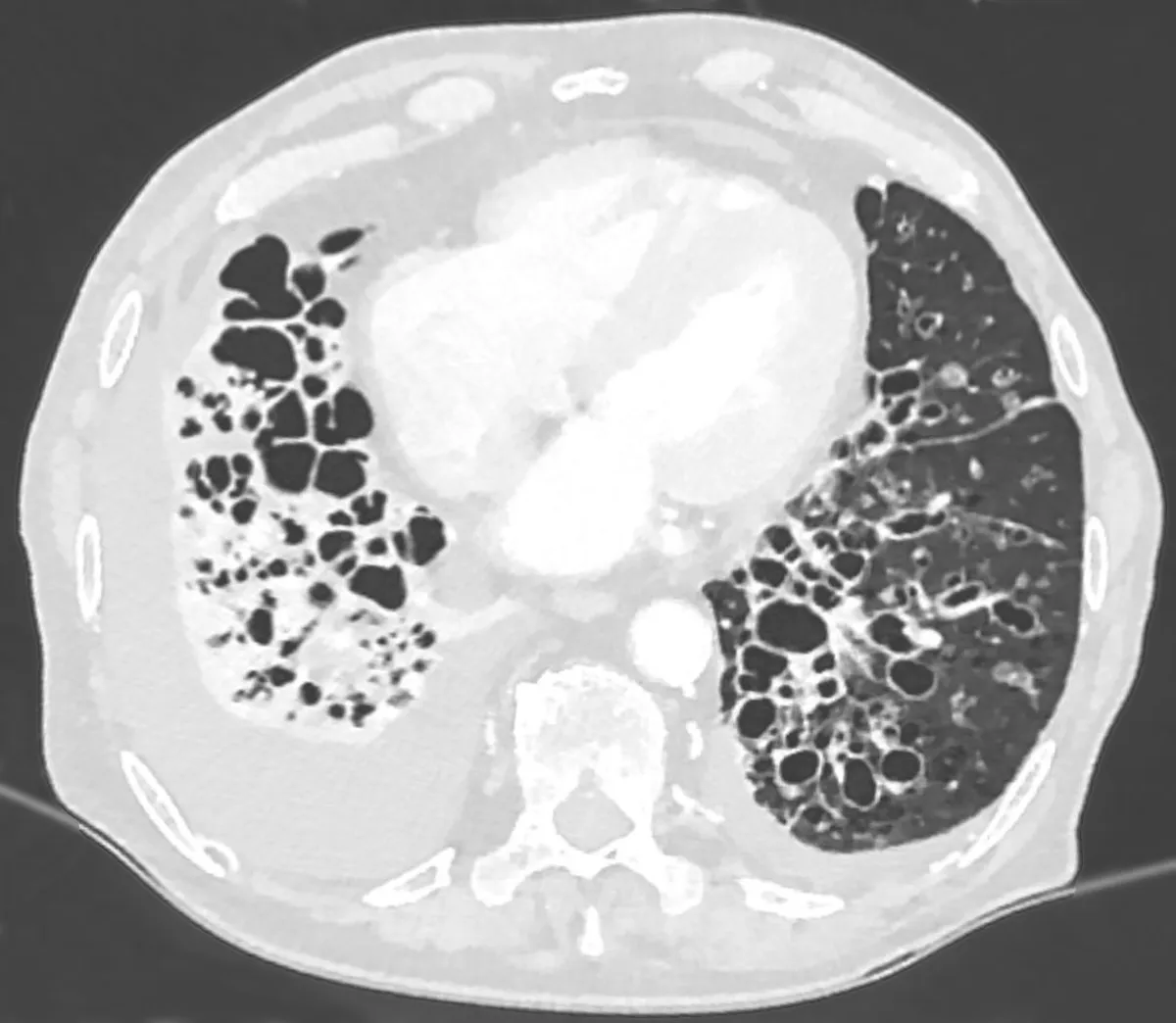
X-linked agammaglobulinaemia (XLA, Bruton disease) is an inborn error of immunity caused by pathogenic variants in BTK, the gene for Bruton tyrosine kinase on Xq22. Without BTK signalling through the pre-B-cell receptor, B-cell development stops in the bone marrow, so boys have almost no circulating B cells (below 2% CD19+), no plasma cells and very low levels of all immunoglobulin classes. Infants are protected by maternal IgG for the first months and typically present between 6 and 18 months with recurrent otitis, sinusitis and pneumonia caused by encapsulated bacteria, diarrhoea from Giardia or Campylobacter, septic arthritis and, characteristically, chronic enteroviral meningoencephalitis or vaccine-associated polio. Examination shows tiny tonsils and absent lymph nodes. Diagnosis rests on immunoglobulins, B-cell flow cytometry and BTK genetic or protein testing. Treatment is lifelong immunoglobulin replacement aiming for a trough IgG of at least 8 g/L, prompt antibiotics, avoidance of live vaccines and surveillance for bronchiectasis. Mothers should be offered carrier testing.
Patient case, mechanism, investigations, management, flashcards and exam-style questions.Open the lesson →
Key facts
- Caused by pathogenic variants in BTK (Xq22); affects boys, about 1 in 100 000–250 000 male births; about a third to half are new mutations
- B-cell maturation arrests at the pro-B to pre-B stage: circulating CD19+ B cells below 2% with normal T-cell numbers
- All immunoglobulin classes are very low (IgG usually below 2 g/L) and vaccine antibody responses are absent
- Symptoms begin after about 6 months, when transplacental maternal IgG wanes
- Infections: encapsulated bacteria (pneumococcus, Haemophilus), Giardia, Campylobacter, Mycoplasma/Ureaplasma arthritis, and enteroviruses (echovirus meningoencephalitis, vaccine-associated polio)
- Clinical clue: absent or tiny tonsils, adenoids and lymph nodes despite repeated infections
- Lifelong IgG replacement 0.4–0.6 g/kg per month IV every 3–4 weeks or the same total subcutaneously, aiming for trough IgG at least 8 g/L and adjusted to infection control
- Live vaccines (oral polio, rotavirus) are contraindicated; serology cannot be used to diagnose infections
Differential diagnosis
| Condition | Clues | Key test |
|---|---|---|
| Transient hypogammaglobulinaemia of infancy | Low IgG but normal B cells and vaccine responses; improves by 2–4 years | CD19 count normal; repeat immunoglobulins |
| Autosomal recessive agammaglobulinaemia | Same phenotype in girls or consanguineous families | Genes for mu heavy chain, Igα, Igβ, BLNK |
| Common variable immunodeficiency | Later onset (usually after age 4), B cells usually present, autoimmunity | B-cell count, switched memory B cells |
| Hyper-IgM syndrome (CD40L deficiency) | Boys with low IgG and IgA but normal or high IgM, Pneumocystis, Cryptosporidium | IgM level, CD40L expression on activated T cells |
| Severe combined immunodeficiency | Onset in first months, viral and fungal infections, failure to thrive | Lymphopenia, low T cells, TREC |
| Cystic fibrosis | Recurrent chest infections and failure to thrive | Sweat chloride; normal immunoglobulins |
| Secondary hypogammaglobulinaemia (protein loss) | Nephrotic syndrome or enteropathy | Low albumin, normal B cells |
Exam pearls
Guideline
ESID Registry Working Definitions for clinical diagnosis of inborn errors of immunity (2019), IUIS classification of inborn errors of immunity (2024 update, published 2025) and AAAAI review on the use of immunoglobulin in human disease (2017)
References
- Seidel MG, Kindle G, Gathmann B, et al.. The European Society for Immunodeficiencies (ESID) Registry Working Definitions for the Clinical Diagnosis of Inborn Errors of Immunity. J Allergy Clin Immunol Pract 2019.
- Poli MC, Aksentijevich I, Bousfiha AA, et al.. Human inborn errors of immunity: 2024 update on the classification from the International Union of Immunological Societies Expert Committee. J Hum Immun 2025.
- Perez EE, Orange JS, Bonilla F, et al.. Update on the use of immunoglobulin in human disease: a review of evidence. J Allergy Clin Immunol 2017.
- Bruton OC. Agammaglobulinemia. Pediatrics 1952.
- Smith CIE. From identification of the BTK kinase to effective management of leukemia. Oncogene 2017.
- Murphy K, Weaver C, Berg L. Janeway's Immunobiology. 2022.
Related topics
By Dr Khalid Seidi (B.Sc., M.D.) · MedEd World Clinical Knowledge library. Original teaching content checked against current guidelines (November 2026); confirm the latest local guidance before clinical use. Not a substitute for clinical judgement.