Clinical Knowledge › Paediatrics › Paediatric infectious diseases
Congenital infections (TORCH)
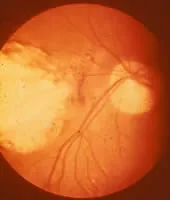
TORCH is a mnemonic for infections transmitted from mother to fetus or newborn that cause overlapping features: Toxoplasma gondii, Other (syphilis, varicella zoster virus, parvovirus B19, Zika virus, HIV, hepatitis B, enteroviruses, Listeria), Rubella, Cytomegalovirus and Herpes simplex virus. Timing shapes the damage: early infection disturbs organ formation, later infection inflames formed organs. Shared signs include growth restriction, microcephaly, intracranial calcification, chorioretinitis, cataract, sensorineural hearing loss, jaundice, hepatosplenomegaly, petechiae or 'blueberry muffin' skin, and thrombocytopenia, but most infected newborns look normal at birth. Congenital CMV is the commonest congenital infection (about 0.5–0.7% of births) and the leading non-genetic cause of childhood hearing loss. Diagnosis needs pathogen-specific tests rather than a blanket 'TORCH screen': CMV PCR on urine or saliva within 21 days, toxoplasma serology, syphilis serology compared with the mother, and HSV PCR. Specific treatment exists for several: valganciclovir for symptomatic CMV, pyrimethamine–sulfadiazine for toxoplasmosis, benzylpenicillin for syphilis and high-dose aciclovir for neonatal HSV. Prevention relies on maternal screening, vaccination, hygiene and safe-sex advice.
Patient case, mechanism, investigations, management, flashcards and exam-style questions.Open the lesson →
Key facts
- TORCH: Toxoplasma, Other (syphilis, VZV, parvovirus B19, Zika, HIV, HBV, enterovirus, Listeria), Rubella, CMV, HSV
- Congenital CMV: about 0.5–0.7% of births; 10–15% symptomatic at birth; leading non-genetic cause of sensorineural hearing loss
- Diagnose congenital CMV by urine or saliva PCR within the first 21 days of life; after that, use the newborn dried blood spot
- Symptomatic congenital CMV with moderate to severe disease: oral valganciclovir 16 mg/kg twice daily for 6 months, starting in the first month (teaching dose)
- Classic patterns: CMV periventricular calcification and microcephaly; toxoplasmosis diffuse calcification, hydrocephalus and chorioretinitis; rubella cataract, deafness and patent ductus arteriosus
- Congenital syphilis: snuffles, desquamating rash on palms and soles, hepatosplenomegaly, periostitis; treat with IV benzylpenicillin for 10 days
- Neonatal HSV is usually acquired at birth; presents at 1–3 weeks; IV aciclovir 20 mg/kg 8-hourly for 14–21 days, then oral suppression for 6 months
- Most congenitally infected newborns are asymptomatic: hearing and eye follow-up is essential
Differential diagnosis
| Condition | Clues | Key test |
|---|---|---|
| Pseudo-TORCH syndromes (e.g. Aicardi–Goutières, band-like calcification) | TORCH-like calcification and microcephaly with negative infection tests; family history or consanguinity | Genetic testing; interferon signature |
| Neonatal bacterial sepsis | Acute illness, temperature instability, poor feeding in first days | Blood culture, CRP, LP |
| Haemolytic disease of the newborn | Early jaundice, anaemia, hepatosplenomegaly | Direct antiglobulin test, blood groups |
| Neonatal alloimmune thrombocytopenia | Isolated severe thrombocytopenia in a well baby | Parental platelet antigen typing |
| Inborn error of metabolism | Hepatomegaly, jaundice, acidosis, hypoglycaemia | Metabolic screen, ammonia, lactate |
| Biliary atresia | Conjugated jaundice, pale stools, hepatomegaly after 2 weeks | Conjugated bilirubin, ultrasound, hepatobiliary scan |
| Genetic microcephaly or craniosynostosis | Small head without calcification or organomegaly | Genetic testing; imaging |
| Congenital leukaemia or transient abnormal myelopoiesis (Down syndrome) | Blueberry muffin rash and hepatosplenomegaly with blasts | Blood film; karyotype |
Exam pearls
Guideline
European Congenital Infection Initiative consensus on congenital CMV (2024), International congenital CMV consensus (2017), CDC STI Treatment Guidelines (2021) for congenital syphilis and neonatal HSV, and UKHSA (PHE) guidance on rash illness in pregnancy (2019)
References
- Leruez-Ville M, Chatzakis C, Lilleri D, et al.. Consensus recommendation for prenatal, neonatal and postnatal management of congenital cytomegalovirus infection from the European congenital infection initiative (ECCI). Lancet Reg Health Eur 2024.
- Rawlinson WD, Boppana SB, Fowler KB, et al.. Congenital cytomegalovirus infection in pregnancy and the neonate: consensus recommendations for prevention, diagnosis, and therapy. Lancet Infect Dis 2017.
- Kimberlin DW, Jester PM, Sánchez PJ, et al.. Valganciclovir for symptomatic congenital cytomegalovirus disease. N Engl J Med 2015.
- Shahar-Nissan K, Pardo J, Peled O, et al.. Valaciclovir to prevent vertical transmission of cytomegalovirus after maternal primary infection during pregnancy: a randomised, double-blind, placebo-controlled trial. Lancet 2020.
- Kimberlin DW, Whitley RJ, Wan W, et al.. Oral acyclovir suppression and neurodevelopment after neonatal herpes. N Engl J Med 2011.
- Workowski KA, Bachmann LH, Chan PA, et al.. Sexually transmitted infections treatment guidelines, 2021. MMWR Recomm Rep 2021.
Related topics
By Dr Khalid Seidi (B.Sc., M.D.) · MedEd World Clinical Knowledge library. Original teaching content checked against current guidelines (November 2026); confirm the latest local guidance before clinical use. Not a substitute for clinical judgement.