Clinical Knowledge › Paediatrics › Paediatric infectious diseases
Scarlet fever
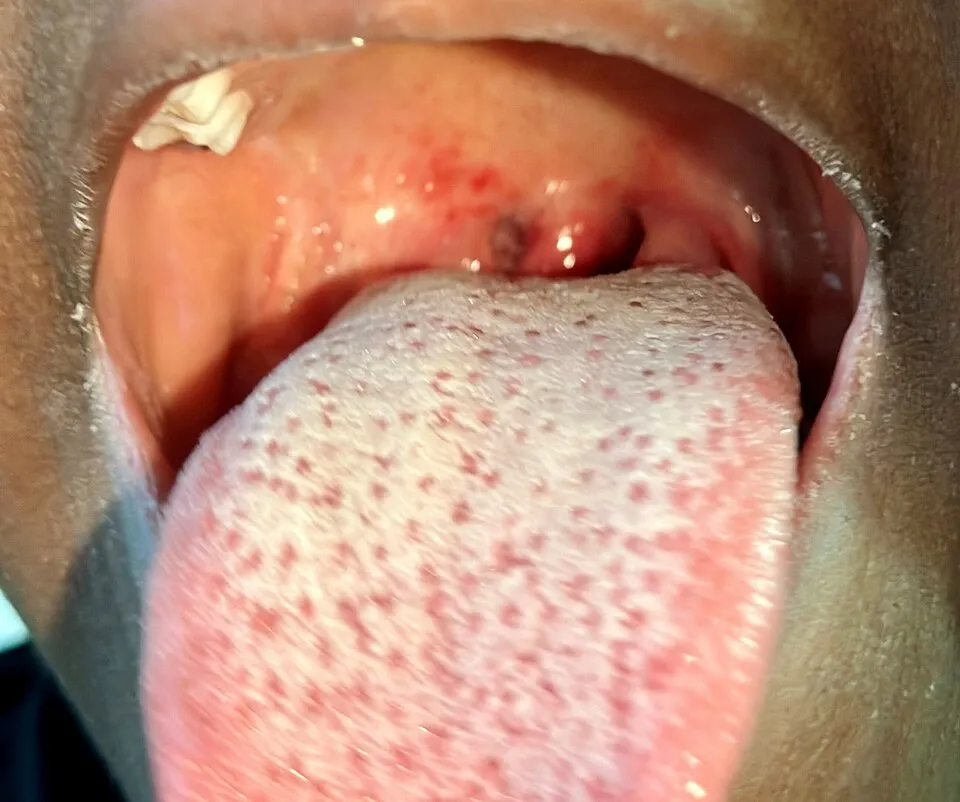
Scarlet fever is a toxin-mediated illness caused by group A Streptococcus (Streptococcus pyogenes), usually accompanying tonsillopharyngitis and occasionally skin or wound infection. It mainly affects children aged 2–10 years, peaks in late winter and spring, and spreads by droplets and close contact after an incubation period of 2–5 days. Pyrogenic exotoxins produce fever, sore throat and a fine, blanching, 'sandpaper' erythematous rash that starts on the neck and trunk, is accentuated in skin folds (Pastia lines), spares the area around the mouth, and is followed by peeling of the fingertips and palms. The tongue changes from white-coated to red 'strawberry'. Diagnosis is clinical, supported by a throat swab culture or rapid antigen test when uncertain. Treatment is phenoxymethylpenicillin for 10 days (teaching dose; check local formulary) to shorten illness, prevent rheumatic fever and reduce spread; children return to school 24 hours after starting antibiotics. In England it is notifiable. Clinicians must recognise invasive group A streptococcal disease (sepsis, necrotising fasciitis, toxic shock, empyema), especially after chickenpox, and warn families about the warning signs.
Patient case, mechanism, investigations, management, flashcards and exam-style questions.Open the lesson →
Key facts
- Cause: group A Streptococcus releasing streptococcal pyrogenic exotoxins (superantigens such as SpeA and SpeC); usually from tonsillopharyngitis
- Peak age 2–10 years (most under 10); incubation 2–5 days; spread by respiratory droplets, hands and shared objects
- Rash: fine, blanching, rough 'sandpaper' erythema starting on neck and chest, flexural accentuation (Pastia lines), circumoral pallor; desquamation of fingers and toes after about 1 week
- Strawberry tongue: white coat with red papillae in the first days, then a beefy red tongue
- Treatment: phenoxymethylpenicillin for 10 days (teaching dose; check local formulary); amoxicillin is an alternative; macrolide only for true penicillin allergy, given rising macrolide resistance
- Exclude from nursery or school until 24 hours after starting antibiotics; scarlet fever is notifiable in England and Wales
- Non-suppurative sequelae: acute rheumatic fever (2–4 weeks after pharyngitis) and post-streptococcal glomerulonephritis (1–3 weeks after pharyngitis)
- Invasive group A streptococcal disease is rare but life-threatening; risk rises with concurrent varicella and in household contacts
Differential diagnosis
| Condition | Clues | Key test |
|---|---|---|
| Kawasaki disease | Fever 5 days or more, bilateral non-exudative conjunctivitis, cracked lips, oedema of hands and feet, often under 5 years | Clinical criteria; echocardiogram; raised CRP and platelets |
| Measles | Coryza, cough, conjunctivitis, Koplik spots, maculopapular rash spreading from hairline downwards | Measles IgM or PCR (saliva/throat) |
| Staphylococcal scalded skin syndrome | Tender erythema, flaccid blisters, positive Nikolsky sign, usually under 5 years; mucosa spared | Clinical; swab of primary focus |
| Toxic shock syndrome | Hypotension, multi-organ involvement, diffuse erythroderma | Blood cultures, lactate, creatine kinase, organ function |
| Infectious mononucleosis | Tonsillar exudate, posterior cervical nodes, splenomegaly; rash after amoxicillin | Heterophile antibody or EBV serology; atypical lymphocytes |
| Viral exanthem (e.g. enterovirus, adenovirus) | Coryza, conjunctivitis, non-sandpaper rash, no strawberry tongue | Clinical; negative throat culture |
| Drug eruption | Recent new medicine, itchy morbilliform rash, no pharyngitis | History; eosinophilia; drug withdrawal |
Exam pearls
Guideline
UKHSA scarlet fever and group A streptococcal public health guidance with seasonal surveillance reports (2025–2026 season), NICE NG84 acute sore throat antimicrobial prescribing (2018), IDSA group A streptococcal pharyngitis guideline (2012) and AHA rheumatic fever prevention statement (2009)
References
- National Institute for Health and Care Excellence. Sore throat (acute): antimicrobial prescribing (NG84). NICE guideline 2018.
- UK Health Security Agency. Group A streptococcal infections: report on seasonal activity in England, 2025 to 2026. GOV.UK 2026.
- Lamagni T, Guy R, Chand M, et al.. Resurgence of scarlet fever in England, 2014-16: a population-based surveillance study. Lancet Infect Dis 2018.
- Lynskey NN, Jauneikaite E, Li HK, et al.. Emergence of dominant toxigenic M1T1 Streptococcus pyogenes clone during increased scarlet fever activity in England: a population-based molecular epidemiological study. Lancet Infect Dis 2019.
- Guy R, Henderson KL, Coelho J, et al.. Increase in invasive group A streptococcal infection notifications, England, 2022. Euro Surveill 2023.
- Shulman ST, Bisno AL, Clegg HW, et al.. Clinical practice guideline for the diagnosis and management of group A streptococcal pharyngitis: 2012 update by the Infectious Diseases Society of America. Clin Infect Dis 2012.
Related topics
By Dr Khalid Seidi (B.Sc., M.D.) · MedEd World Clinical Knowledge library. Original teaching content checked against current guidelines (November 2026); confirm the latest local guidance before clinical use. Not a substitute for clinical judgement.