Clinical Knowledge › Paediatrics › Paediatric infectious diseases
Impetigo
Impetigo is a contagious superficial bacterial infection of the epidermis caused by Staphylococcus aureus, Streptococcus pyogenes (group A streptococcus) or both. It is the commonest bacterial skin infection of childhood, peaking at 2–5 years, and is endemic in hot, crowded settings, often complicating scabies. Non-bullous impetigo (about 70%) begins as a vesicle or pustule that ruptures to leave golden 'honey-coloured' crusts around the nose and mouth or on the limbs; bullous impetigo is caused by exfoliative-toxin-producing S. aureus and gives flaccid blisters that leave a collarette of scale, typically in infants and in the napkin area. Diagnosis is clinical. NICE NG153 advises hydrogen peroxide 1% cream for localised non-bullous disease in a well child, a topical antibiotic if that is unsuitable, and oral flucloxacillin (clarithromycin in penicillin allergy) for widespread or bullous disease or a systemically unwell child, for 5 days. Children stay off nursery or school until lesions are crusted and healed or 48 hours after starting antibiotics. Important complications are cellulitis, staphylococcal scalded skin syndrome, post-streptococcal glomerulonephritis and, in endemic communities, acute rheumatic fever.
Patient case, mechanism, investigations, management, flashcards and exam-style questions.Open the lesson →
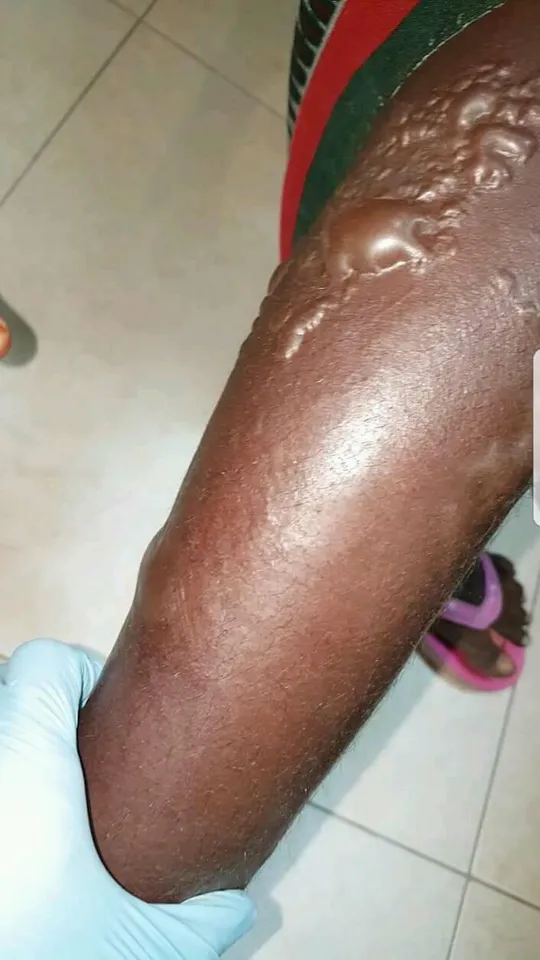
Key facts
- Commonest bacterial skin infection in children; peak age 2–5 years; global childhood prevalence in endemic tropical settings can exceed 10%
- Organisms: Staphylococcus aureus (most cases in temperate countries) and Streptococcus pyogenes (dominant in tropical, overcrowded settings)
- Non-bullous (about 70%): vesicle or pustule that ruptures to form golden 'honey-coloured' crusts, often perioral and perinasal
- Bullous: flaccid blisters from S. aureus exfoliative toxins (cleave desmoglein 1 in the granular layer); commonest in infants and the napkin area
- NICE NG153: hydrogen peroxide 1% cream for localised non-bullous impetigo in a well child; topical fusidic acid if unsuitable; oral flucloxacillin for widespread, bullous or systemically unwell
- Usual course 5 days (extend to 7 days if needed); clarithromycin or erythromycin in penicillin allergy; mupirocin only if fusidic acid resistance is suspected or confirmed (MRSA: seek microbiology advice)
- Exclusion from nursery or school until lesions are crusted and healed, or 48 hours after starting antibiotics
- Post-streptococcal glomerulonephritis follows skin infection after 3–6 weeks and is NOT prevented by antibiotic treatment
Differential diagnosis
| Condition | Clues | Key test |
|---|---|---|
| Eczema herpeticum (HSV) | Painful monomorphic punched-out erosions on eczematous skin, febrile, unwell | Viral PCR swab; urgent aciclovir |
| Varicella | Crops of lesions at different stages, mucosal involvement, fever, contact history | Clinical; VZV PCR if doubt |
| Scabies with secondary infection | Itchy burrows in finger webs, wrists; household itch | Dermatoscopy or skin scraping |
| Tinea corporis or capitis | Annular scaly plaque with active edge, no honey crust | Skin or hair scrapings for fungi |
| Inflicted burns (cigarette, scald) | Uniform round 7–10 mm deep lesions, pattern or history inconsistent with development | Safeguarding assessment, skeletal survey if indicated |
| Staphylococcal scalded skin syndrome | Febrile, tender widespread erythema, positive Nikolsky sign, mucosa spared | Clinical; swab colonised sites; admit |
| Atopic eczema flare | Itchy flexural eczema, weeping but no golden crust | Clinical; swab only if not responding |
| Bullous pemphigoid of childhood or insect bites (bullous) | Tense blisters, itchy; bites in clusters on exposed skin | Biopsy with immunofluorescence if persistent |
Exam pearls
Guideline
NICE NG153 Impetigo: antimicrobial prescribing (2020), with UKHSA exclusion guidance and WHO skin-NTD (scabies-impetigo) recommendations
References
- National Institute for Health and Care Excellence. Impetigo: antimicrobial prescribing (NG153). NICE guideline 2020.
- Trang DT, Buck EC, Schoenherr DT.. Impetigo: rapid evidence review. Am Fam Physician 2026.
- Bowen AC, Mahé A, Hay RJ, et al.. The global epidemiology of impetigo: a systematic review of the population prevalence of impetigo and pyoderma. PLoS One 2015.
- Hartman-Adams H, Banvard C, Juckett G.. Impetigo: diagnosis and treatment. Am Fam Physician 2014.
- Romani L, Steer AC, Whitfeld MJ, Kaldor JM.. Prevalence of scabies and impetigo worldwide: a systematic review. Lancet Infect Dis 2015.
- Dollani LC, Marathe KS.. Impetigo/staphylococcal scalded skin disease. Pediatr Rev 2020.
Related topics
By Dr Khalid Seidi (B.Sc., M.D.) · MedEd World Clinical Knowledge library. Original teaching content checked against current guidelines (November 2026); confirm the latest local guidance before clinical use. Not a substitute for clinical judgement.