Clinical Knowledge › Anaesthesiology › Regional and local anaesthesia
Epidural anaesthesia and analgesia
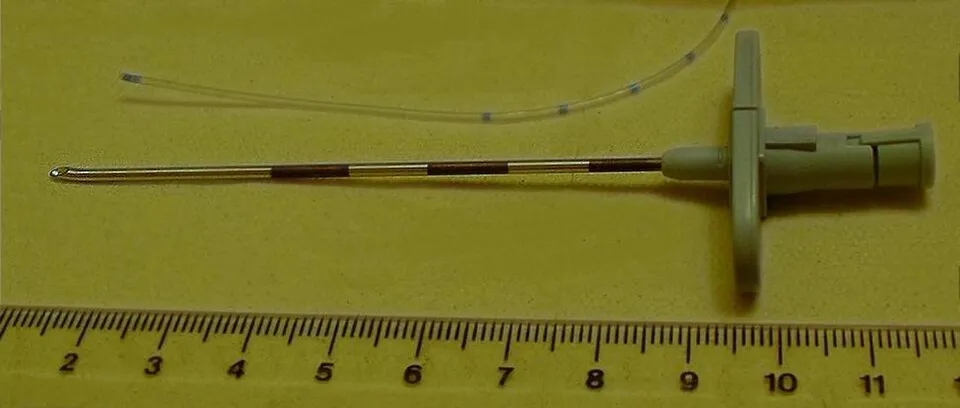
Epidural anaesthesia and analgesia involve placing local anaesthetic, usually with an opioid, into the epidural space between the ligamentum flavum and the dura, normally through a catheter inserted with a Tuohy needle using loss of resistance to saline. Unlike a spinal, the block is segmental, slower in onset and titratable, so it can be extended for hours or days: lumbar epidurals for labour and lower limb surgery, thoracic epidurals for thoracotomy and open upper abdominal surgery or multiple rib fractures. Low-concentration mixtures (for example bupivacaine 0.1% with fentanyl 2 microgram/mL) give analgesia with little motor block, whereas higher concentrations give surgical anaesthesia. Epidural analgesia improves dynamic pain control and reduces respiratory failure after major surgery (MASTER trial) but causes hypotension, motor block, urinary retention and itch, and sometimes fails. Serious complications include accidental dural puncture, intravascular or intrathecal catheter placement, epidural haematoma and abscess. Perioperative epidurals carried the highest risk of permanent harm in NAP3, so strict anticoagulant timing (ASRA 5th edition), asepsis, test dosing, ward monitoring with Bromage scores and a rapid MRI pathway are essential.
Patient case, mechanism, investigations, management, flashcards and exam-style questions.Open the lesson →
Key facts
- The epidural space lies between the ligamentum flavum and dura; it contains fat, the internal vertebral venous plexus and the nerve roots in their dural cuffs
- A Tuohy needle (16–18 G) is advanced with loss of resistance to saline; the catheter is left about 4–5 cm in the space
- A test dose (for example lidocaine 2% 3 mL with adrenaline 15 microgram) detects intrathecal placement (rapid dense block) or intravascular placement (tachycardia)
- Spread is segmental and volume dependent: roughly 1–2 mL per segment; thoracic catheters are placed at the dermatomal middle of the incision (T6–T10 for laparotomy)
- Labour analgesia uses low-dose mixtures (bupivacaine 0.0625–0.1% with fentanyl 2 microgram/mL) by programmed intermittent bolus and patient-controlled top-ups
- MASTER (2002) showed fewer respiratory failures but no mortality benefit with epidural analgesia after major abdominal surgery
- Accidental dural puncture with a 16–18 G Tuohy needle leads to PDPH in more than half of cases
- Dense motor block during a low-dose infusion, or new weakness or back pain, is a red flag for epidural haematoma or abscess: stop the infusion, review, urgent MRI
Differential diagnosis
| Condition | Clues | Key test |
|---|---|---|
| Spinal anaesthesia | Single shot, fast, dense, fixed duration, tiny dose | Technique choice |
| Combined spinal–epidural | Fast onset with an epidural catheter for extension | Technique choice |
| Paravertebral or erector spinae plane block | Unilateral chest wall analgesia with less hypotension | Surgical site and anticoagulation |
| Intrathecal morphine plus systemic multimodal analgesia | Simpler alternative after laparoscopic or open surgery within ERAS | Surgical approach |
| Patient-controlled IV opioid analgesia | No neuraxial risks; more opioid side effects | Contraindications to epidural |
| Wound catheter or transversus abdominis plane block | Somatic analgesia of abdominal wall only | Visceral pain persists |
Exam pearls
Guideline
ASRA Pain Medicine antithrombotic guidelines 5th ed (2025) and ESAIC/ESRA 2022; Association of Anaesthetists neuraxial skin antisepsis 2014; NAP3 recommendations
References
- Cook TM, Counsell D, Wildsmith JA, et al.. Major complications of central neuraxial block: report on the Third National Audit Project of the Royal College of Anaesthetists. Br J Anaesth 2009.
- Rigg JR, Jamrozik K, Myles PS, et al.. Epidural anaesthesia and analgesia and outcome of major surgery: a randomised trial. Lancet 2002.
- Kopp SL, Vandermeulen E, McBane RD, et al.. Regional anesthesia in the patient receiving antithrombotic or thrombolytic therapy: American Society of Regional Anesthesia and Pain Medicine Evidence-Based Guidelines (fifth edition). Reg Anesth Pain Med 2026.
- Kietaibl S, Ferrandis R, Godier A, et al.. Regional anaesthesia in patients on antithrombotic drugs: Joint ESAIC/ESRA guidelines. Eur J Anaesthesiol 2022.
- Association of Anaesthetists of Great Britain and Ireland; Obstetric Anaesthetists' Association; Regional Anaesthesia UK; et al.. Safety guideline: skin antisepsis for central neuraxial blockade. Anaesthesia 2014.
- Moen V, Dahlgren N, Irestedt L. Severe neurological complications after central neuraxial blockades in Sweden 1990-1999. Anesthesiology 2004.
Related topics
By Dr Khalid Seidi (B.Sc., M.D.) · MedEd World Clinical Knowledge library. Original teaching content checked against current guidelines (November 2026); confirm the latest local guidance before clinical use. Not a substitute for clinical judgement.