Clinical Knowledge › Anaesthesiology › Regional and local anaesthesia
Epidural haematoma and abscess
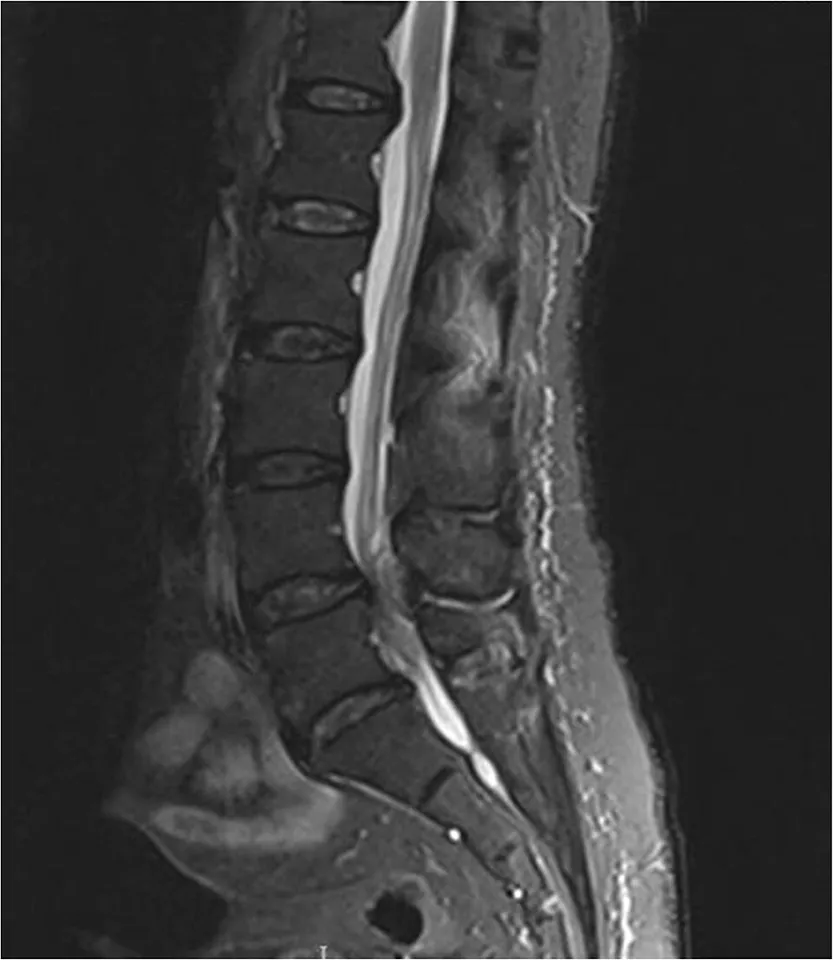
Spinal epidural haematoma and epidural abscess are rare but devastating complications of neuraxial anaesthesia, because blood or pus in the rigid spinal canal compresses the cord or cauda equina and can cause permanent paraplegia. Haematoma usually presents within hours to a few days of needle insertion or catheter removal, typically in patients with anticoagulants, antiplatelet drugs, thrombocytopenia, renal impairment, older age, spinal stenosis or a traumatic puncture; the key sign is new or increasing leg weakness or numbness (often a motor block denser than expected), sometimes with back pain and sphincter dysfunction. Abscess usually appears days to weeks later, most often from Staphylococcus aureus, with back pain, fever, raised inflammatory markers and evolving neurological deficit. Both need emergency MRI with gadolinium, urgent neurosurgical review and decompression when deficits exist; recovery is best when decompression occurs within about 8–12 hours of onset. Prevention relies on ASRA 5th edition and ESAIC/ESRA anticoagulant timing, full asepsis with 0.5% chlorhexidine in alcohol, limiting catheter duration and protocol-driven neurological monitoring with a rapid MRI pathway.
Patient case, mechanism, investigations, management, flashcards and exam-style questions.Open the lesson →
Key facts
- Spinal epidural haematoma risk is very low after obstetric epidurals (about 1 in 200,000 in Swedish data) but much higher in older women having knee arthroplasty with thromboprophylaxis (about 1 in 3,600)
- Most haematomas occur with a haemostatic abnormality (anticoagulant, antiplatelet, thrombocytopenia, renal failure) and around catheter insertion or removal
- Leading sign: new or progressive motor or sensory deficit, or motor block more dense or prolonged than expected; back pain is often absent
- Outcome depends on time to decompression: best recovery when laminectomy is performed within about 8–12 hours of symptom onset
- Epidural abscess usually presents days after the block; Staphylococcus aureus causes about two-thirds of cases
- The classic triad of back pain, fever and neurological deficit is present in only a minority at first presentation
- MRI with gadolinium is the investigation of choice for both conditions; do not delay it for other tests
- Reverse anticoagulants and correct platelets for haematoma; give IV antistaphylococcal antibiotics (with MRSA cover where needed) after blood cultures for abscess
Differential diagnosis
| Condition | Clues | Key test |
|---|---|---|
| Prolonged local anaesthetic block | Symmetrical block regressing steadily after stopping infusion; no back pain | Recovery within about 4 hours of stopping infusion |
| Peripheral nerve injury (e.g. common peroneal, femoral) | Unilateral deficit in one nerve distribution; often positioning or surgery related | Neurological examination; nerve conduction later |
| Anterior spinal artery syndrome | Sudden bilateral weakness and loss of pain and temperature with preserved proprioception, often after hypotension | MRI (diffusion) |
| Transient neurological symptoms | Buttock and leg pain after spinal lidocaine, no deficit | Clinical |
| Meningitis | Fever, headache, neck stiffness after neuraxial block, often streptococcal | CSF analysis, cultures |
| Discitis or vertebral osteomyelitis | Back pain with fever, often bacteraemic | MRI |
| Cauda equina syndrome from disc prolapse | Saddle anaesthesia, sphincter disturbance, sciatica | MRI |
Exam pearls
Guideline
ASRA Pain Medicine antithrombotic guidelines 5th ed (2025); ESAIC/ESRA joint guidelines 2022; Association of Anaesthetists neuraxial skin antisepsis 2014; ASRA neurological complications practice advisory 2015
References
- Vandermeulen EP, Van Aken H, Vermylen J. Anticoagulants and spinal-epidural anesthesia. Anesth Analg 1994.
- Moen V, Dahlgren N, Irestedt L. Severe neurological complications after central neuraxial blockades in Sweden 1990-1999. Anesthesiology 2004.
- Darouiche RO. Spinal epidural abscess. N Engl J Med 2006.
- Cook TM, Counsell D, Wildsmith JA, et al.. Major complications of central neuraxial block: report on the Third National Audit Project of the Royal College of Anaesthetists. Br J Anaesth 2009.
- Kopp SL, Vandermeulen E, McBane RD, et al.. Regional anesthesia in the patient receiving antithrombotic or thrombolytic therapy: American Society of Regional Anesthesia and Pain Medicine Evidence-Based Guidelines (fifth edition). Reg Anesth Pain Med 2026.
- Kietaibl S, Ferrandis R, Godier A, et al.. Regional anaesthesia in patients on antithrombotic drugs: Joint ESAIC/ESRA guidelines. Eur J Anaesthesiol 2022.
Related topics
By Dr Khalid Seidi (B.Sc., M.D.) · MedEd World Clinical Knowledge library. Original teaching content checked against current guidelines (November 2026); confirm the latest local guidance before clinical use. Not a substitute for clinical judgement.