Clinical Knowledge › Anaesthesiology › Regional and local anaesthesia
Local anaesthetic systemic toxicity (LAST)
Local anaesthetic systemic toxicity (LAST) is the life-threatening effect of a local anaesthetic reaching a high plasma concentration, usually after accidental intravascular injection or rapid absorption of a large dose. Local anaesthetics block voltage-gated sodium channels in the brain and heart as well as in nerves, so toxicity classically progresses from perioral numbness, tinnitus and agitation to seizures and coma, then to bradycardia, broad-complex arrhythmias and cardiovascular collapse; bupivacaine is the most cardiotoxic. Atypical presentations are common: symptoms may be delayed for 30 minutes or more, and some patients have cardiovascular signs only. Management is a drill: stop injecting, call for help, give 100% oxygen and ventilate, control seizures with a benzodiazepine, and give 20% lipid emulsion 1.5 mL/kg followed by an infusion. Cardiac arrest needs prolonged CPR with reduced adrenaline doses and early consideration of extracorporeal support. Prevention depends on dose limits, ultrasound guidance, aspiration, incremental injection and monitoring.
Patient case, mechanism, investigations, management, flashcards and exam-style questions.Open the lesson →
Key facts
- Incidence after peripheral nerve block is roughly 1 per 1000–10 000 blocks, lower with ultrasound guidance
- Mechanism: sodium-channel blockade in the CNS and myocardium; bupivacaine also blocks potassium and calcium channels and mitochondrial energy production
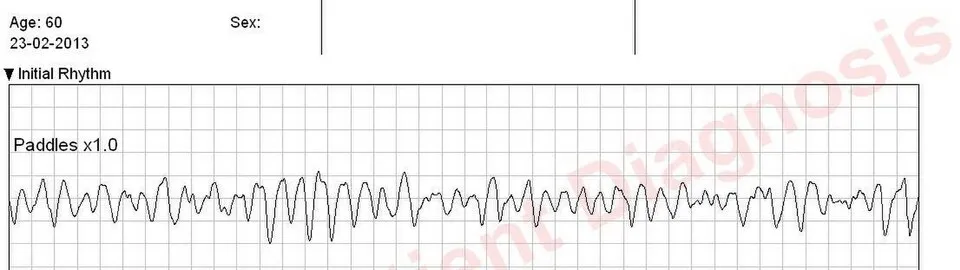
- Classic sequence: perioral tingling, metallic taste, tinnitus, dizziness, agitation, then seizures, coma, bradycardia, broad QRS, ventricular arrhythmias, asystole
- Bupivacaine has a low cardiovascular-to-CNS toxicity ratio: cardiac collapse may occur with little warning and is resistant to resuscitation
- Teaching maximum doses: lidocaine 3 mg/kg plain (7 mg/kg with adrenaline), bupivacaine and levobupivacaine 2 mg/kg, ropivacaine 3 mg/kg, prilocaine 6 mg/kg
- Lipid emulsion 20%: 1.5 mL/kg IV over 1 min, then 15 mL/kg/h; up to two repeat boluses 5 min apart; maximum cumulative 12 mL/kg (teaching dose; check local protocol)
- In LAST cardiac arrest use adrenaline in small doses (1 microgram/kg or less) and avoid vasopressin, calcium-channel blockers, beta-blockers and further local anaesthetic
- Monitor at least 2 hours after a CNS-only event and at least 4–6 hours after any cardiovascular event; report every case
Differential diagnosis
| Condition | Clues | Key test |
|---|---|---|
| Vasovagal reaction | Bradycardia, pallor and sweating with rapid recovery on lying flat; no perioral symptoms or seizure | Clinical course; ECG normal QRS |
| Adrenaline (epinephrine) intravascular injection | Abrupt tachycardia and hypertension within seconds of a test dose containing adrenaline | Heart rate rise of 10 bpm or more after test dose; resolves within minutes |
| High or total spinal block | Hypotension, bradycardia, arm weakness, breathing difficulty and loss of consciousness after neuraxial injection without seizures | Ascending sensory and motor block on examination |
| Perioperative anaphylaxis | Hypotension with bronchospasm, rash or angioedema | Serum mast cell tryptase |
| Primary seizure disorder or hypoglycaemia | Known epilepsy or low capillary glucose | Capillary glucose; history |
| Myocardial ischaemia or primary arrhythmia | Chest pain, ST changes, no recent local anaesthetic | 12-lead ECG and troponin |
| Methaemoglobinaemia (prilocaine, benzocaine) | Cyanosis with SpO2 around 85% unresponsive to oxygen, chocolate-coloured blood | Co-oximetry methaemoglobin level |
| Anxiety or hyperventilation | Perioral tingling and carpopedal spasm with rapid breathing | Clinical; normal ECG; low PaCO2 on blood gas |
Exam pearls
Guideline
Association of Anaesthetists Management of Severe Local Anaesthetic Toxicity (Quick Reference Handbook, 2023) and ASRA Practice Advisory on LAST (2017) with ASRA LAST checklist (2020)
References
- Association of Anaesthetists. Management of severe local anaesthetic toxicity (Quick Reference Handbook guideline 3-10, version 2). Association of Anaesthetists, London 2023.
- Neal JM, Barrington MJ, Fettiplace MR, et al.. The Third American Society of Regional Anesthesia and Pain Medicine Practice Advisory on Local Anesthetic Systemic Toxicity: Executive Summary 2017. Reg Anesth Pain Med 2018.
- Neal JM, Neal EJ, Weinberg GL.. American Society of Regional Anesthesia and Pain Medicine Local Anesthetic Systemic Toxicity checklist: 2020 version. Reg Anesth Pain Med 2021.
- El-Boghdadly K, Pawa A, Chin KJ.. Local anesthetic systemic toxicity: current perspectives. Local Reg Anesth 2018.
- Barrington MJ, Kluger R.. Ultrasound guidance reduces the risk of local anesthetic systemic toxicity following peripheral nerve blockade. Reg Anesth Pain Med 2013.
- Guay J.. Adverse events associated with intravenous regional anesthesia (Bier block): a systematic review of complications. J Clin Anesth 2009.
Related topics
By Dr Khalid Seidi (B.Sc., M.D.) · MedEd World Clinical Knowledge library. Original teaching content checked against current guidelines (November 2026); confirm the latest local guidance before clinical use. Not a substitute for clinical judgement.