Clinical Knowledge › Internal medicine › Gastroenterology and hepatology › Diseases of the stomach and duodenum
Gastritis
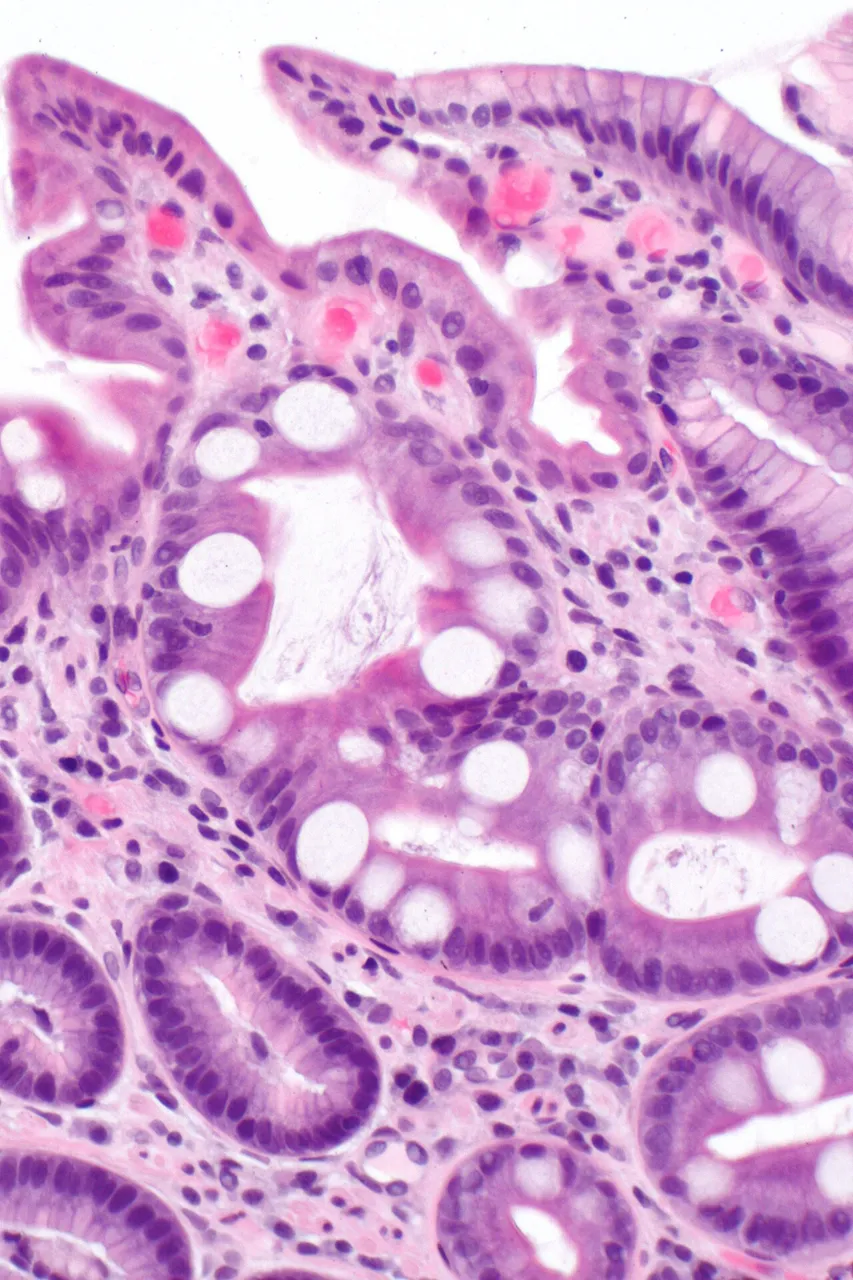
Gastritis is inflammation of the gastric mucosa confirmed on biopsy; injury with little inflammation, as caused by NSAIDs, alcohol, bile reflux or portal hypertension, is better called gastropathy. Helicobacter pylori is by far the commonest cause, infecting about half of the world's population and always producing chronic active gastritis, which the Kyoto consensus regards as an infectious disease that should be treated. Antral-predominant gastritis raises acid output and predisposes to duodenal ulcer, whereas corpus-predominant or pangastritis lowers acid and leads, through atrophy and intestinal metaplasia, to gastric ulcer and adenocarcinoma (the Correa cascade). Autoimmune gastritis destroys parietal cells in the corpus, causing achlorhydria, high gastrin, iron and vitamin B12 deficiency (pernicious anaemia) and type 1 gastric neuroendocrine tumours. Most gastritis is asymptomatic or causes dyspepsia. Diagnosis rests on endoscopy with mapped biopsies and H. pylori testing; treatment removes the cause, eradicates H. pylori with confirmed cure, replaces B12 and iron, and offers endoscopic surveillance to patients with extensive atrophy or intestinal metaplasia.
Patient case, mechanism, investigations, management, flashcards and exam-style questions.Open the lesson →
Key facts
- Gastritis is a histological diagnosis; endoscopic redness correlates poorly with inflammation
- H. pylori causes most chronic gastritis; every infected person has chronic active gastritis and should be offered eradication
- Antral-predominant H. pylori gastritis → high acid → duodenal ulcer; corpus-predominant → atrophy, low acid → gastric ulcer and cancer
- Correa cascade: chronic gastritis → atrophy → intestinal metaplasia → dysplasia → intestinal-type adenocarcinoma
- Autoimmune gastritis: corpus atrophy with antibodies to parietal cells (sensitive) and intrinsic factor (specific), high gastrin, low pepsinogen I, B12 and iron deficiency
- Biopsy protocol: at least two antral/incisural and two corpus biopsies in separately labelled pots
- Extensive atrophy or intestinal metaplasia (OLGA/OLGIM III–IV) merits surveillance endoscopy about every 3 years
- Acute erosive gastropathy follows NSAIDs, alcohol and critical illness; PPI prophylaxis is reserved for high-risk ICU patients
Differential diagnosis
| Condition | Clues | Key test |
|---|---|---|
| Functional dyspepsia | Chronic epigastric symptoms with normal histology | Endoscopy and biopsies; H. pylori testing |
| Peptic ulcer disease | Nocturnal pain, bleeding, NSAID use | Endoscopy |
| Gastric adenocarcinoma | Weight loss, anaemia, older age, mass or ulcer | Endoscopy with targeted biopsies |
| Gastric MALT lymphoma | H. pylori-positive, nodular or ulcerated mucosa | Biopsy with immunohistochemistry and t(11;18) testing |
| Ménétrier disease | Giant rugal folds, protein-losing gastropathy, hypoalbuminaemia | Full-thickness snare biopsy; foveolar hyperplasia |
| Zollinger–Ellison syndrome | Thick folds, multiple ulcers, diarrhoea, high gastrin with low gastric pH | Fasting gastrin with gastric pH; secretin test |
| Gastro-oesophageal reflux disease | Heartburn and regurgitation | Clinical; endoscopy or pH monitoring |
Exam pearls
Guideline
Kyoto global consensus on H. pylori gastritis (2015), Maastricht VI/Florence (2022), ACG H. pylori treatment guideline (2024), ACG gastric premalignant conditions guideline (2025) and ESGE/EHMSG/ESP MAPS III (2025)
References
- Sugano K, Tack J, Kuipers EJ, et al.. Kyoto global consensus report on Helicobacter pylori gastritis. Gut 2015.
- Malfertheiner P, Megraud F, Rokkas T, et al.. Management of Helicobacter pylori infection: the Maastricht VI/Florence consensus report. Gut 2022.
- Chey WD, Howden CW, Moss SF, Morgan DR, Greer KB, Grover S, Shah SC.. ACG Clinical Guideline: Treatment of Helicobacter pylori Infection. Am J Gastroenterol 2024.
- Morgan DR, Corral JE, Li D, et al.. ACG Clinical Guideline: Diagnosis and Management of Gastric Premalignant Conditions. Am J Gastroenterol 2025.
- Dinis-Ribeiro M, Libânio D, Uchima H, et al.. Management of epithelial precancerous conditions and early neoplasia of the stomach (MAPS III): European Society of Gastrointestinal Endoscopy (ESGE), European Helicobacter and Microbiota Study Group (EHMSG) and European Society of Pathology (ESP) Guideline update 2025. Endoscopy 2025.
- Shah SC, Piazuelo MB, Kuipers EJ, Li D.. AGA Clinical Practice Update on the Diagnosis and Management of Atrophic Gastritis: Expert Review. Gastroenterology 2021.
Related topics
By Dr Khalid Seidi (B.Sc., M.D.) · MedEd World Clinical Knowledge library. Original teaching content checked against current guidelines (November 2026); confirm the latest local guidance before clinical use. Not a substitute for clinical judgement.