Clinical Knowledge › Internal medicine › Gastroenterology and hepatology › Diseases of the stomach and duodenum
Zollinger–Ellison syndrome
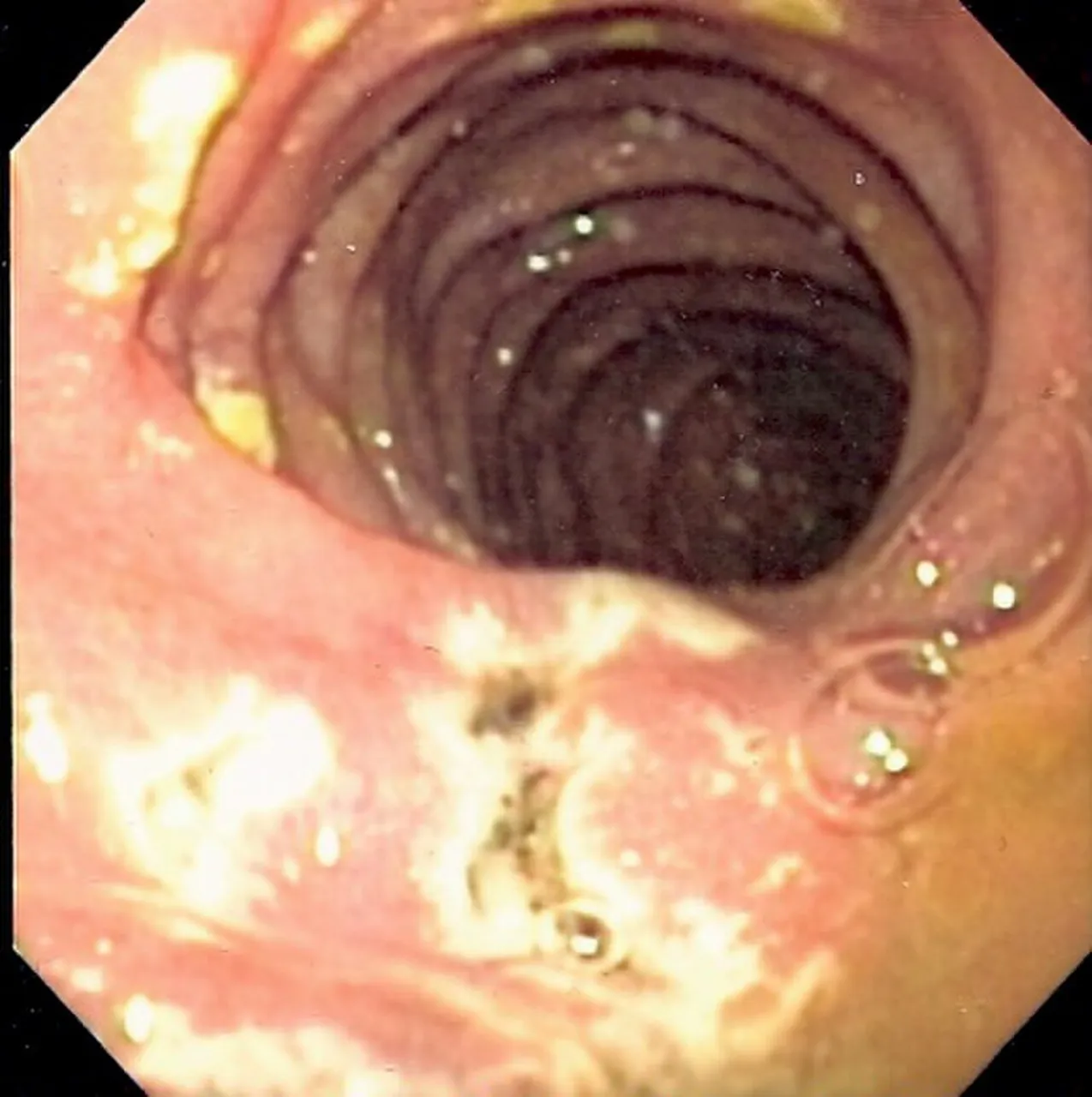
Zollinger–Ellison syndrome is severe acid-peptic disease caused by a gastrin-secreting neuroendocrine tumour (gastrinoma), usually in the duodenal wall or pancreas within the 'gastrinoma triangle'. Unregulated gastrin drives parietal cell hyperplasia and massive acid output, producing multiple, refractory or unusually sited peptic ulcers (distal duodenum, jejunum), severe reflux oesophagitis and chronic diarrhoea from acid inactivation of pancreatic enzymes. About one in four patients has multiple endocrine neoplasia type 1 (MEN1), so calcium and parathyroid hormone must always be checked. Diagnosis needs an inappropriately raised fasting gastrin together with acid (gastric pH below 2); because proton pump inhibitors also raise gastrin, testing must be interpreted carefully and PPIs should never be stopped abruptly. A secretin stimulation test helps when results are equivocal, and somatostatin receptor PET/CT, CT and endoscopic ultrasound localise the tumour. Acid is controlled with high-dose PPI; sporadic localised tumours are resected, and metastatic disease is treated as a neuroendocrine neoplasm. Liver metastases determine survival.
Patient case, mechanism, investigations, management, flashcards and exam-style questions.Open the lesson →
Key facts
- A gastrinoma is a gastrin-secreting neuroendocrine tumour; most are in the duodenum, the rest mainly in the pancreas
- Most gastrinomas lie in the gastrinoma triangle (cystic–common bile duct junction, second–third part of duodenum, pancreatic neck–body junction)
- Suspect it with multiple, distal, refractory or recurrent ulcers, ulcers without H. pylori or NSAIDs, or ulcers with diarrhoea
- About 20–25% have MEN1: check calcium, parathyroid hormone and prolactin, and offer genetic testing
- Fasting gastrin above 10 times normal with gastric pH below 2 is diagnostic; PPIs and atrophic gastritis also raise gastrin
- Secretin stimulation test: a gastrin rise of 120 pg/mL or more supports gastrinoma when the fasting gastrin is equivocal
- High-dose PPI controls acid in almost all patients (for example omeprazole 60 mg daily or more; teaching dose, check local formulary)
- Liver metastases are the main determinant of survival; sporadic localised tumours should be considered for surgery
Differential diagnosis
| Condition | Clues | Key test |
|---|---|---|
| Peptic ulcer from H. pylori or NSAIDs | Single bulbar ulcer; normal gastrin; responds to standard PPI | H. pylori testing; fasting gastrin if atypical |
| PPI-induced hypergastrinaemia | Raised gastrin with high gastric pH on PPI | Gastric pH; repeat gastrin after supervised H2-blocker switch |
| Atrophic body gastritis (autoimmune) | Very high gastrin but achlorhydria; B12 deficiency | Gastric pH above 4; parietal cell and intrinsic factor antibodies |
| Retained gastric antrum or G-cell hyperplasia | Hypergastrinaemia after partial gastrectomy; negative secretin test | Secretin test; technetium scan; history of Billroth II surgery |
| Gastric outlet obstruction | Raised gastrin with distended stomach, vomiting | Endoscopy; gastric pH; repeat gastrin after decompression |
| Chronic kidney disease | Raised gastrin from reduced clearance | Creatinine and eGFR; gastric pH |
| VIPoma or other secretory diarrhoea | Large-volume watery diarrhoea with hypokalaemia, no ulcers | Plasma VIP; stool osmotic gap |
Exam pearls
Guideline
ENETS 2023 guidance paper for functioning pancreatic neuroendocrine tumour syndromes, ENETS 2023 guidance paper for gastroduodenal NETs, ESMO gastroenteropancreatic neuroendocrine neoplasm guideline (2020) and MEN1 clinical practice guidelines (2012)
References
- Hofland J, Falconi M, Christ E, et al.. European Neuroendocrine Tumor Society 2023 guidance paper for functioning pancreatic neuroendocrine tumour syndromes. J Neuroendocrinol 2023.
- Panzuto F, Ramage J, Pritchard DM, et al.. European Neuroendocrine Tumor Society (ENETS) 2023 guidance paper for gastroduodenal neuroendocrine tumours (NETs) G1-G3. J Neuroendocrinol 2023.
- Pavel M, Öberg K, Falconi M, et al.. Gastroenteropancreatic neuroendocrine neoplasms: ESMO Clinical Practice Guidelines for diagnosis, treatment and follow-up. Ann Oncol 2020.
- Thakker RV, Newey PJ, Walls GV, et al.. Clinical practice guidelines for multiple endocrine neoplasia type 1 (MEN1). J Clin Endocrinol Metab 2012.
- Ito T, Cadiot G, Jensen RT.. Diagnosis of Zollinger-Ellison syndrome: increasingly difficult. World J Gastroenterol 2012.
- Jensen RT, Ramos-Alvarez I, Norton JA.. Current Medical Controversies in Zollinger-Ellison Syndrome. Biomedicines 2025.
Related topics
By Dr Khalid Seidi (B.Sc., M.D.) · MedEd World Clinical Knowledge library. Original teaching content checked against current guidelines (November 2026); confirm the latest local guidance before clinical use. Not a substitute for clinical judgement.