Clinical Knowledge › Internal medicine › Endocrinology › Thyroid disorders
Graves disease
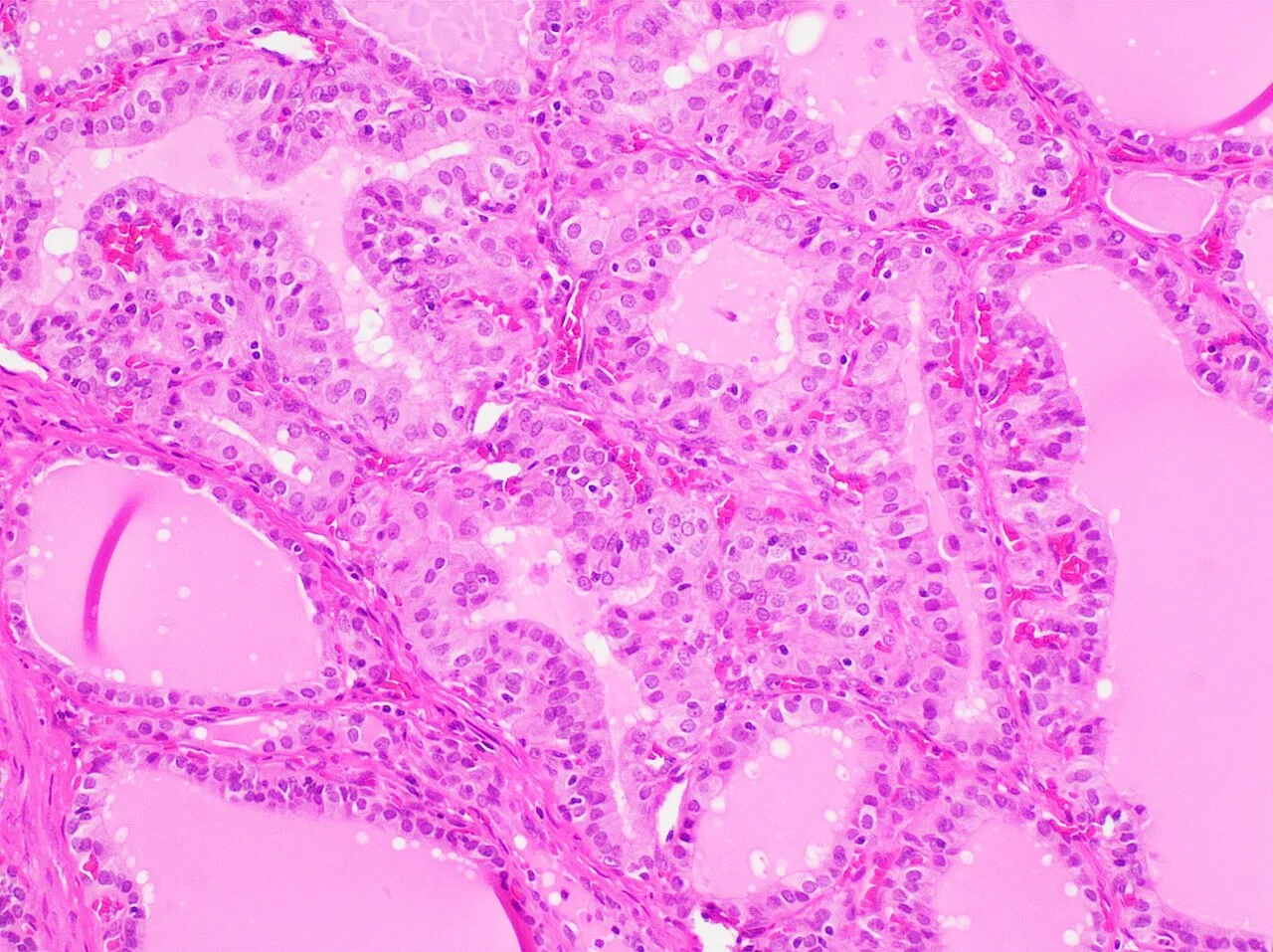
Graves disease is an autoimmune disorder in which stimulating antibodies against the TSH receptor (TRAb) drive thyroid growth and hormone overproduction. It is the commonest cause of hyperthyroidism, typically in women aged 20–50, with genetic, smoking, stress and postpartum triggers. Patients have thyrotoxicosis with a diffuse, often vascular goitre, plus features unique to Graves: orbitopathy (proptosis, periorbital swelling, diplopia), pretibial myxoedema and thyroid acropachy, because the same autoimmunity targets orbital and dermal fibroblasts. Diagnosis rests on a suppressed TSH, raised free T4 and/or T3 and positive TRAb, with diffusely increased uptake if scanned. Beta-blockers relieve symptoms. Definitive choices are a 12–18-month course of carbimazole or methimazole (about half relapse; long-term low-dose therapy is acceptable), radioiodine, or total thyroidectomy. Orbitopathy needs smoking cessation, assessment of activity and severity, and for active moderate-to-severe disease intravenous methylprednisolone or newer biologics such as teprotumumab.
Patient case, mechanism, investigations, management, flashcards and exam-style questions.Open the lesson →
Key facts
- Caused by IgG antibodies that stimulate the TSH receptor (type II hypersensitivity with a stimulating, not destructive, effect)
- TRAb are positive in about 95%; they predict relapse, cross the placenta and can cause fetal and neonatal thyrotoxicosis
- Graves-specific features: orbitopathy, pretibial myxoedema and thyroid acropachy; a diffuse goitre often has a bruit
- Thionamide titration for 12–18 months gives remission in about 50%; relapse is likelier with young age, male sex, smoking, large goitre and high TRAb
- Radioiodine can worsen orbitopathy, especially in smokers; give prednisolone cover if orbitopathy is mild and active or risk factors exist, and avoid it in active moderate-to-severe disease
- Smoking is the strongest modifiable risk factor for orbitopathy; every patient should be supported to stop
- Active moderate-to-severe orbitopathy: IV methylprednisolone (typically 4.5 g over 12 weeks), with mycophenolate; teprotumumab, tocilizumab, radiotherapy or surgery are other options
- Dysthyroid optic neuropathy (reduced acuity or colour vision) is an emergency: high-dose IV steroids and urgent orbital decompression
Differential diagnosis
| Condition | Clues | Key test |
|---|---|---|
| Toxic multinodular goitre | Older adult, nodular goitre, no orbitopathy | TRAb negative; patchy uptake |
| Toxic adenoma | Single palpable nodule, no eye disease | Single hot nodule |
| Painless or postpartum thyroiditis | Small painless goitre, transient, TPO positive | Low uptake; TRAb usually negative |
| Subacute thyroiditis | Painful tender gland, high ESR | Low uptake |
| Gestational transient thyrotoxicosis | First trimester, hyperemesis, no goitre or eye disease | TRAb negative; hCG |
| Orbital mimics (orbital lymphoma, myositis, carotid–cavernous fistula) | Unilateral proptosis without thyroid disease, pain, bruit | Orbital CT or MRI |
| Anxiety disorder | Palpitations and tremor without weight loss or goitre | Normal TSH |
Exam pearls
Guideline
ETA 2018 Guideline for the management of Graves hyperthyroidism, ATA 2016 Hyperthyroidism guideline, EUGOGO 2021 Graves orbitopathy guideline and NICE NG145 (2019), with ATA 2026 pregnancy guidelines
References
- Kahaly GJ, Bartalena L, Hegedüs L, et al.. 2018 European Thyroid Association guideline for the management of Graves' hyperthyroidism. Eur Thyroid J 2018.
- Ross DS, Burch HB, Cooper DS, et al.. 2016 American Thyroid Association guidelines for diagnosis and management of hyperthyroidism and other causes of thyrotoxicosis. Thyroid 2016.
- Bartalena L, Kahaly GJ, Baldeschi L, et al.. The 2021 European Group on Graves' orbitopathy (EUGOGO) clinical practice guidelines for the medical management of Graves' orbitopathy. Eur J Endocrinol 2021.
- National Institute for Health and Care Excellence. Thyroid disease: assessment and management (NG145). NICE 2019.
- American Thyroid Association. American Thyroid Association 2026 Guidelines for Thyroid Disease in Preconception, Pregnancy, and the Postpartum Period. Thyroid 2026.
- Smith TJ, Hegedüs L. Graves' disease. N Engl J Med 2016.
Related topics
By Dr Khalid Seidi (B.Sc., M.D.) · MedEd World Clinical Knowledge library. Original teaching content checked against current guidelines (November 2026); confirm the latest local guidance before clinical use. Not a substitute for clinical judgement.