Clinical Knowledge › Internal medicine › Endocrinology › Thyroid disorders
Postpartum and silent thyroiditis
Postpartum thyroiditis and silent (painless, sporadic) thyroiditis are autoimmune, lymphocytic, destructive thyroiditides that cause transient thyrotoxicosis, hypothyroidism or both without neck pain. Postpartum thyroiditis occurs within 12 months of delivery or pregnancy loss in about 5% of women, and in a third to a half of women with TPO antibodies in early pregnancy; silent thyroiditis is the same disease at other times, sometimes triggered by drugs such as lithium or immune checkpoint inhibitors. Rebound of immune activity after pregnancy-related immune tolerance destroys follicles, releasing stored hormone (thyrotoxic phase, typically 1–4 months postpartum, with low uptake and negative TRAb), followed by hypothyroidism (typically 3–8 months) and recovery by 12 months in most. Treatment is a beta-blocker for symptoms and levothyroxine for symptomatic hypothyroidism or when another pregnancy is planned. Permanent hypothyroidism develops in up to a third to a half of women over the following years, and recurrence after future pregnancies is common, so long-term TSH testing is needed.
Patient case, mechanism, investigations, management, flashcards and exam-style questions.Open the lesson →
Key facts
- Postpartum thyroiditis: new thyroid dysfunction within 12 months of delivery, miscarriage or termination in a woman without previous thyroid disease; prevalence about 5%
- Strongest predictor: TPO antibodies in early pregnancy (30–50% of antibody-positive women develop it); risk also high in type 1 diabetes
- Patterns: biphasic (about 25%), thyrotoxic only (about 30%), hypothyroid only (about 45%)
- Thyrotoxic phase typically at 1–4 months postpartum, hypothyroid phase at 3–8 months; most recover by 12 months
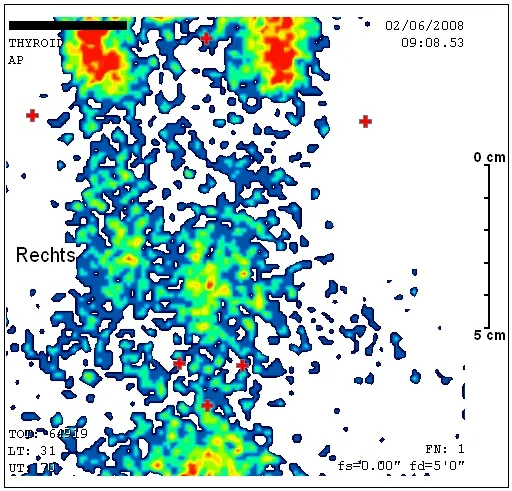
- Painless, small, firm or non-palpable goitre; normal ESR; TRAb negative; low uptake (scan avoided or breastfeeding interrupted)
- Thionamides are ineffective; use propranolol (compatible with breastfeeding) for symptoms
- Treat hypothyroid phase with levothyroxine if symptomatic, TSH above 10 mU/L, breastfeeding with symptoms, or planning pregnancy
- Long-term permanent hypothyroidism in up to 30–50%; recurrence in a later pregnancy in about 70%: check TSH annually
Differential diagnosis
| Condition | Clues | Key test |
|---|---|---|
| Postpartum Graves disease | Onset often after 6 months postpartum, orbitopathy, bruit, larger goitre, more severe thyrotoxicosis | TRAb positive; T3:T4 ratio above 20 (ng/µg); high uptake |
| Subacute (de Quervain) thyroiditis | Painful tender thyroid, fever, high ESR | ESR/CRP; neck tenderness |
| Exogenous thyroxine (factitious or excess dose) | Low uptake thyrotoxicosis without goitre | Low thyroglobulin |
| Postpartum depression | Low mood, fatigue, insomnia | TSH normal; screening questionnaires |
| Sheehan syndrome | Postpartum haemorrhage, failure of lactation, low TSH with low free T4 | Low free T4 with inappropriately low TSH; cortisol, prolactin |
| Lymphocytic hypophysitis | Late pregnancy or postpartum headache, visual field loss, hypopituitarism | Pituitary MRI; anterior pituitary hormones |
| Hashimoto thyroiditis (permanent) | Persisting hypothyroidism beyond 12 months | TSH remains high on withdrawal of levothyroxine |
Exam pearls
Guideline
ATA 2026 guidelines for thyroid disease in preconception, pregnancy and postpartum (replacing the ATA 2017 pregnancy guideline); ATA 2016 hyperthyroidism and thyrotoxicosis guideline (painless thyroiditis); NICE NG145 Thyroid disease (2019)
References
- Korevaar TIM, Leung AM, Alexander EK, et al.. American Thyroid Association 2026 guidelines for thyroid disease in preconception, pregnancy, and postpartum. Thyroid 2026.
- Alexander EK, Pearce EN, Brent GA, et al.. 2017 Guidelines of the American Thyroid Association for the diagnosis and management of thyroid disease during pregnancy and the postpartum. Thyroid 2017.
- Ross DS, Burch HB, Cooper DS, et al.. 2016 American Thyroid Association guidelines for diagnosis and management of hyperthyroidism and other causes of thyrotoxicosis. Thyroid 2016.
- National Institute for Health and Care Excellence (NICE). Thyroid disease: assessment and management (NG145). NICE guideline 2019.
- Nguyen CT, Mestman JH. Postpartum thyroiditis. Clin Obstet Gynecol 2019.
- Stagnaro-Green A. Approach to the patient with postpartum thyroiditis. J Clin Endocrinol Metab 2012.
Related topics
By Dr Khalid Seidi (B.Sc., M.D.) · MedEd World Clinical Knowledge library. Original teaching content checked against current guidelines (November 2026); confirm the latest local guidance before clinical use. Not a substitute for clinical judgement.