Clinical Knowledge › Internal medicine › Endocrinology › Relevant pharmacology
Insulin and insulin regimens
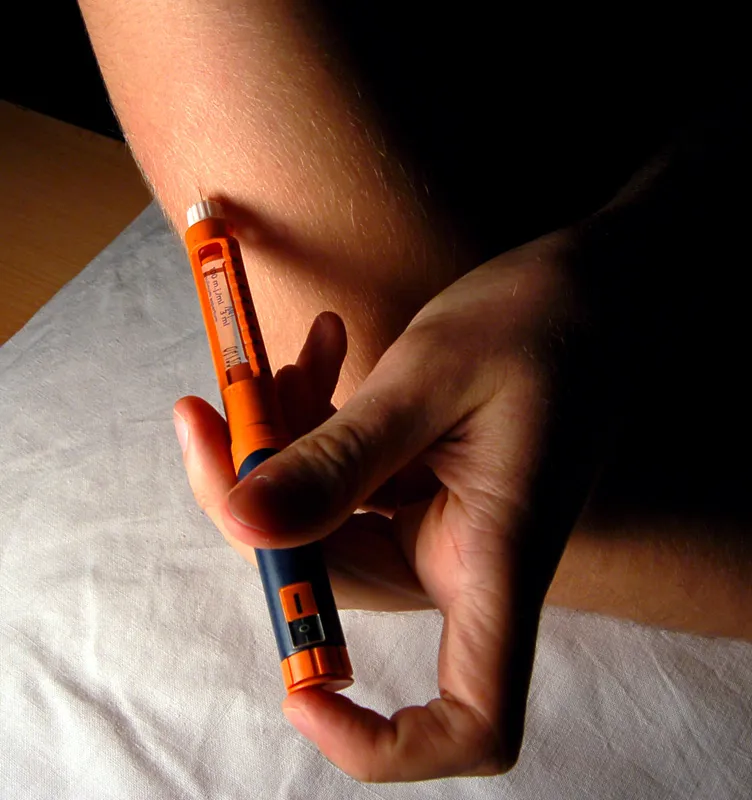
Insulin is essential for life in type 1 diabetes and is used in type 2 diabetes when other drugs fail, during catabolic or symptomatic hyperglycaemia, in pregnancy and in hospital emergencies. Preparations differ in onset and duration: rapid-acting analogues (aspart, lispro, glulisine) cover meals; soluble human insulin is used intravenously; NPH is intermediate; long-acting analogues (glargine, degludec, detemir) give a flat basal supply; and once-weekly insulin icodec is now approved for type 2 diabetes in Europe and the USA. In type 1 diabetes the standard is a basal–bolus regimen or pump, with carbohydrate counting, continuous glucose monitoring and, increasingly, hybrid closed-loop systems. In type 2 diabetes basal insulin is usually started at 10 units (or 0.1–0.2 units/kg) daily and titrated to fasting glucose, with GLP-1 receptor agonists preferred before or alongside insulin. Hypoglycaemia and weight gain are the main adverse effects; lipohypertrophy, prescribing errors and hypokalaemia with IV insulin are preventable harms. Basal insulin must never be stopped in type 1 diabetes, even when not eating.
Patient case, mechanism, investigations, management, flashcards and exam-style questions.Open the lesson →
Key facts
- Rapid-acting analogues: onset 10–15 min, peak 1–2 h, duration 3–5 h; give just before meals
- Long-acting analogues: glargine about 24 h, degludec over 42 h; weekly icodec for type 2 diabetes
- Type 1 diabetes: basal–bolus or pump; total daily dose about 0.5–1 unit/kg, roughly half basal
- Never stop basal insulin in type 1 diabetes, even when vomiting or nil by mouth (DKA risk)
- Type 2: start basal 10 units nightly and increase by 2 units every 3 days until fasting glucose is 4–7 mmol/L (72–126 mg/dL)
- Overbasalisation: basal above about 0.5 units/kg/day with bedtime-to-morning glucose falls and hypoglycaemia; add prandial insulin or a GLP-1 RA instead
- Hypoglycaemia (glucose below 4 mmol/L, 70 mg/dL): 15–20 g fast-acting carbohydrate, recheck in 15 minutes
- Always write 'units' in full; insulin is a high-alert medicine
Differential diagnosis
| Condition | Clues | Key test |
|---|---|---|
| Hypoglycaemia from excess insulin | Sweating, tremor, confusion after missed meal or exercise | Capillary glucose |
| Dawn phenomenon | Fasting hyperglycaemia from early-morning counter-regulatory hormones | CGM: rise from about 3–4 am without preceding low |
| Nocturnal hypoglycaemia with rebound | Night sweats, nightmares, high morning glucose | CGM or 3 am glucose |
| Lipohypertrophy causing erratic absorption | Rubbery lumps at injection sites; unpredictable glucose | Inspect and palpate sites |
| Insulin omission | High HbA1c, recurrent DKA, often in adolescents or eating disorders | Sensitive history; pen memory or pump download |
| Factitious hypoglycaemia | Insulin access; high insulin, low C-peptide | Insulin, C-peptide, sulfonylurea screen during hypoglycaemia |
Exam pearls
Guideline
ADA Standards of Care in Diabetes 2026 (sections 6 and 9), NICE NG17 (type 1) and NG28 (type 2, updated 2026), NICE TA943 hybrid closed loop (2023)
References
- American Diabetes Association Professional Practice Committee. 9. Pharmacologic approaches to glycemic treatment: Standards of Care in Diabetes—2026. Diabetes Care 2026.
- American Diabetes Association Professional Practice Committee. 6. Glycemic goals, hypoglycemia, and hyperglycemic crises: Standards of Care in Diabetes—2026. Diabetes Care 2026.
- National Institute for Health and Care Excellence (NICE). Type 1 diabetes in adults: diagnosis and management (NG17). NICE guideline NG17 2022.
- National Institute for Health and Care Excellence (NICE). Type 2 diabetes in adults: management (NG28), last updated 2026. NICE guideline NG28 2026.
- National Institute for Health and Care Excellence (NICE). Hybrid closed loop systems for managing blood glucose levels in type 1 diabetes (TA943). NICE technology appraisal guidance TA943 2023.
- The Diabetes Control and Complications Trial Research Group. The effect of intensive treatment of diabetes on the development and progression of long-term complications in insulin-dependent diabetes mellitus. N Engl J Med 1993.
Related topics
By Dr Khalid Seidi (B.Sc., M.D.) · MedEd World Clinical Knowledge library. Original teaching content checked against current guidelines (November 2026); confirm the latest local guidance before clinical use. Not a substitute for clinical judgement.