Clinical Knowledge › Internal medicine › Endocrinology › Relevant pharmacology
Metformin
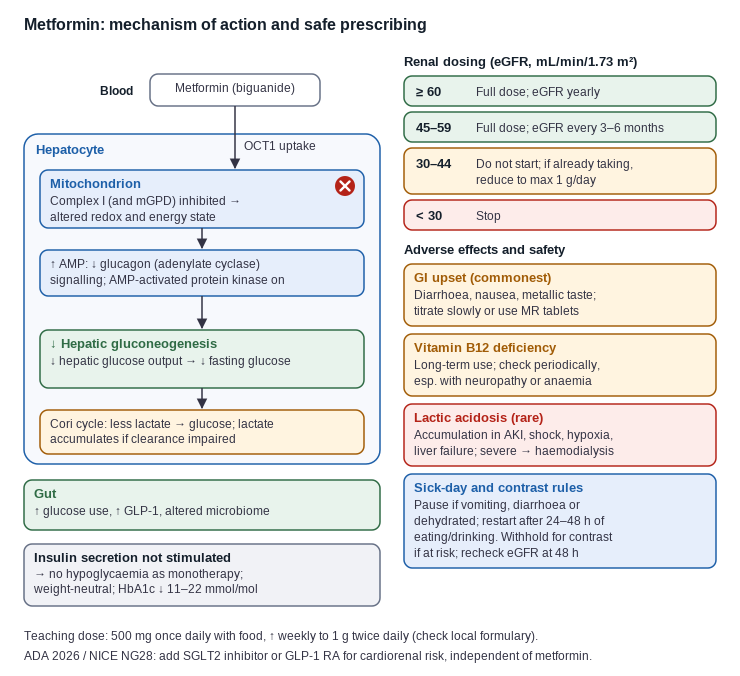
Metformin, a biguanide, is the most widely used glucose-lowering drug and remains a first-line option for type 2 diabetes worldwide. It lowers hepatic glucose production, mainly by inhibiting mitochondrial respiration and gluconeogenesis, with additional gut effects that raise GLP-1. Used alone it does not cause hypoglycaemia, is weight-neutral or causes slight weight loss, lowers HbA1c by about 11–22 mmol/mol (1–2%) and is cheap. UKPDS 34 showed fewer myocardial infarctions and deaths in overweight people, and the Diabetes Prevention Program showed it delays type 2 diabetes. Gastrointestinal upset is common and is reduced by slow titration and modified-release tablets. Long-term use lowers vitamin B12. The feared complication, metformin-associated lactic acidosis, is rare and occurs mainly when the drug accumulates during acute kidney injury, hypoxia, sepsis or liver failure. Doses are reduced when eGFR is 30–44, it is stopped below 30, and it is paused during dehydrating illness and around iodinated contrast in at-risk patients. Current ADA and NICE guidance add SGLT2 inhibitors or GLP-1 receptor agonists early for cardiorenal protection, independent of metformin.
Patient case, mechanism, investigations, management, flashcards and exam-style questions.Open the lesson →
Key facts
- Mechanism: reduces hepatic gluconeogenesis via mitochondrial complex I inhibition and AMP-activated protein kinase signalling; increases GLP-1
- No hypoglycaemia as monotherapy; weight-neutral; HbA1c falls about 11–22 mmol/mol (1–2%)
- Teaching dose: 500 mg once daily with food, increasing weekly to 1 g twice daily; MR 500 mg–2 g once daily (check local formulary)
- eGFR 45 or more: full dose; 30–44: do not start (or reduce, maximum 1 g/day); below 30: stop
- Commonest adverse effect: GI upset (diarrhoea, nausea, metallic taste)
- Long-term use lowers vitamin B12: check periodically, especially with neuropathy or anaemia
- Lactic acidosis is rare and linked to accumulation in AKI, shock, hypoxia and liver failure; severe cases need haemodialysis
- Sick-day rule: pause during vomiting, diarrhoea or dehydration; restart after 24–48 hours of eating and drinking
Differential diagnosis
| Condition | Clues | Key test |
|---|---|---|
| Metformin-associated lactic acidosis | High anion gap acidosis with high lactate and AKI or overdose | Lactate, venous gas, metformin level if available |
| Diabetic ketoacidosis | Ketones raised; often SGLT2i or insulin deficiency | Blood ketones |
| Septic shock lactic acidosis | Infection, hypotension; metformin incidental | Cultures, clinical picture |
| Metformin GI intolerance | Diarrhoea starting after initiation or dose rise | Temporal relationship; try MR form |
| Coeliac disease or other diarrhoea | Persistent diarrhoea, weight loss, anaemia | tTG antibodies; stool tests |
| Vitamin B12 deficiency neuropathy | Numb feet in a long-term user | Serum B12 or methylmalonic acid |
| Diabetic peripheral neuropathy | Stocking sensory loss; normal B12 | B12 normal; monofilament |
Exam pearls
Guideline
ADA Standards of Care in Diabetes 2026 (section 9), NICE NG28 (updated 2026) and KDIGO 2022 diabetes in CKD
References
- American Diabetes Association Professional Practice Committee. 9. Pharmacologic approaches to glycemic treatment: Standards of Care in Diabetes—2026. Diabetes Care 2026.
- National Institute for Health and Care Excellence (NICE). Type 2 diabetes in adults: management (NG28), last updated 2026. NICE guideline NG28 2026.
- Kidney Disease: Improving Global Outcomes (KDIGO) Diabetes Work Group. KDIGO 2022 Clinical Practice Guideline for Diabetes Management in Chronic Kidney Disease. Kidney Int 2022.
- UK Prospective Diabetes Study (UKPDS) Group. Effect of intensive blood-glucose control with metformin on complications in overweight patients with type 2 diabetes (UKPDS 34). Lancet 1998.
- Knowler WC, Barrett-Connor E, Fowler SE, et al.. Reduction in the incidence of type 2 diabetes with lifestyle intervention or metformin. N Engl J Med 2002.
- Aroda VR, Edelstein SL, Goldberg RB, et al.. Long-term metformin use and vitamin B12 deficiency in the Diabetes Prevention Program Outcomes Study. J Clin Endocrinol Metab 2016.
Related topics
By Dr Khalid Seidi (B.Sc., M.D.) · MedEd World Clinical Knowledge library. Original teaching content checked against current guidelines (November 2026); confirm the latest local guidance before clinical use. Not a substitute for clinical judgement.