Clinical Knowledge › Paediatrics › Neonatology
Neonatal sepsis
Neonatal sepsis is a systemic bacterial (or fungal) infection in the first 28 days, divided into early-onset sepsis (EOS, within 72 hours of birth, acquired from the mother around birth) and late-onset sepsis (LOS, from 72 hours, acquired in hospital or the community). Group B streptococcus (GBS) and Escherichia coli dominate EOS, with E. coli now commonest in preterm babies; coagulase-negative staphylococci, Staphylococcus aureus, Gram-negative bacilli and Candida cause most LOS on neonatal units. Signs are subtle and non-specific: poor feeding, lethargy, temperature instability, apnoea, tachypnoea, poor perfusion, jaundice or abnormal glucose. Because delay kills, NICE NG195 (updated May 2026) uses maternal risk factors and clinical indicators to decide who needs a blood culture and antibiotics within 1 hour; first-line EOS treatment is IV benzylpenicillin plus gentamicin, reviewed at 36 hours with culture and CRP. Lumbar puncture is essential when meningitis is possible. Intrapartum antibiotic prophylaxis prevents most early-onset GBS disease, and line care bundles reduce LOS.
Patient case, mechanism, investigations, management, flashcards and exam-style questions.Open the lesson →
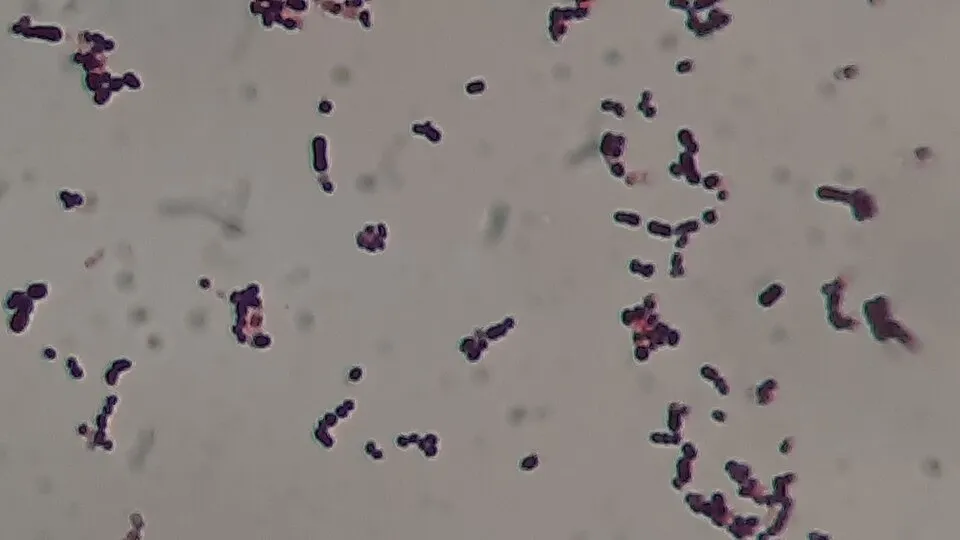
Key facts
- Early-onset sepsis: within 72 hours, vertical transmission; late-onset: 72 hours to 28 days (longer on neonatal units), nosocomial or community
- EOS incidence about 0.5–1 per 1000 live births in high-income countries, many times higher in very preterm babies and in low- and middle-income settings
- EOS organisms: GBS (commonest at term), E. coli (commonest in preterm babies), Listeria; LOS: coagulase-negative staphylococci, S. aureus, Gram-negatives, Candida
- NICE NG195: any red flag, or two or more non-red-flag risk factors or clinical indicators, means blood culture and IV antibiotics within 1 hour
- EOS first line: benzylpenicillin 25 mg/kg 12-hourly plus gentamicin 5 mg/kg, second dose at 36 hours (teaching doses; check local formulary)
- Stop at 36 hours if culture negative, initial suspicion not strong, baby well and CRP reassuring; decisions must not rest on CRP alone (NG195)
- 2026 NICE option: switch to oral amoxicillin after 36 hours for well babies of 35 weeks or more with negative cultures, completing up to 7 days, with senior agreement and follow-up
- Intrapartum antibiotic prophylaxis (benzylpenicillin from onset of labour) prevents most early-onset GBS disease
Differential diagnosis
| Condition | Clues | Key test |
|---|---|---|
| Transient tachypnoea of the newborn | Planned caesarean, well-perfused, improving | Clinical course; CXR fluid in fissures; negative culture |
| Duct-dependent congenital heart disease | Shock or cyanosis on days 2–5 as the duct closes; weak femorals | Four-limb BP, pre/post-ductal SpO2, echo; start prostaglandin |
| Inborn error of metabolism | Well then vomiting, encephalopathy, hypoglycaemia, acidosis | Ammonia, lactate, ketones, gas, metabolic screen |
| Neonatal hypoglycaemia | Jitteriness, poor feeding, infant of diabetic mother | Blood glucose (laboratory confirmation) |
| Hypoxic-ischaemic encephalopathy | Perinatal asphyxia, encephalopathy from birth | Cord gas, Apgar, neurological examination |
| Neonatal HSV infection | Days 5–21, vesicles, seizures, raised transaminases | HSV PCR (blood, CSF, surface swabs); start aciclovir |
| Non-accidental injury (late) | Unexplained collapse, bruising, inconsistent history | Skeletal survey, CT head, ophthalmology, safeguarding referral |
Exam pearls
Guideline
NICE NG195 Neonatal infection: antibiotics for prevention and treatment (2021, updated May 2026); AAP clinical reports on early-onset sepsis (2018, ≥35 and ≤34 weeks); NICE NG254 Suspected sepsis in under 16s (2025)
References
- National Institute for Health and Care Excellence. Neonatal infection: antibiotics for prevention and treatment (NG195). NICE guideline 2021.
- Puopolo KM, Benitz WE, Zaoutis TE, et al.. Management of neonates born at ≥35 0/7 weeks' gestation with suspected or proven early-onset bacterial sepsis. Pediatrics 2018.
- Puopolo KM, Benitz WE, Zaoutis TE, et al.. Management of neonates born at ≤34 6/7 weeks' gestation with suspected or proven early-onset bacterial sepsis. Pediatrics 2018.
- Kuzniewicz MW, Puopolo KM, Fischer A, et al.. A quantitative, risk-based approach to the management of neonatal early-onset sepsis. JAMA Pediatr 2017.
- Kuzniewicz MW, Escobar GJ, Forquer H, et al.. Update to the neonatal early-onset sepsis calculator utilizing a contemporary cohort. Pediatrics 2024.
- Stoll BJ, Puopolo KM, Hansen NI, et al.. Early-onset neonatal sepsis 2015 to 2017, the rise of Escherichia coli, and the need for novel prevention strategies. JAMA Pediatr 2020.
Related topics
By Dr Khalid Seidi (B.Sc., M.D.) · MedEd World Clinical Knowledge library. Original teaching content checked against current guidelines (November 2026); confirm the latest local guidance before clinical use. Not a substitute for clinical judgement.