Clinical Knowledge › Paediatrics › Neonatology
Newborn examination and neonatal screening
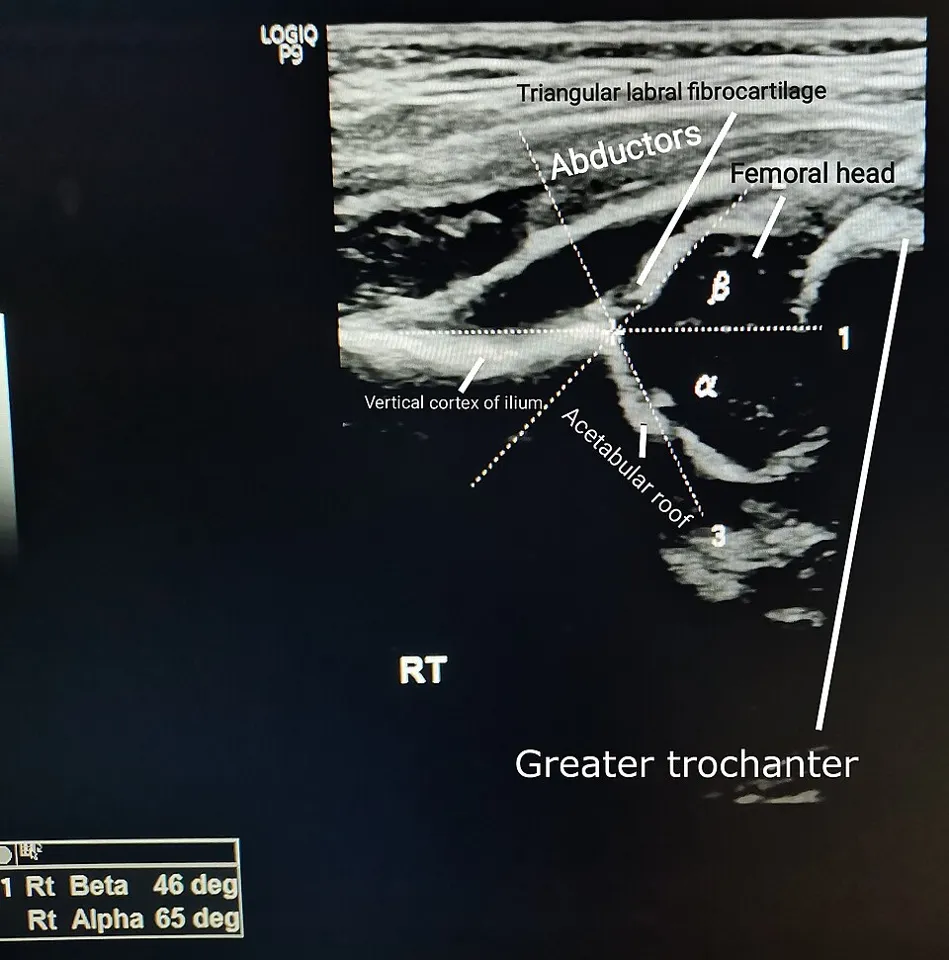
Every baby is offered a structured head-to-toe examination within 72 hours of birth and again at 6–8 weeks, plus population screening tests that find serious, treatable conditions before symptoms appear. The examination confirms normal transition, recognises harmless variants (milia, erythema toxicum, dermal melanocytosis) and detects anomalies. In the UK the newborn and infant physical examination (NIPE) has four screening elements: eyes (red reflex for cataract and retinoblastoma), heart (murmurs, femoral pulses, cyanosis), hips (Barlow and Ortolani manoeuvres, ultrasound for risk factors) and testes (undescended testes). The newborn blood spot (heel prick), ideally taken on day 5, screens for sickle cell disease, cystic fibrosis, congenital hypothyroidism and six metabolic diseases, with in-service evaluations of SCID and (from 2026) SMA screening. Hearing is screened with automated otoacoustic emissions or auditory brainstem response, and many countries add pulse oximetry for critical congenital heart disease. Panels differ by country; the principles (consent, timely testing, rapid referral, clear communication) do not.
Patient case, mechanism, investigations, management, flashcards and exam-style questions.Open the lesson →
Key facts
- Full newborn examination within 72 hours of birth and a second check at 6–8 weeks (NIPE)
- NIPE screening elements: eyes, heart, hips and testes
- Absent or abnormal red reflex: urgent ophthalmology (congenital cataract; retinoblastoma if white reflex)
- Hip ultrasound by about 6 weeks for risk factors (first-degree family history of early hip problems, breech at or after 36 weeks or at delivery); within 2 weeks for an abnormal examination
- Bilateral undescended testes: senior review within 24 hours (consider congenital adrenal hyperplasia or a difference of sex development)
- Blood spot on day 5 (day of birth = day 0), ideally between days 5 and 8: SCD, CF, CHT, PKU, MCADD, MSUD, IVA, GA1, HCU (UK), plus in-service evaluations for SCID and SMA
- Hearing screening: AOAE for well babies, AABR if no clear response or after NICU stay; aim to screen by 1 month, diagnose by 3 months and intervene by 6 months
- Vitamin K 1 mg IM at birth (term) prevents vitamin K deficiency bleeding (teaching dose; check local formulary)
Differential diagnosis
| Condition | Clues | Key test |
|---|---|---|
| Developmental dysplasia of the hip | Positive Barlow or Ortolani, asymmetric skin creases, limited abduction | Hip ultrasound (Graf) |
| Congenital cataract | Absent or dull red reflex | Urgent ophthalmology review |
| Retinoblastoma | White pupillary reflex (leukocoria), family history | Same-day or urgent ophthalmology; MRI |
| Critical congenital heart disease | Cyanosis, weak femoral pulses, murmur, low pre/post-ductal saturation | Pulse oximetry, echocardiogram |
| Cleft palate | Feeding difficulty, nasal regurgitation; missed if palate not seen and felt | Direct inspection with torch and tongue depressor |
| Undescended testis | Empty scrotum; bilateral needs urgent review | Clinical; karyotype and 17-OHP if bilateral or ambiguous genitalia |
| Pathological jaundice | Visible jaundice in first 24 hours | Serum bilirubin, DAT, blood group |
| Hypospadias | Ventral meatus, hooded foreskin, chordee | Clinical; avoid circumcision; urology referral |
Exam pearls
Guideline
UK NIPE screening programme standards (2021, updated) and newborn blood spot screening programme (UK NSC; SCID and SMA in-service evaluations 2021–2026); NICE NG194 Postnatal care (2021); AAP-endorsed pulse oximetry algorithm (2020); JCIH 2019 hearing position statement
References
- NHS England / UK National Screening Committee. Newborn and infant physical examination (NIPE) screening programme: standards and handbook. GOV.UK 2021.
- UK National Screening Committee / NHS screening programmes. Newborn blood spot screening programme in the UK: sampling guidelines and programme standards. GOV.UK 2024.
- UK National Screening Committee. UK NSC consultation on extending the in-service evaluation of screening for severe combined immunodeficiency (SCID). UK NSC blog 2025.
- National Institute for Health and Care Excellence. Postnatal care (NG194). NICE guideline 2021.
- Martin GR, Ewer AK, Gaviglio A, et al.. Updated strategies for pulse oximetry screening for critical congenital heart disease. Pediatrics 2020.
- Joint Committee on Infant Hearing. Year 2019 position statement: principles and guidelines for early hearing detection and intervention programs. J Early Hear Detect Interv 2019.
Related topics
By Dr Khalid Seidi (B.Sc., M.D.) · MedEd World Clinical Knowledge library. Original teaching content checked against current guidelines (November 2026); confirm the latest local guidance before clinical use. Not a substitute for clinical judgement.