Clinical Knowledge › Paediatrics › Neonatology
Prematurity and its complications
A preterm birth is one before 37 completed weeks of gestation. About 13 million babies (roughly 1 in 10) are born preterm each year, and complications of prematurity are the leading cause of death in children under 5 worldwide. Risk rises steeply as gestation falls: extremely preterm babies (under 28 weeks) face respiratory distress syndrome, apnoea, patent ductus arteriosus, intraventricular haemorrhage, necrotising enterocolitis, late-onset sepsis, retinopathy of prematurity and bronchopulmonary dysplasia, while late preterm babies mainly have hypoglycaemia, hypothermia, jaundice and feeding problems. Outcomes are improved by a bundle of evidence-based steps: birth in a centre with neonatal intensive care, antenatal corticosteroids, magnesium sulfate for neuroprotection under 30 weeks, deferred cord clamping, prevention of hypothermia, non-invasive respiratory support with early surfactant, caffeine, early breast milk, kangaroo mother care and infection control. Survivors need follow-up of growth, hearing, vision and development using corrected age, and families need honest support.
Patient case, mechanism, investigations, management, flashcards and exam-style questions.Open the lesson →
Key facts
- Preterm under 37 weeks: extremely preterm under 28, very preterm 28–31+6, moderate 32–33+6, late preterm 34–36+6 weeks
- Low birth weight under 2500 g; very low under 1500 g; extremely low under 1000 g
- Antenatal corticosteroids (for example betamethasone 12 mg IM, two doses 24 hours apart) reduce RDS, IVH, NEC and death (teaching dose; check local formulary)
- Magnesium sulfate before birth under 30 weeks reduces cerebral palsy (NICE: offer 24+0–29+6, consider 30+0–33+6)
- Caffeine citrate treats apnoea of prematurity and reduces bronchopulmonary dysplasia (CAP trial)
- IVH occurs mostly in the first 72 hours; screen with cranial ultrasound
- ROP screening in the UK: born before 31 weeks or under 1501 g (2022 guideline, revised 2024); US: 30 weeks or less or 1500 g or less
- Use corrected age (chronological age minus weeks born early) for growth and development until 2 years; immunise by chronological age
Differential diagnosis
| Condition | Clues | Key test |
|---|---|---|
| Small for gestational age term infant | Low weight but mature features and term dates | Dating scan, gestational assessment |
| Respiratory distress syndrome | Preterm, grunting from birth, ground-glass CXR | Chest X-ray |
| Neonatal sepsis | Temperature instability, apnoea, feed intolerance | Blood culture, CRP |
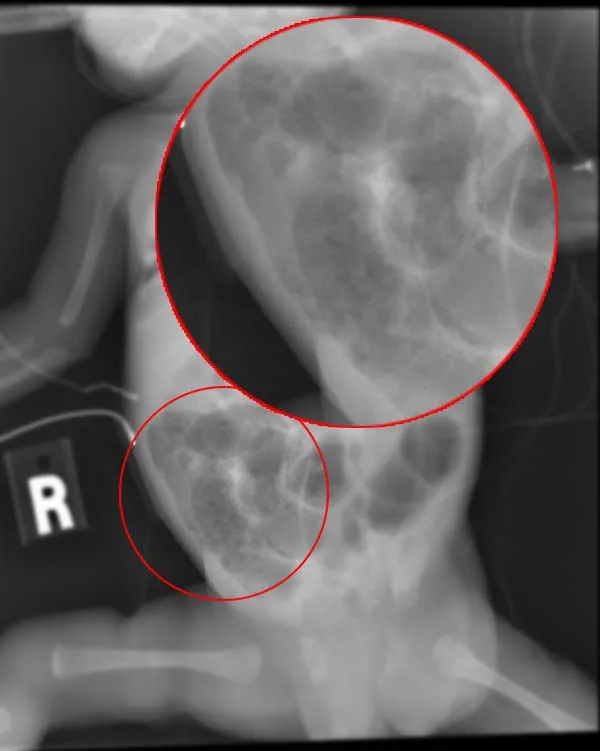
| Necrotising enterocolitis | Feed intolerance, distension, bloody stools at 1–3 weeks | Abdominal X-ray (pneumatosis) |
| Apnoea of prematurity | Pauses of 20 s or more, bradycardia, desaturation; well between | Exclude sepsis, hypoglycaemia, anaemia, seizures |
| Intraventricular haemorrhage | Often silent; sudden deterioration, bulging fontanelle, falling haematocrit | Cranial ultrasound |
| Patent ductus arteriosus | Bounding pulses, wide pulse pressure, continuous murmur | Echocardiogram |
Exam pearls
Guideline
WHO recommendations for care of the preterm or low-birth-weight infant (2022) and on antenatal corticosteroids (2022); NICE NG25 Preterm labour and birth (2015, updated 2022); BAPM extreme preterm framework (2019); NICE NG72 developmental follow-up (2017)
References
- World Health Organization. WHO recommendations for care of the preterm or low-birth-weight infant. WHO 2022.
- World Health Organization. WHO recommendations on antenatal corticosteroids for improving preterm birth outcomes. WHO 2022.
- National Institute for Health and Care Excellence. Preterm labour and birth (NG25). NICE guideline 2015.
- British Association of Perinatal Medicine. Perinatal management of extreme preterm birth before 27 weeks of gestation: a framework for practice. BAPM 2019.
- WHO ACTION Trials Collaborators; Oladapo OT, Vogel JP, et al.. Antenatal dexamethasone for early preterm birth in low-resource countries. N Engl J Med 2020.
- WHO Immediate KMC Study Group; Arya S, Naburi H, et al.. Immediate 'kangaroo mother care' and survival of infants with low birth weight. N Engl J Med 2021.
Related topics
By Dr Khalid Seidi (B.Sc., M.D.) · MedEd World Clinical Knowledge library. Original teaching content checked against current guidelines (November 2026); confirm the latest local guidance before clinical use. Not a substitute for clinical judgement.