Clinical Knowledge › Obstetrics and gynaecology › Labour and delivery
Operative vaginal delivery
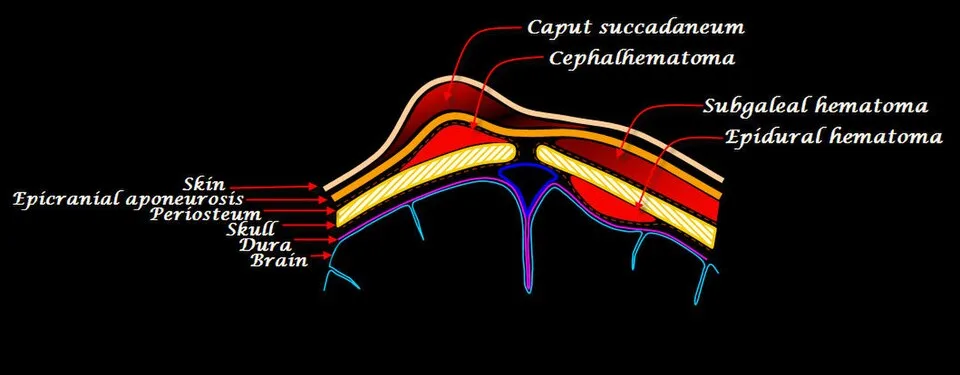
Operative (assisted) vaginal delivery uses a vacuum extractor (ventouse) or obstetric forceps to expedite birth in the second stage of labour. Indications are suspected fetal compromise, delay in the second stage, maternal exhaustion, and medical conditions in which pushing should be shortened or avoided. Safe practice depends on strict prerequisites: full dilatation, ruptured membranes, the head no more than one-fifth palpable abdominally and at or below the ischial spines, a known position, adequate analgesia, an empty bladder, informed consent and a skilled operator ready to abandon. Births are classified as outlet, low or mid-cavity. The ventouse fails more often and causes more cephalhaematoma, while forceps are more likely to succeed but cause more perineal and anal sphincter trauma. Procedures with a higher chance of failure are done as a trial in theatre. Abandon if there is no progressive descent with each pull or birth is not imminent after three pulls. Aftercare includes a single prophylactic antibiotic dose, rectal examination, bladder care, VTE assessment and a debrief.
Patient case, mechanism, investigations, management, flashcards and exam-style questions.Open the lesson →
Key facts
- Instruments: ventouse (soft or rigid cup, handheld devices) and forceps (non-rotational: Neville-Barnes, Simpson, Wrigley; rotational: Kielland)
- Prerequisites: fully dilated, membranes ruptured, head 1/5 or less palpable, at or below the spines, position known, moulding not severe, analgesia, empty bladder, consent, skilled operator, backup plan
- RCOG classification: outlet (scalp visible without parting labia), low (station +2 or below, not on perineum), mid (1/5 palpable, station 0 to +1); rotation more than 45° = rotational
- Ventouse: more failures, cephalhaematoma and retinal haemorrhage, less maternal trauma; forceps: more successful, more perineal trauma and OASI, facial nerve palsy
- Ventouse is avoided below 32 weeks and used with caution between 32+0 and 36+0 weeks
- Abandon if no progressive descent with each pull or birth not imminent after three pulls by an experienced operator; avoid sequential instruments where possible
- Mediolateral episiotomy (about 60° from the midline at crowning) is advised, particularly for forceps and nulliparous women
- After birth: single IV dose of prophylactic antibiotic (e.g. co-amoxiclav; ANODE trial), rectal examination, bladder care, VTE assessment and debrief
Differential diagnosis
| Condition | Clues | Key test |
|---|---|---|
| Spontaneous vaginal birth with more time | Normal CTG, progressive descent, woman able to push | Reassess progress and fetal condition |
| Caesarean birth in the second stage | Head more than 1/5 palpable, above spines, unknown position or severe moulding | Abdominal and vaginal assessment, ultrasound |
| Rotational assisted birth | OP or OT position needing rotation more than 45° | Ultrasound and vaginal examination of position |
| Trial of assisted birth in theatre | Higher risk of failure: mid-cavity, rotational, BMI over 30, estimated fetal weight over 4 kg | Senior assessment with theatre and caesarean ready |
| Fetal compromise requiring category 1 caesarean | Not fully dilated or head high with abnormal CTG | Vaginal examination; move to theatre |
Exam pearls
Guideline
RCOG Green-top Guideline No. 26 Assisted vaginal birth (2020); ACOG Practice Bulletin No. 219 Operative vaginal birth (2020); SOGC Clinical Practice Guideline No. 381 Assisted vaginal birth (2019); NICE NG235 Intrapartum care (2023)
References
- Murphy DJ, Strachan BK, Bahl R; Royal College of Obstetricians and Gynaecologists. Assisted vaginal birth: Green-top Guideline No. 26. BJOG 2020.
- American College of Obstetricians and Gynecologists. Operative vaginal birth: ACOG Practice Bulletin No. 219. Obstet Gynecol 2020.
- Society of Obstetricians and Gynaecologists of Canada. Assisted vaginal birth: SOGC Clinical Practice Guideline No. 381. J Obstet Gynaecol Can 2019.
- Knight M, Chiocchia V, Partlett C, et al.. Prophylactic antibiotics in the prevention of infection after operative vaginal delivery (ANODE): a multicentre randomised controlled trial. Lancet 2019.
- National Institute for Health and Care Excellence. Intrapartum care (NG235). NICE guideline NG235 2023.
- Royal College of Obstetricians and Gynaecologists. Reducing the risk of venous thromboembolism during pregnancy and the puerperium (Green-top Guideline No. 37a). RCOG 2015.
Related topics
By Dr Khalid Seidi (B.Sc., M.D.) · MedEd World Clinical Knowledge library. Original teaching content checked against current guidelines (November 2026); confirm the latest local guidance before clinical use. Not a substitute for clinical judgement.