Clinical Knowledge › Obstetrics and gynaecology › Clinical problems
Postmenopausal bleeding: approach to the patient
Postmenopausal bleeding (PMB) is vaginal bleeding occurring 12 months or more after the last menstrual period, or unscheduled bleeding on hormone replacement therapy outside the expected pattern. It is the cardinal symptom of endometrial cancer: about 90% of women with endometrial cancer present with PMB, and about 9% of women with PMB have endometrial cancer, more if they are older, obese, diabetic or taking tamoxifen. Most bleeding, however, comes from atrophic endometrium or vagina, polyps or HRT. Every episode needs prompt assessment: history, abdominal and speculum examination to find the source (vulva, vagina, cervix, urethra, rectum), then transvaginal ultrasound of endometrial thickness. In women not using HRT, a thickness of 4 mm or less makes cancer very unlikely; a thicker or irregular endometrium, recurrent bleeding, tamoxifen use or high risk leads to endometrial biopsy, usually with outpatient hysteroscopy. Management follows the cause: vaginal oestrogen for atrophy, polypectomy, progestogen or hysterectomy for hyperplasia, and staging and surgery for cancer.
Patient case, mechanism, investigations, management, flashcards and exam-style questions.Open the lesson →
Key facts
- PMB = bleeding 12 months or more after the final menstrual period; unscheduled bleeding on HRT is assessed in the same way
- About 9% of women with PMB have endometrial cancer, and about 90% of endometrial cancers present with PMB
- Commonest causes: atrophic vaginitis and endometrium, endometrial polyps, HRT; important causes: hyperplasia, endometrial and cervical cancer
- NICE NG12: refer women aged 55 or over with PMB on a suspected cancer pathway; consider referral under 55
- Transvaginal ultrasound first: endometrial thickness 4 mm or less (no HRT) gives a cancer risk well under 1%
- Endometrium over 4 mm, focal lesion, recurrent bleeding or tamoxifen use → endometrial sampling (Pipelle or hysteroscopy with biopsy)
- Atypical hyperplasia → total hysterectomy with bilateral salpingo-oophorectomy; hyperplasia without atypia → progestogen, LNG-IUS first-line
- Tamoxifen thickens the endometrium on ultrasound and raises endometrial cancer risk 2–3-fold; any bleeding needs hysteroscopy and biopsy
Differential diagnosis
| Condition | Clues | Key test |
|---|---|---|
| Atrophic vaginitis or endometrium | Dryness, dyspareunia, pale thin vaginal epithelium, petechiae | Speculum; TVUS endometrium ≤4 mm |
| Endometrial polyp | Intermittent spotting; focal echogenic lesion | Saline sonography or hysteroscopy |
| Endometrial hyperplasia | Obesity, PCOS, unopposed oestrogen, thickened endometrium | Endometrial biopsy |
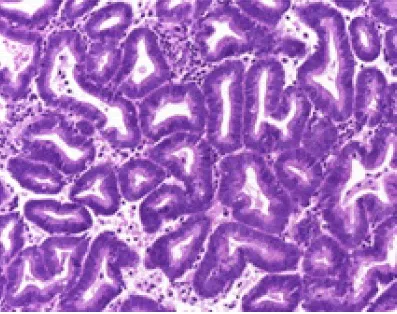
| Endometrial carcinoma | Older, obese, diabetic, nulliparous, tamoxifen, Lynch; thick irregular endometrium | Endometrial biopsy; MRI and CT staging |
| Cervical cancer or cervical polyp | Postcoital bleeding, visible lesion, discharge | Speculum, colposcopy and biopsy |
| HRT-related bleeding | Bleeding outside expected pattern on sequential or continuous HRT | Review regimen; TVUS ± biopsy if persistent |
| Oestrogen-secreting ovarian tumour (granulosa cell) | Adnexal mass with thick endometrium | Ultrasound, inhibin B |
| Non-gynaecological bleeding (urethral caruncle, haematuria, rectal) | Source outside the genital tract | Examination, urinalysis, colorectal assessment |
Exam pearls
Guideline
NICE NG12 Suspected cancer: recognition and referral (2015, updated); ACOG Committee Opinion 734 transvaginal ultrasound in PMB (2018, reaffirmed); RCOG/BSGE Green-top No.67 endometrial hyperplasia (2016); FIGO 2023 endometrial cancer staging; ESGO/ESTRO/ESP endometrial carcinoma guidelines (2021, with subsequent updates); NICE DG42 Lynch syndrome testing in endometrial cancer (2020); RCOG Green-top No.59 outpatient hysteroscopy (2024)
References
- National Institute for Health and Care Excellence (NICE). Suspected cancer: recognition and referral (NG12). NICE guideline 2015.
- American College of Obstetricians and Gynecologists (ACOG). Committee Opinion No. 734: The role of transvaginal ultrasonography in evaluating the endometrium of women with postmenopausal bleeding. Obstet Gynecol 2018.
- Royal College of Obstetricians and Gynaecologists (RCOG) and British Society for Gynaecological Endoscopy (BSGE). Management of endometrial hyperplasia (Green-top Guideline No. 67). RCOG 2016.
- Berek JS, Matias-Guiu X, Creutzberg C, et al.. FIGO staging of endometrial cancer: 2023. Int J Gynaecol Obstet 2023.
- Concin N, Matias-Guiu X, Vergote I, et al.. ESGO/ESTRO/ESP guidelines for the management of patients with endometrial carcinoma. Int J Gynecol Cancer 2021.
- National Institute for Health and Care Excellence (NICE). Testing strategies for Lynch syndrome in people with endometrial cancer (DG42). NICE diagnostics guidance 2020.
Related topics
By Dr Khalid Seidi (B.Sc., M.D.) · MedEd World Clinical Knowledge library. Original teaching content checked against current guidelines (November 2026); confirm the latest local guidance before clinical use. Not a substitute for clinical judgement.