Clinical Knowledge › Surgery › Fractures and orthopaedic trauma
Principles of fracture management
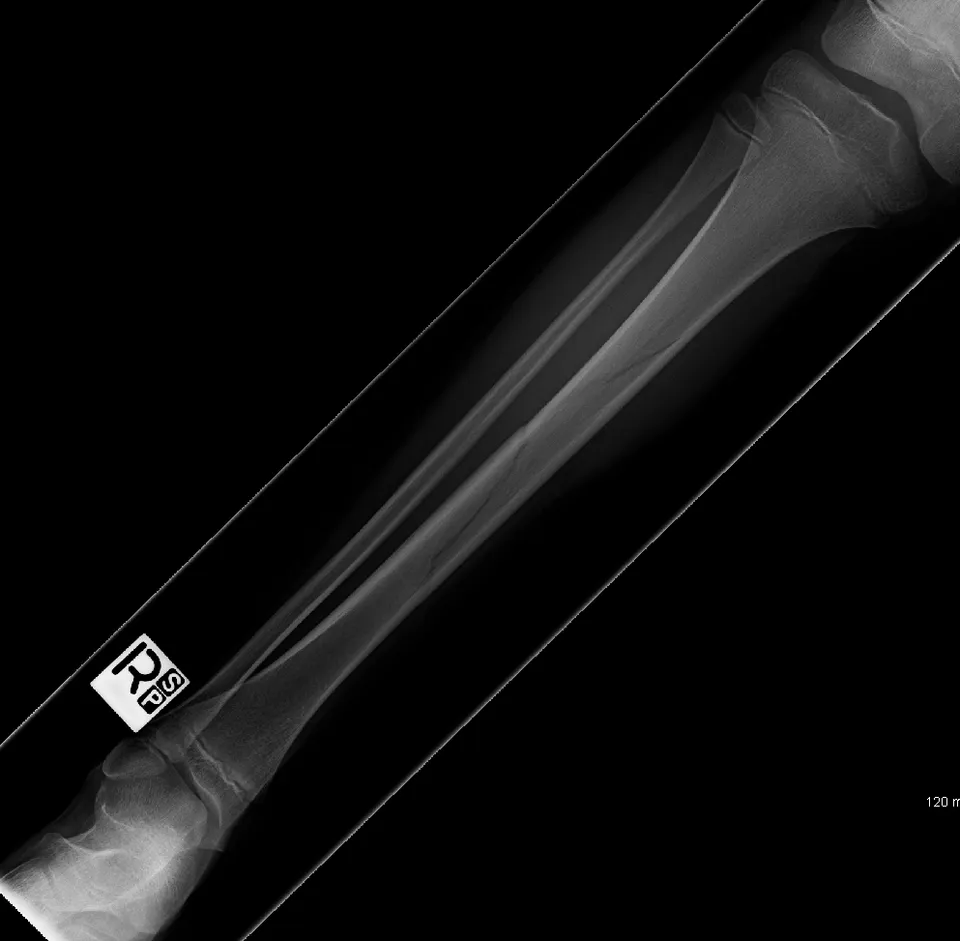
A fracture is a break in the structural continuity of bone, from trauma, repetitive stress or minor force on diseased bone (pathological fracture). Management starts with resuscitation of the whole patient using an xABCDE approach, followed by a focused assessment of the limb: skin, neurovascular status and compartments. Fractures are described systematically from two orthogonal radiographs that include the joints above and below, and classified with systems that guide treatment (for example AO/OTA, Gustilo–Anderson, Salter–Harris, Garden, Weber). The core principles are to reduce displaced fractures, hold them until union, and rehabilitate the limb and patient. Holding methods range from casts and traction to internal fixation (screws, plates, nails), external fixation or arthroplasty. Surgery is chosen for open, unstable, displaced intra-articular, pathological or failed closed fractures and to allow early mobilisation. Anticipate early complications (compartment syndrome, fat embolism, VTE) and late ones (non-union, malunion, avascular necrosis).
Patient case, mechanism, investigations, management, flashcards and exam-style questions.Open the lesson →
Key facts
- Treat the patient first (xABCDE), then the limb: check skin, pulses, capillary refill, nerve function and compartments before and after any intervention
- Radiographs: two orthogonal views including the joint above and below the fracture
- Describe: bone, location, articular involvement, pattern, displacement (translation, angulation, rotation, shortening), comminution and whether open or closed
- Principles: reduce (if displaced), hold (immobilise or fix) and rehabilitate (restore movement and function)
- Absolute stability (anatomical reduction and compression) gives primary bone healing; relative stability (casts, nails, external fixators) gives callus (secondary) healing
- Typical adult union: about 6–8 weeks for upper limb and about 12 weeks for lower limb long bones; faster in children
- Indications for surgery: open fracture, failed or unstable closed reduction, displaced intra-articular fracture, neurovascular injury, pathological fracture, polytrauma, need for early mobilisation
- Early complications: compartment syndrome, neurovascular injury, fat embolism, VTE, infection; late: delayed union, non-union, malunion, avascular necrosis, post-traumatic arthritis, CRPS
Differential diagnosis
| Condition | Clues | Key test |
|---|---|---|
| Soft-tissue injury (sprain, contusion) | Pain and swelling without bony tenderness at key sites | Clinical decision rules (e.g. Ottawa); X-ray if positive |
| Dislocation or subluxation | Loss of joint contour, fixed position, empty joint | Two-view X-ray of the joint |
| Pathological fracture | Minimal trauma, prior bone pain, known cancer or myeloma | X-ray lytic lesion; bone profile, myeloma screen, staging CT |
| Stress fracture | Athlete or recruit with gradual pain, normal early X-ray | MRI or bone scan |
| Non-accidental injury (child) | Fracture in non-ambulant infant, inconsistent history | Skeletal survey; safeguarding referral |
| Septic arthritis or osteomyelitis | Fever, inability to bear weight, no clear trauma | CRP, cultures, aspiration, MRI |
| Occult fracture (scaphoid, hip) | Bony tenderness with normal initial X-ray | MRI or CT |
Exam pearls
Guideline
NICE NG38 Fractures (non-complex): assessment and management (2016), NICE NG37 Fractures (complex) (2016), BOA BOAST standards, NICE NG89 VTE prophylaxis (2018, updated 2019) and ATLS 11th edition (ACS 2025)
References
- National Institute for Health and Care Excellence. Fractures (non-complex): assessment and management (NG38). NICE 2016.
- National Institute for Health and Care Excellence. Fractures (complex): assessment and management (NG37). NICE 2016.
- American College of Surgeons Committee on Trauma. Advanced Trauma Life Support (ATLS) Student Course Manual, 11th edition. American College of Surgeons 2025.
- National Institute for Health and Care Excellence. Venous thromboembolism in over 16s: reducing the risk of hospital-acquired deep vein thrombosis or pulmonary embolism (NG89). NICE 2018.
- Einhorn TA, Gerstenfeld LC. Fracture healing: mechanisms and interventions. Nat Rev Rheumatol 2015.
- Buckley RE, Moran CG, Apivatthakakul T, eds.. AO Principles of Fracture Management. 2018.
Related topics
By Dr Khalid Seidi (B.Sc., M.D.) · MedEd World Clinical Knowledge library. Original teaching content checked against current guidelines (November 2026); confirm the latest local guidance before clinical use. Not a substitute for clinical judgement.