Clinical Knowledge › Paediatrics › Clinical problems
Abdominal pain in a child: approach to the patient
Abdominal pain in children is usually benign (constipation, gastroenteritis, mesenteric adenitis, viral illness, functional pain). The challenge is to find the few with time-critical disease. Appendicitis is the commonest surgical emergency and perforates early in young children, who cannot localise pain. Age narrows the list: intussusception and malrotation in infants and toddlers; appendicitis, constipation and urinary infection at school age; and in adolescents also ovarian or testicular torsion, ectopic pregnancy, pelvic inflammatory disease and inflammatory bowel disease. Extra-abdominal causes are easily missed: lower-lobe pneumonia, diabetic ketoacidosis, IgA vasculitis, sickle cell crisis, streptococcal tonsillitis and testicular torsion. Assessment combines history, watching the child move, examination including genitalia and throat, urine and glucose testing, the Paediatric Appendicitis Score and ultrasound as first-line imaging; analgesia is given early. Chronic recurrent pain is usually a functional abdominal pain disorder (Rome IV) once alarm features have been sought.
Patient case, mechanism, investigations, management, flashcards and exam-style questions.Open the lesson →
Key facts
- Appendicitis: peak 10–19 years; perforation rate is much higher in under-5s (often over half at presentation) because of non-specific symptoms and a thin omentum
- Paediatric Appendicitis Score (0–10): cough/percussion/hop tenderness 2, RIF tenderness 2, migration 1, anorexia 1, fever 1, nausea or vomiting 1, WCC over 10 1, neutrophils over 7.5 1; 6 or more suggests appendicitis, 3 or less low risk
- Ultrasound is the first-line imaging for suspected appendicitis, intussusception and ovarian torsion in children; CT is reserved for equivocal cases to limit radiation
- Always examine the testes in boys with abdominal pain: torsion can present with lower abdominal pain and vomiting
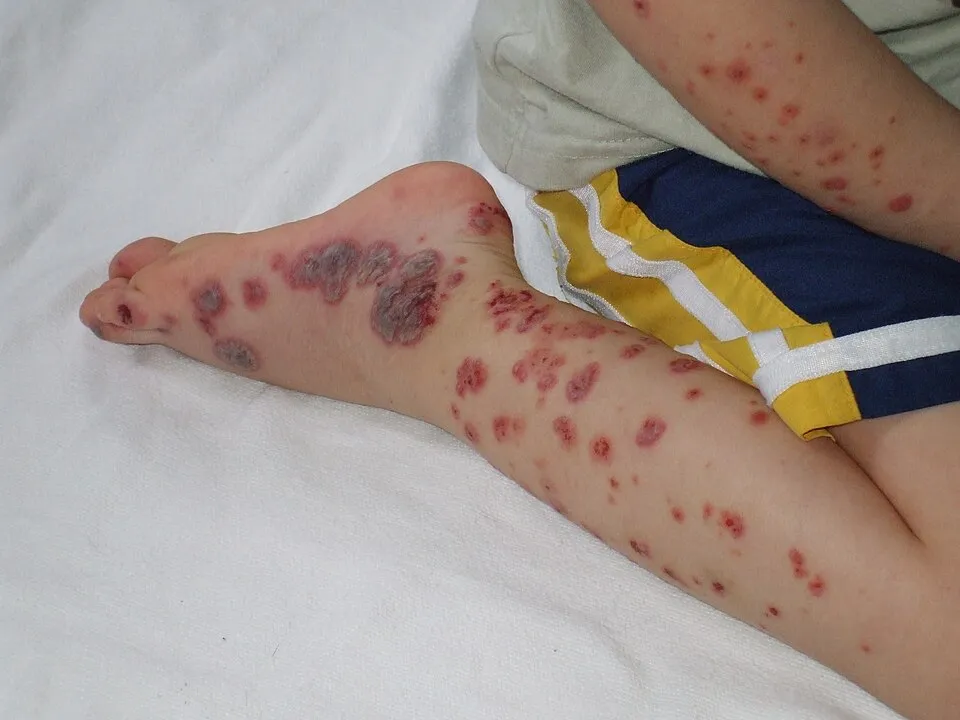
- Extra-abdominal causes: lower-lobe pneumonia, DKA, IgA vasculitis (purpura on legs and buttocks), streptococcal pharyngitis, sickle cell crisis, UTI
- Early analgesia (for example intranasal fentanyl 1.5 micrograms/kg or IV morphine 0.1 mg/kg; teaching doses) does not mask surgical diagnosis
- Chronic abdominal pain (at least 2 months, Rome IV) without alarm features is usually functional: IBS, functional dyspepsia, abdominal migraine or functional abdominal pain–not otherwise specified
- Do a pregnancy test in every post-menarchal girl with abdominal pain, and take a confidential (HEADSS) history
Differential diagnosis
| Condition | Clues | Key test |
|---|---|---|
| Acute appendicitis | Periumbilical pain migrating to RIF, anorexia, fever, pain on hopping or coughing | PAS, WCC/neutrophils, CRP, ultrasound |
| Mesenteric adenitis | Recent viral URTI, high fever early, diffuse or shifting tenderness, no guarding | Ultrasound: enlarged mesenteric nodes, normal appendix |
| Constipation | Infrequent hard stools, withholding, palpable faecal mass in left iliac fossa | Clinical (NICE CG99); no X-ray routinely |
| Intussusception | 3 months–3 years, episodic screaming, pallor, vomiting, redcurrant-jelly stool | Ultrasound (target sign) |
| Testicular or ovarian torsion | Sudden severe pain with vomiting; tender high-riding testis or adnexal pain | Urgent surgical exploration (testis); pelvic ultrasound (ovary) |
| Diabetic ketoacidosis | Polyuria, polydipsia, weight loss, Kussmaul breathing | Capillary glucose, ketones, venous gas |
| Lower-lobe pneumonia | Fever, tachypnoea, cough, grunting; abdomen soft | Chest X-ray |
| IgA vasculitis (Henoch–Schönlein purpura) | Colicky pain, palpable purpura on legs and buttocks, arthralgia, haematuria | Urinalysis and BP; clinical diagnosis |
Exam pearls
Guideline
WSES Jerusalem guidelines on acute appendicitis (2020 update, including paediatric algorithm), NICE NG224 UTI in under 16s (2022), NICE CG99 constipation in children (2010, updated 2017), ISPAD DKA guideline (2022) and Rome IV paediatric functional abdominal pain criteria (2016; Rome V 2026)
References
- Di Saverio S, Podda M, De Simone B, et al.. Diagnosis and treatment of acute appendicitis: 2020 update of the WSES Jerusalem guidelines. World J Emerg Surg 2020.
- Samuel M.. Pediatric appendicitis score. J Pediatr Surg 2002.
- Kharbanda AB, Vazquez-Benitez G, Ballard DW, et al.. Development and validation of a novel pediatric appendicitis risk calculator (pARC). Pediatrics 2018.
- Bundy DG, Byerley JS, Liles EA, et al.. Does this child have appendicitis?. JAMA 2007.
- Hyams JS, Di Lorenzo C, Saps M, et al.. Functional disorders: children and adolescents. Gastroenterology 2016.
- Glaser N, Fritsch M, Priyambada L, et al.. ISPAD clinical practice consensus guidelines 2022: diabetic ketoacidosis and hyperglycemic hyperosmolar state. Pediatr Diabetes 2022.
Related topics
By Dr Khalid Seidi (B.Sc., M.D.) · MedEd World Clinical Knowledge library. Original teaching content checked against current guidelines (November 2026); confirm the latest local guidance before clinical use. Not a substitute for clinical judgement.