Clinical Knowledge › Paediatrics › Clinical problems
Fever in a child: approach to the patient
Fever (38°C or above) is one of the commonest reasons children see a doctor. Most febrile children have a self-limiting viral infection, but a small number have a serious bacterial infection such as urinary tract infection, pneumonia, bacteraemia, meningitis or bone and joint infection, or a non-infective cause such as Kawasaki disease. The approach depends on age: infants under 3 months (and especially under 1 month) have immature immunity and few localising signs, so any fever is high risk and needs investigation, often including urine, blood and cerebrospinal fluid, with parenteral antibiotics if unwell. In older children, risk is stratified by colour, activity, breathing, circulation and hydration using tools such as the NICE traffic-light system, together with age-specific vital signs, a search for a focus and recognition of red flags such as a non-blanching rash. Antipyretics are for distress, not to lower the number or prevent febrile seizures. Fever lasting 5 days or more prompts a search for Kawasaki disease and other causes. Families need clear safety-netting.
Patient case, mechanism, investigations, management, flashcards and exam-style questions.Open the lesson →
Key facts
- Fever is a temperature of 38°C or more; measure with an electronic axillary thermometer under 4 weeks, and an axillary or infrared tympanic thermometer from 4 weeks to 5 years (NICE NG143)
- Infants under 3 months with fever of 38°C or more are high risk (red); infants 3–6 months with 39°C or more are amber
- About 8–12% of febrile infants aged 60 days or under have a serious bacterial infection, most often urinary tract infection; bacteraemia and meningitis are less common but dangerous
- NICE NG143: give parenteral antibiotics to febrile infants under 1 month, to unwell infants 1–3 months, and to those 1–3 months with white cell count under 5 or over 15 × 10⁹/L
- Empirical antibiotics under 3 months: cefotaxime (or ceftriaxone) plus amoxicillin or ampicillin to cover Listeria; add aciclovir if herpes simplex is possible
- Test urine in all febrile infants under 3 months and in older children with fever without an obvious source
- A non-blanching rash with fever is meningococcal disease until proved otherwise: give parenteral antibiotics immediately
- Fever for 5 days or more: consider Kawasaki disease, UTI, osteomyelitis, endocarditis, malaria, typhoid, TB and malignancy
Differential diagnosis
| Condition | Clues | Key test |
|---|---|---|
| Viral upper respiratory tract infection | Coryza, cough, well between fever spikes, normal perfusion | Clinical; urine if no clear source |
| Urinary tract infection | Fever without focus in infants, poor feeding, vomiting, smelly urine | Clean-catch urine dipstick, microscopy and culture |
| Pneumonia | Tachypnoea, recession, crackles, SpO2 95% or less | Clinical; chest X-ray if severe or uncertain |
| Bacterial meningitis or meningococcal disease | Non-blanching rash, irritability, bulging fontanelle, neck stiffness (unreliable in infants) | Blood culture, PCR, lumbar puncture when safe |
| Septic arthritis or osteomyelitis | Limp, refusal to bear weight, swollen joint | CRP, blood culture, ultrasound, MRI, joint aspiration |
| Kawasaki disease | Fever 5 days or more, conjunctivitis, red lips, rash, extremity changes, cervical node | Clinical criteria, CRP, echocardiography |
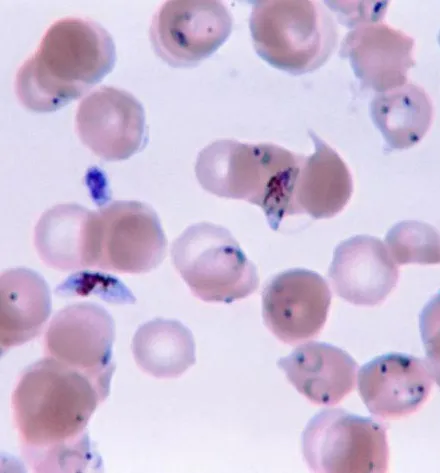
| Malaria or dengue | Recent travel or residence in an endemic area | Thick and thin films or rapid diagnostic test; dengue NS1 |
| Herpes simplex virus infection (neonate) | Vesicles, seizures, raised ALT, CSF pleocytosis, maternal history | HSV PCR of blood, CSF and lesions |
Exam pearls
Guideline
NICE NG143 Fever in under 5s (2019), AAP Clinical Practice Guideline: Well-appearing febrile infants 8–60 days old (2021), NICE NG254 Suspected sepsis in under 16s (2025), NICE NG240 Bacterial meningitis and meningococcal disease (2024) and NICE NG224 UTI in under 16s (2022)
References
- National Institute for Health and Care Excellence. Fever in under 5s: assessment and initial management (NG143). NICE guideline 2019.
- Pantell RH, Roberts KB, Adams WG, et al.. Evaluation and management of well-appearing febrile infants 8 to 60 days old. Pediatrics 2021.
- Kuppermann N, Dayan PS, Levine DA, et al.. A clinical prediction rule to identify febrile infants 60 days and younger at low risk for serious bacterial infections. JAMA Pediatr 2019.
- National Institute for Health and Care Excellence. Suspected sepsis in under 16s: recognition, diagnosis and early management (NG254). NICE guideline 2025.
- Schlapbach LJ, Watson RS, Sorce LR, et al.. International consensus criteria for pediatric sepsis and septic shock. JAMA 2024.
- National Institute for Health and Care Excellence. Urinary tract infection in under 16s: diagnosis and management (NG224). NICE guideline 2022.
Related topics
By Dr Khalid Seidi (B.Sc., M.D.) · MedEd World Clinical Knowledge library. Original teaching content checked against current guidelines (November 2026); confirm the latest local guidance before clinical use. Not a substitute for clinical judgement.