Clinical Knowledge › Paediatrics › Clinical problems
Respiratory distress in a child: approach to the patient
Respiratory distress is increased work of breathing: tachypnoea for age, recession, nasal flaring, head bobbing, grunting and accessory muscle use. It is the commonest reason for paediatric emergency admission, and respiratory failure is the commonest route to cardiac arrest in children. The approach is a rapid ABCDE assessment with age-specific normal values, oxygen saturation and an early warning score, then localisation: stridor means upper airway obstruction (croup, epiglottitis, foreign body, anaphylaxis), wheeze means lower airway narrowing (bronchiolitis, asthma) and crackles or focal signs mean pneumonia. Heart failure, metabolic acidosis (sepsis, diabetic ketoacidosis), anaemia and poisoning must be considered. Exhaustion, a silent chest, cyanosis, drowsiness and bradycardia signal impending arrest. Treatment follows the cause: oxygen for low saturation (in bronchiolitis below 90%, or 92% under 6 weeks or with underlying disease), dexamethasone for croup, bronchodilators and steroids for asthma, supportive care for bronchiolitis and bronchoscopy for a foreign body.
Patient case, mechanism, investigations, management, flashcards and exam-style questions.Open the lesson →
Key facts
- Normal respiratory rate: under 1 year 30–40, 1–2 years 25–35, 2–5 years 25–30, 5–12 years 20–25, over 12 years 15–20 breaths/min (approximate)
- Signs of increased work of breathing: tachypnoea, subcostal, intercostal and sternal recession, tracheal tug, nasal flaring, head bobbing, grunting
- Stridor = upper airway (extrathoracic) obstruction; wheeze = lower airway; grunting = attempt to maintain end-expiratory pressure (alveolar disease)
- Pre-arrest signs: exhaustion, reduced effort, silent chest, cyanosis, altered consciousness, bradycardia
- Croup: barking cough and stridor in a 6-month to 3-year-old; dexamethasone 0.15 mg/kg orally (single dose) for all severities; nebulised adrenaline if severe
- Bronchiolitis (NICE NG9, 2021 update): supportive care only; give oxygen if SpO2 persistently below 90% (below 92% if under 6 weeks or with underlying disease); no salbutamol, steroids, antibiotics or hypertonic saline
- Acute asthma: salbutamol via spacer, ipratropium if poor response, prednisolone for 3 days, IV magnesium sulfate 40 mg/kg (max 2 g) for severe or life-threatening attacks
- Never examine the throat of a child with suspected epiglottitis or upper airway obstruction: keep them calm with a parent and call senior anaesthesia and ENT
Differential diagnosis
| Condition | Clues | Key test |
|---|---|---|
| Bronchiolitis | Infant under 1 year, coryzal prodrome, crackles and/or wheeze, poor feeding, winter | Clinical; viral PCR if cohorting |
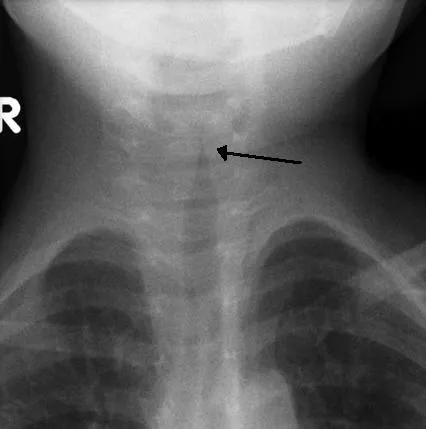
| Croup | 6 months–3 years, barking cough, hoarse voice, inspiratory stridor, worse at night | Clinical; Westley score |
| Epiglottitis or bacterial tracheitis | Toxic, drooling, tripod position, muffled voice, little cough; unvaccinated (Hib) or post-croup deterioration | Airway first in theatre; lateral neck X-ray only if stable |
| Acute asthma or preschool wheeze | Wheeze, prolonged expiration, response to bronchodilator, atopy, triggers | PEF in older children; SpO2; clinical severity |
| Pneumonia | Fever, tachypnoea, focal crackles or bronchial breathing, grunting | Clinical; CXR if severe or not improving |
| Inhaled foreign body | Sudden choking episode, unilateral wheeze or reduced air entry, toddler | Expiratory or decubitus CXR; rigid bronchoscopy |
| Heart failure | Infant with sweating on feeds, hepatomegaly, murmur, poor weight gain | Echocardiogram; CXR cardiomegaly |
| Diabetic ketoacidosis | Deep sighing (Kussmaul) breathing, dehydration, polyuria, ketotic breath | Capillary glucose, ketones and blood gas |
Exam pearls
Guideline
NICE NG9 Bronchiolitis (2015, updated 2021), BTS/NICE/SIGN NG245 Asthma (2024), GINA 2025, European Resuscitation Council Paediatric Life Support (2025) and WHO Pocket Book of Hospital Care for Children
References
- National Institute for Health and Care Excellence. Bronchiolitis in children: diagnosis and management (NG9). NICE guideline 2015.
- NICE, British Thoracic Society and Scottish Intercollegiate Guidelines Network. Asthma: diagnosis, monitoring and chronic asthma management (NG245). BTS/NICE/SIGN joint guideline 2024.
- Global Initiative for Asthma. Global Strategy for Asthma Management and Prevention. GINA report 2025.
- Bjornson CL, Klassen TP, Williamson J, et al.. A randomized trial of a single dose of oral dexamethasone for mild croup. N Engl J Med 2004.
- Djakow J, Turner NM, Skellett S, et al.. European Resuscitation Council Guidelines 2025 Paediatric Life Support. Resuscitation 2025.
- Westley CR, Cotton EK, Brooks JG. Nebulized racemic epinephrine by IPPB for the treatment of croup: a double-blind study. Am J Dis Child 1978.
Related topics
By Dr Khalid Seidi (B.Sc., M.D.) · MedEd World Clinical Knowledge library. Original teaching content checked against current guidelines (November 2026); confirm the latest local guidance before clinical use. Not a substitute for clinical judgement.