Clinical Knowledge › Surgery › Fractures and orthopaedic trauma
Achilles tendon rupture
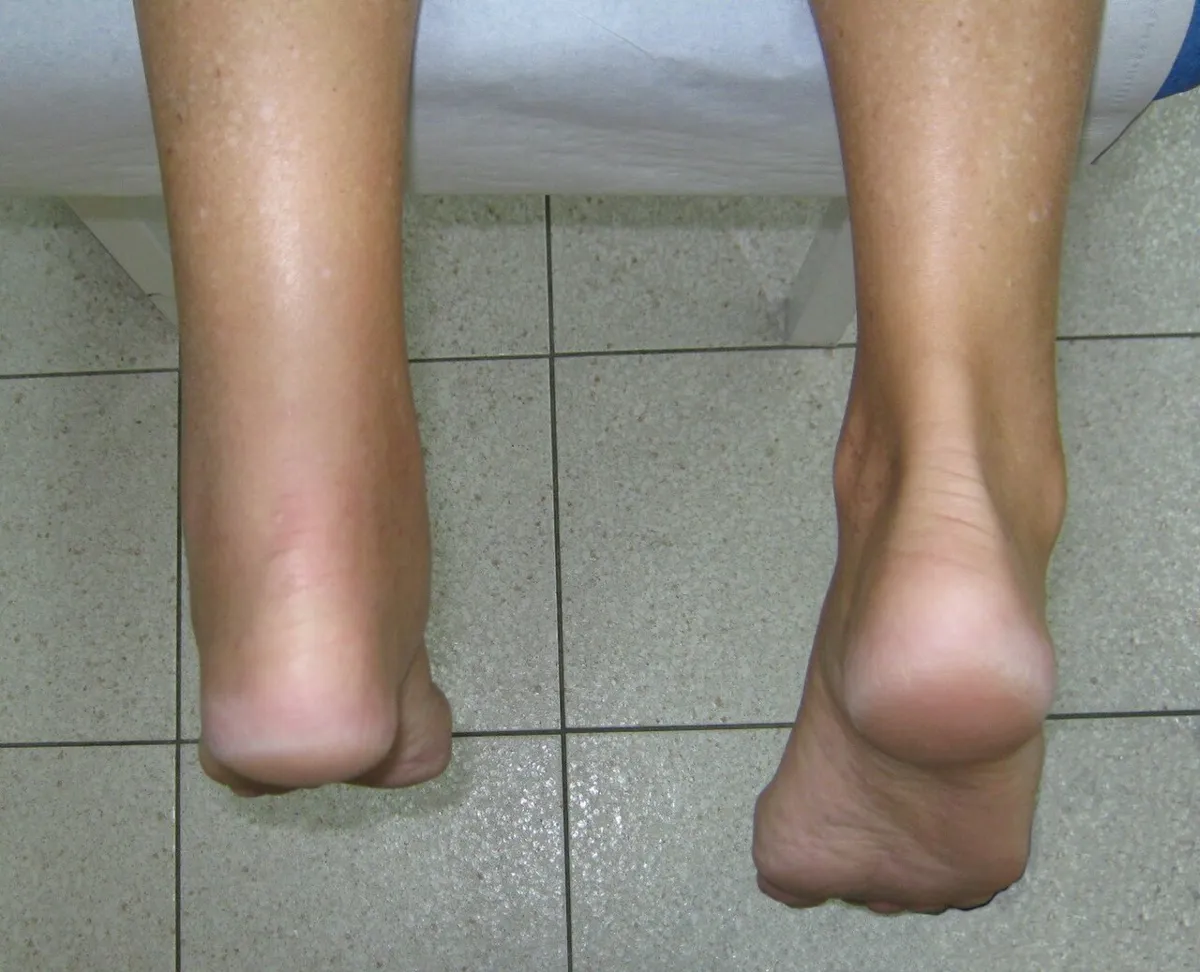
Acute Achilles tendon rupture typically affects men aged 30–50 playing intermittent sport, who feel as if they have been kicked in the back of the heel during push-off. The tear usually lies 2–6 cm above the calcaneal insertion in a poorly vascularised zone. Risk factors include fluoroquinolone antibiotics (especially with corticosteroids in older people), local steroid injection and pre-existing tendinopathy. Because other muscles can still weakly plantarflex the foot, about one in five ruptures is missed at first presentation. Diagnosis is clinical: a palpable gap, a positive Simmonds–Thompson calf squeeze test and an abnormal Matles angle; ultrasound helps if in doubt. Treatment starts immediately with the foot in plantarflexion (equinus) in a boot or backslab. Non-operative functional rehabilitation with early weight bearing gives function similar to surgery, with a slightly higher re-rupture rate, while surgery lowers re-rupture but adds wound complications and sural nerve injury. Choice is shared with the patient. Venous thromboembolism is common during immobilisation.
Patient case, mechanism, investigations, management, flashcards and exam-style questions.Open the lesson →
Key facts
- Peak incidence in men aged 30–50 in intermittent sport (squash, badminton, football); a second peak in older adults with fewer sports links
- Rupture usually occurs 2–6 cm above the insertion, in the relatively avascular watershed zone
- Fluoroquinolones increase rupture risk, particularly over 60 years and with systemic corticosteroids; stop the drug at the first sign of tendon pain
- Simmonds–Thompson test: squeezing the calf with the patient prone produces no plantarflexion on the injured side
- About 20% are missed initially because tibialis posterior, toe flexors and peronei can still plantarflex weakly
- Immobilise immediately in equinus (plantarflexion) and avoid weight bearing until a treatment plan is made
- Functional bracing with early weight bearing is as good as plaster casting for non-operative care (UKSTAR)
- Surgery reduces re-rupture (about 0.6% versus 6% in one large trial) but causes more wound complications and nerve injuries, with similar function at 1 year
Differential diagnosis
| Condition | Clues | Key test |
|---|---|---|
| Medial gastrocnemius tear ('tennis leg') | Pain in the mid-calf, tendon intact, Thompson negative | Ultrasound |
| Achilles tendinopathy | Gradual pain and thickening, no gap | Ultrasound; clinical |
| Ankle fracture or sprain | Twisting injury, malleolar tenderness | Ottawa rules; X-ray |
| Calcaneal avulsion fracture | Older or diabetic patient, bony tenderness at insertion | Lateral X-ray |
| Deep vein thrombosis | Calf swelling and pain, no sudden pop | Doppler ultrasound |
| Ruptured Baker cyst | Sudden calf pain and swelling, knee osteoarthritis | Ultrasound |
| Plantaris rupture | Sudden calf pain, Thompson negative | Ultrasound |
Exam pearls
Guideline
AAOS Clinical Practice Guideline on acute Achilles tendon rupture (2009, published 2010), MHRA fluoroquinolone safety update (2019) and NICE NG89 VTE prophylaxis (2018, updated 2019)
References
- Chiodo CP, Glazebrook M, Bluman EM, et al.. Diagnosis and treatment of acute Achilles tendon rupture. J Am Acad Orthop Surg 2010.
- Myhrvold SB, Brouwer EF, Andresen TKM, et al.. Nonoperative or surgical treatment of acute Achilles' tendon rupture. N Engl J Med 2022.
- Costa ML, Achten J, Marian IR, et al.. Plaster cast versus functional brace for non-surgical treatment of Achilles tendon rupture (UKSTAR): a multicentre randomised controlled trial and economic evaluation. Lancet 2020.
- Ochen Y, Beks RB, van Heijl M, et al.. Operative treatment versus nonoperative treatment of Achilles tendon ruptures: systematic review and meta-analysis. BMJ 2019.
- Willits K, Amendola A, Bryant D, et al.. Operative versus nonoperative treatment of acute Achilles tendon ruptures: a multicenter randomized trial using accelerated functional rehabilitation. J Bone Joint Surg Am 2010.
- Medicines and Healthcare products Regulatory Agency. Fluoroquinolone antibiotics: new restrictions and precautions for use due to very rare reports of disabling and potentially long-lasting or irreversible side effects. Drug Safety Update 2019.
Related topics
By Dr Khalid Seidi (B.Sc., M.D.) · MedEd World Clinical Knowledge library. Original teaching content checked against current guidelines (November 2026); confirm the latest local guidance before clinical use. Not a substitute for clinical judgement.