Clinical Knowledge › Neurology › Headache, facial pain and cranial nerve disorders
Benign paroxysmal positional vertigo (BPPV)
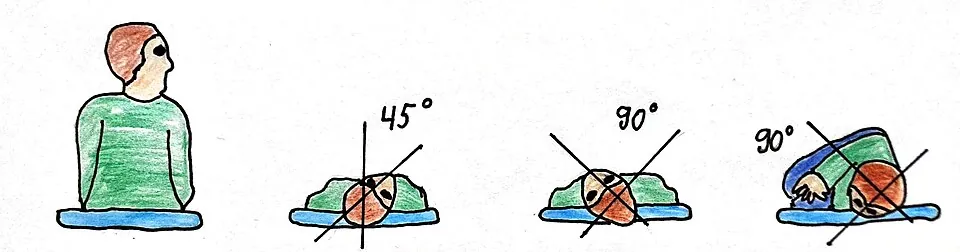
Benign paroxysmal positional vertigo (BPPV) is the commonest cause of vertigo. Otoconia (calcium carbonate crystals) dislodged from the utricle drift into a semicircular canal, most often the posterior canal, so that changes in head position relative to gravity cause abnormal endolymph flow and brief, intense spinning vertigo. Attacks last less than a minute and are provoked by rolling over in bed, lying down, looking up or bending forward, with nausea but no hearing loss or neurological symptoms. It is commonest in older women and may follow head injury. The Dix–Hallpike manoeuvre confirms posterior canal BPPV by provoking, after a short latency, torsional upbeating nystagmus towards the lower ear that fatigues within 60 seconds; the supine roll test assesses the horizontal canal. Canalith repositioning manoeuvres – the Epley or Semont manoeuvre for the posterior canal and barbecue roll or Gufoni manoeuvre for the horizontal canal – cure most patients, whereas vestibular suppressant drugs and imaging are not routinely indicated. Recurrence is common.
Patient case, mechanism, investigations, management, flashcards and exam-style questions.Open the lesson →
Key facts
- Commonest cause of vertigo; lifetime prevalence about 2.4%; peak age 50–70; women about twice as often as men
- Posterior canal BPPV accounts for 80–90%, horizontal canal 10–15%, anterior canal rare
- Mechanism: canalithiasis (free otoconia in the canal) or cupulolithiasis (otoconia attached to the cupula)
- Vertigo lasting under 1 minute, triggered by turning in bed, lying down, looking up or bending; no hearing loss or neurological signs
- Dix–Hallpike: latency of a few seconds, torsional upbeating nystagmus beating towards the lower (affected) ear, lasting <60 seconds, reversing on sitting up, fatigable
- Supine roll test for horizontal canal BPPV: geotropic (canalithiasis) or apogeotropic (cupulolithiasis) horizontal nystagmus
- Treat posterior canal BPPV with the Epley (or Semont) manoeuvre; do not routinely prescribe vestibular suppressants or arrange imaging
- Recurrence about 15% per year (around 50% within 5 years); atypical nystagmus or neurological signs suggest central positional vertigo needing MRI
Differential diagnosis
| Condition | Clues | Key test |
|---|---|---|
| Vestibular neuritis | Continuous vertigo for days, spontaneous nystagmus, abnormal head impulse | HINTS; no positional trigger |
| Central positional vertigo (cerebellar lesion, Chiari) | Persistent downbeat or pure vertical nystagmus without latency or fatigue, neurological signs | MRI brain |
| Ménière disease | Episodes of 20 min–12 h with fluctuating hearing loss, tinnitus, aural fullness | Audiometry |
| Vestibular migraine | Episodes of minutes to days with migraine features; positional nystagmus atypical | Clinical criteria |
| Orthostatic hypotension | Light-headedness on standing (not lying down or rolling) | Lying and standing BP |
| Posterior circulation TIA | Vertigo with other brainstem symptoms, vascular risk | Neurological examination; MRI/CTA |
| Cervicogenic dizziness | Neck movement-related imbalance, no typical nystagmus | Diagnosis of exclusion |
Exam pearls
Guideline
AAO-HNS Clinical Practice Guideline: Benign Paroxysmal Positional Vertigo (Update, 2017); Bárány Society diagnostic criteria for BPPV (2015)
References
- Bhattacharyya N, Gubbels SP, Schwartz SR, et al.. Clinical practice guideline: benign paroxysmal positional vertigo (update). Otolaryngol Head Neck Surg 2017.
- von Brevern M, Bertholon P, Brandt T, et al.. Benign paroxysmal positional vertigo: diagnostic criteria. Consensus document of the Committee for the Classification of Vestibular Disorders of the Bárány Society. J Vestib Res 2015.
- Hilton MP, Pinder DK. Canalith repositioning procedure for benign paroxysmal positional vertigo. Cochrane Database Syst Rev 2014.
- von Brevern M, Radtke A, Lezius F, et al.. Epidemiology of benign paroxysmal positional vertigo: a population based study. J Neurol Neurosurg Psychiatry 2007.
- Kim JS, Zee DS. Benign paroxysmal positional vertigo. N Engl J Med 2014.
- Ropper AH, Samuels MA, Klein JP, Prasad S. Adams and Victor's Principles of Neurology. 2023.
Related topics
By Dr Khalid Seidi (B.Sc., M.D.) · MedEd World Clinical Knowledge library. Original teaching content checked against current guidelines (November 2026); confirm the latest local guidance before clinical use. Not a substitute for clinical judgement.