Clinical Knowledge › Neurology › Headache, facial pain and cranial nerve disorders
Post-herpetic neuralgia
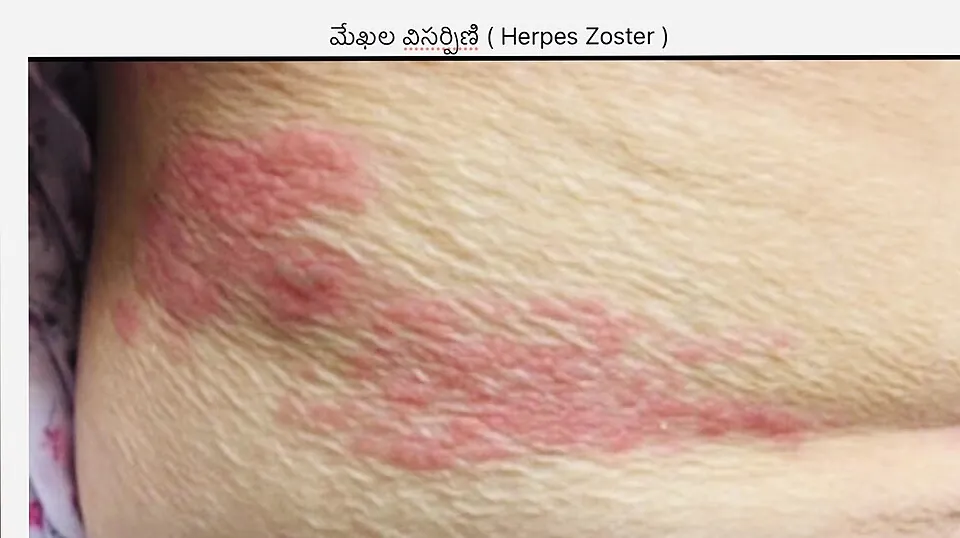
Post-herpetic neuralgia (PHN) is neuropathic pain that persists in the dermatome affected by herpes zoster, most commonly defined as pain lasting 3 months or more after the rash began. It is the commonest complication of shingles, affecting 10–20% of patients and a third of those over 80. Reactivated varicella-zoster virus damages the dorsal root or trigeminal ganglion and peripheral nerve, causing peripheral and central sensitisation. Older age, severe acute pain, extensive rash, prodromal pain, ophthalmic involvement and immunosuppression increase risk. Patients describe constant burning or aching, paroxysmal stabbing pain and allodynia, in which light touch or clothing is painful, usually in a thoracic dermatome or the ophthalmic division of the trigeminal nerve. Diagnosis is clinical. Treatment follows neuropathic pain guidance: amitriptyline, duloxetine, gabapentin or pregabalin first line, with topical lidocaine or capsaicin for localised pain, and opioids only as a short-term last resort. Prevention with the recombinant zoster vaccine is the most effective strategy.
Patient case, mechanism, investigations, management, flashcards and exam-style questions.Open the lesson →
Key facts
- PHN = pain in the affected dermatome persisting ≥3 months after herpes zoster rash onset (some definitions use 1 month)
- Risk rises steeply with age: about 10–20% of zoster overall, over 30% of patients aged 80 or more
- Other risk factors: severe acute pain, severe or extensive rash, prodromal pain, ophthalmic zoster, immunosuppression, diabetes
- Features: constant burning pain, paroxysmal lancinating pain, allodynia (pain from light touch), itch, sensory loss in a dermatome with scarring
- Thoracic dermatomes and V1 (ophthalmic) are most commonly affected
- First-line drugs: amitriptyline (or nortriptyline), duloxetine, gabapentin or pregabalin; capsaicin cream for localised pain if oral drugs are unwanted (NICE)
- Second-line (NeuPSIG 2025): capsaicin 8% patch, capsaicin cream, lidocaine 5% plaster; third-line: botulinum toxin A, rTMS, opioids
- Recombinant adjuvanted zoster vaccine (2 doses) reduces zoster by about 90% and PHN by a similar proportion in older adults
Differential diagnosis
| Condition | Clues | Key test |
|---|---|---|
| Acute herpes zoster pain | Within the first 30 days, active rash | Timing; vesicles |
| Trigeminal neuralgia | Paroxysmal shocks in V2/V3, triggers, no rash history | History; MRI |
| Diabetic or other polyneuropathy | Symmetrical distal glove-and-stocking pain | Nerve conduction studies; HbA1c |
| Thoracic radiculopathy or spinal lesion | Band-like pain without rash, myelopathic signs | MRI spine |
| Visceral pain (cardiac, biliary, renal) | Pain related to organ function, no allodynia | ECG, troponin, imaging |
| Zoster sine herpete | Dermatomal pain without rash, positive VZV PCR | VZV PCR/serology |
| Recurrent zoster or HSV | New vesicles in same area | Viral PCR of lesions |
Exam pearls
Guideline
NICE CG173 Neuropathic pain in adults (updated 2020); NeuPSIG updated recommendations (2025); national zoster vaccination guidance (UKHSA Green Book, ACIP)
References
- National Institute for Health and Care Excellence. Neuropathic pain in adults: pharmacological management in non-specialist settings (CG173). NICE (last updated 2020) 2013.
- Soliman N, Moisset X, Ferraro MC, et al.. Pharmacotherapy and non-invasive neuromodulation for neuropathic pain: a systematic review and meta-analysis (NeuPSIG update). Lancet Neurol 2025.
- UK Health Security Agency. Immunisation against infectious disease (the Green Book), chapter 28a: Shingles (herpes zoster). UKHSA 2025.
- Cunningham AL, Lal H, Kovac M, et al.. Efficacy of the herpes zoster subunit vaccine in adults 70 years of age or older (ZOE-70). N Engl J Med 2016.
- Johnson RW, Rice AS. Postherpetic neuralgia. N Engl J Med 2014.
- Gershon AA, Breuer J, Cohen JI, et al.. Herpes zoster. Nat Rev Dis Primers 2015.
Related topics
By Dr Khalid Seidi (B.Sc., M.D.) · MedEd World Clinical Knowledge library. Original teaching content checked against current guidelines (November 2026); confirm the latest local guidance before clinical use. Not a substitute for clinical judgement.