Clinical Knowledge › Neurology › Headache, facial pain and cranial nerve disorders
Horner syndrome
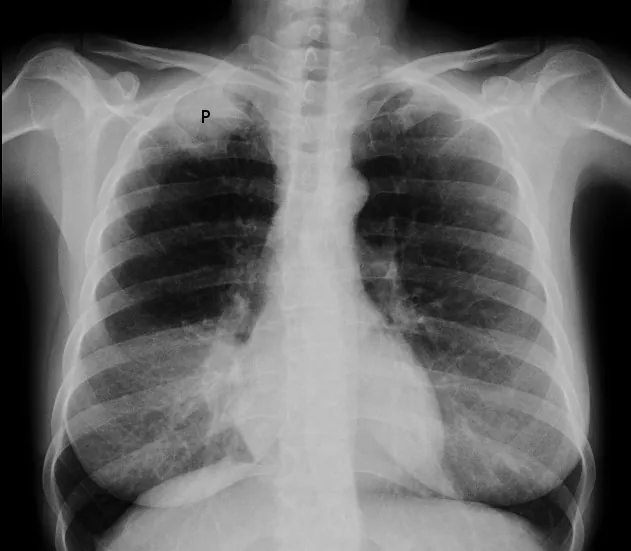
Horner syndrome (oculosympathetic paresis) results from interruption of the three-neuron sympathetic pathway from the hypothalamus to the eye. It produces mild ptosis from weakness of the Müller muscle, miosis with anisocoria that is greater in dim light and a dilation lag, and, depending on the level, facial anhidrosis. The pathway runs from the hypothalamus through the brainstem to the ciliospinal centre at C8–T2 (first-order), over the lung apex to the superior cervical ganglion (second-order), and along the internal carotid artery through the cavernous sinus to the orbit (third-order). Causes therefore range from lateral medullary stroke and syringomyelia to Pancoast tumour, neck trauma or surgery, carotid dissection and cluster headache; in children, neuroblastoma must be excluded. Apraclonidine or cocaine eye drops confirm the diagnosis, and associated signs and imaging localise it. Acute painful Horner syndrome is an emergency because carotid dissection may cause stroke and requires same-day vascular imaging. Treatment is directed at the underlying cause.
Patient case, mechanism, investigations, management, flashcards and exam-style questions.Open the lesson →
Key facts
- Triad: mild ptosis (1–2 mm), miosis and ipsilateral facial anhidrosis (anhidrosis depends on lesion level); also lower lid elevation (reverse ptosis) and apparent enophthalmos
- Anisocoria is greater in the dark because the Horner pupil cannot dilate; dilation lag is characteristic
- First-order neuron: hypothalamus → brainstem → ciliospinal centre (C8–T2): lateral medullary stroke, MS, syringomyelia, cord lesions
- Second-order (preganglionic): C8–T2 → lung apex → superior cervical ganglion: Pancoast tumour, neck/thyroid surgery, cervical rib, brachial plexus injury, central line
- Third-order (postganglionic): along internal carotid → cavernous sinus → orbit: carotid dissection, cavernous sinus lesions, cluster headache; facial sweating spared
- Apraclonidine drops reverse the anisocoria (denervation supersensitivity); cocaine drops fail to dilate the Horner pupil; hydroxyamphetamine localises postganglionic lesions
- Acute painful Horner syndrome = carotid artery dissection until proven otherwise: same-day CT or MR angiography of head and neck
- Congenital Horner syndrome causes iris heterochromia (lighter iris on the affected side); new Horner in a child needs investigation for neuroblastoma
Differential diagnosis
| Condition | Clues | Key test |
|---|---|---|
| Third nerve palsy | Marked ptosis, dilated pupil (if compressive), eye down and out | Eye movement examination; CTA/MRA for aneurysm |
| Physiological anisocoria | Difference <1 mm, same in light and dark, normal lids | Observation; apraclonidine negative |
| Pharmacological miosis | Pilocarpine or opioid exposure | History; usually bilateral |
| Aponeurotic (age-related) ptosis | Older patient, high lid crease, normal pupils | Examination |
| Myasthenia gravis | Fatigable variable ptosis, normal pupils, diplopia | Ice pack test, AChR antibodies |
| Adie tonic pupil (contralateral) | Larger pupil poorly reactive to light with light-near dissociation | Dilute pilocarpine constricts Adie pupil |
| Argyll Robertson pupils | Bilateral small irregular pupils, light-near dissociation | Syphilis serology |
Exam pearls
Guideline
Combined clinical, pharmacological and imaging algorithm for adult Horner syndrome (Davagnanam et al.); AHA 2024 scientific statement on cervical artery dissection; ESO 2021 dissection guideline
References
- Davagnanam I, Fraser CL, Miszkiel K, Daniel CS, Plant GT. Adult Horner's syndrome: a combined clinical, pharmacological, and imaging algorithm. Eye (Lond) 2013.
- Yaghi S, Engelter S, Del Brutto VJ, et al.. Treatment and outcomes of cervical artery dissection in adults: a scientific statement from the American Heart Association. Stroke 2024.
- Debette S, Mazighi M, Bijlenga P, et al.. European Stroke Organisation guideline for the management of extracranial and intracranial artery dissection. Eur Stroke J 2021.
- Kanagalingam S, Miller NR. Horner syndrome: clinical perspectives. Eye Brain 2015.
- Walton KA, Buono LM. Horner syndrome. Curr Opin Ophthalmol 2003.
- Liu GT, Volpe NJ, Galetta SL. Liu, Volpe, and Galetta's Neuro-Ophthalmology: Diagnosis and Management. 2019.
Related topics
By Dr Khalid Seidi (B.Sc., M.D.) · MedEd World Clinical Knowledge library. Original teaching content checked against current guidelines (November 2026); confirm the latest local guidance before clinical use. Not a substitute for clinical judgement.