Clinical Knowledge › Paediatrics › Clinical problems
Bruising and bleeding in a child: approach to the patient
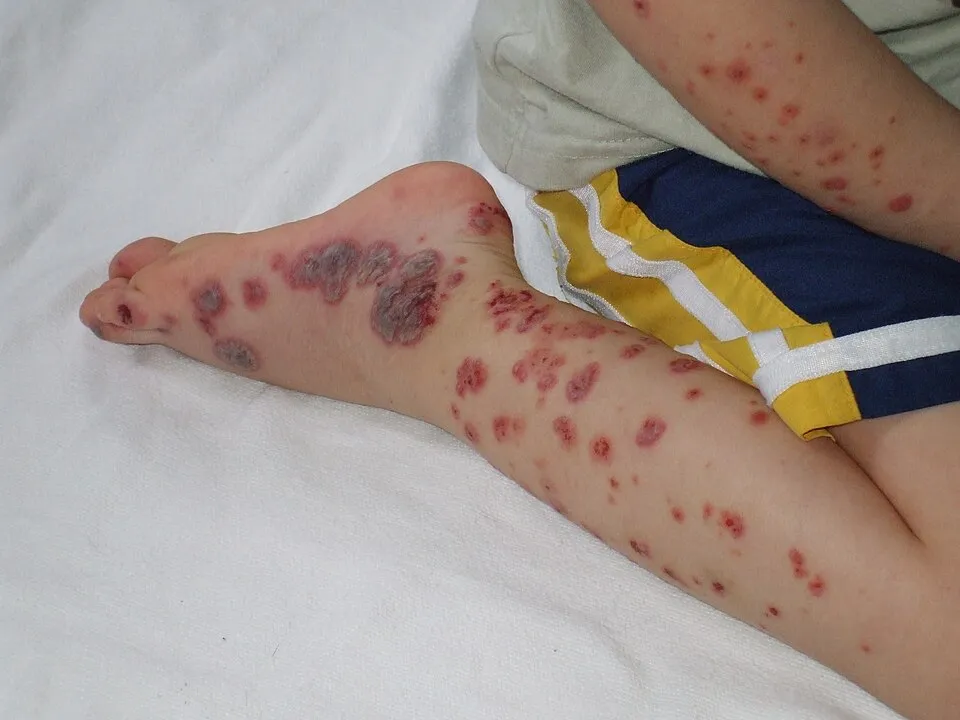
Bruises are common in mobile children, usually small, over bony prominences on the front of the body (shins, knees, forehead), and match an active toddler's play. The paediatric approach asks three questions at once: is the child acutely ill (meningococcal sepsis, leukaemia, haemolytic uraemic syndrome), is there a bleeding disorder, and could this be physical abuse? Bruising in a baby who is not yet mobile ('those who don't cruise rarely bruise') and bruises on the torso, ears, neck, frenulum, angle of the jaw, cheeks, eyelids or subconjunctivae, or with a pattern (TEN-4-FACESp), are red flags for maltreatment. A careful history (mechanism, development, bleeding history, family history, drugs), full skin examination and a first-line screen (full blood count and film, PT, APTT, fibrinogen, von Willebrand studies, factors VIII and IX) separate immune thrombocytopenia, haemophilia, von Willebrand disease, vitamin K deficiency and IgA vasculitis. A bleeding disorder does not exclude abuse: the two can coexist, and safeguarding referral follows local child protection procedures.
Patient case, mechanism, investigations, management, flashcards and exam-style questions.Open the lesson →
Key facts
- Accidental bruises: small, few, over bony prominences on the front of the body (shins, knees, forehead) in mobile children
- Fewer than 1% of babies who cannot yet cruise have bruises: any bruise in a non-mobile infant needs a child protection assessment (NICE CG89)
- TEN-4-FACESp: bruising to Torso, Ears, Neck; Frenulum, Angle of jaw, Cheeks, Eyelids, Subconjunctivae in under-4s; any bruise under 4.99 months; Patterned bruising
- Fever with a non-blanching rash = meningococcal disease until proved otherwise: give parenteral antibiotics immediately
- Unexplained petechiae or hepatosplenomegaly needs immediate specialist assessment for leukaemia (NICE NG12)
- Isolated low platelets in a well child after a viral illness = immune thrombocytopenia; most recover within 6–12 months without treatment
- Prolonged APTT with normal PT in a boy with haemarthrosis = haemophilia A or B (X-linked); von Willebrand disease is the most common inherited bleeding disorder
- Vitamin K deficiency bleeding (prolonged PT) is prevented by vitamin K at birth; late VKDB in breastfed infants can cause intracranial haemorrhage
Differential diagnosis
| Condition | Clues | Key test |
|---|---|---|
| Physical abuse (non-accidental injury) | Bruise in non-mobile infant; TEN-4-FACESp sites; patterned; inconsistent history | Child protection medical; skeletal survey (under 2), CT head (under 1) |
| Immune thrombocytopenia | Well child, sudden petechiae and bruises after a viral illness; no organomegaly | FBC: isolated thrombocytopenia; film normal otherwise |
| Acute lymphoblastic leukaemia | Pallor, bone pain, fever, lymphadenopathy, hepatosplenomegaly | FBC and film (blasts, cytopenias) |
| Meningococcal septicaemia | Fever, unwell, spreading non-blanching rash | Clinical; blood culture, PCR (do not delay antibiotics) |
| Haemophilia A or B | Boy, bruising when crawling, haemarthrosis, bleeding after circumcision | APTT prolonged; factor VIII or IX low |
| Von Willebrand disease | Nosebleeds, gum bleeding, heavy menstrual bleeding, family history | VWF antigen, VWF activity, factor VIII |
| IgA vasculitis | Palpable purpura on buttocks and legs, arthralgia, abdominal pain | Normal platelets and clotting; urinalysis and BP |
| Vitamin K deficiency bleeding | Infant not given vitamin K, exclusively breastfed, cholestasis | PT prolonged (APTT also); corrects with vitamin K |
Exam pearls
Guideline
NICE CG89 Child maltreatment (2009, updated 2017) and NG76 Child abuse and neglect (2017); RCPCH Child Protection Evidence on bruising (2020); ASH 2019 ITP guideline and 2019 international ITP consensus; NICE NG240 meningitis and meningococcal disease (2024)
References
- Pierce MC, Kaczor K, Lorenz DJ, et al.. Validation of a clinical decision rule to predict abuse in young children based on bruising characteristics. JAMA Netw Open 2021.
- National Institute for Health and Care Excellence. Child maltreatment: when to suspect maltreatment in under 18s (CG89). NICE clinical guideline 2009.
- National Institute for Health and Care Excellence. Child abuse and neglect (NG76). NICE guideline 2017.
- Royal College of Paediatrics and Child Health. Child Protection Evidence: systematic review on bruising. RCPCH 2020.
- Neunert C, Terrell DR, Arnold DM, et al.. American Society of Hematology 2019 guidelines for immune thrombocytopenia. Blood Adv 2019.
- Provan D, Arnold DM, Bussel JB, et al.. Updated international consensus report on the investigation and management of primary immune thrombocytopenia. Blood Adv 2019.
Related topics
By Dr Khalid Seidi (B.Sc., M.D.) · MedEd World Clinical Knowledge library. Original teaching content checked against current guidelines (November 2026); confirm the latest local guidance before clinical use. Not a substitute for clinical judgement.