Clinical Knowledge › Internal medicine › Haematology and oncology › Principles of oncology
Cancer of unknown primary
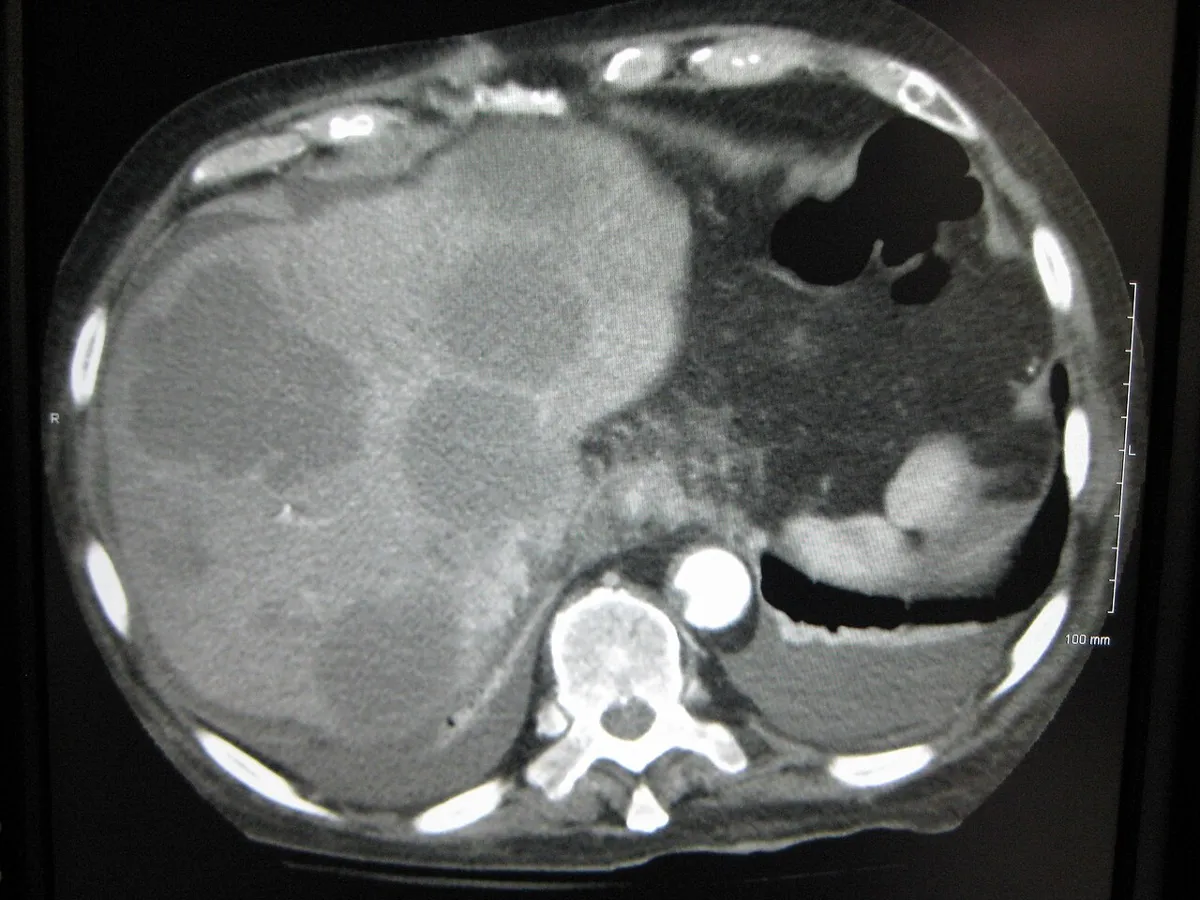
Cancer of unknown primary (CUP) is histologically confirmed metastatic cancer in which no primary site is found after a standardised work-up of history, examination, blood tests, CT of chest, abdomen and pelvis, targeted endoscopy or mammography, and biopsy with immunohistochemistry. It makes up about 1–3% of cancers, mostly in older adults. The primary may be too small to detect, regress, or the tumour may metastasise early through a distinct biology. Patients present with liver, nodal, lung, bone or peritoneal disease and weight loss. Pathology is central: cytokeratin 7/20 patterns and lineage markers (TTF-1, GATA3, CDX2, PAX8, PSA, SOX10) narrow the origin. About 15–20% fall into favourable subsets that are treated like a known primary with good results, such as axillary adenocarcinoma in women (breast), peritoneal serous carcinoma (ovary) and cervical nodal squamous carcinoma (head and neck). Most have unfavourable CUP with median survival under a year; platinum doublets are standard, and comprehensive genomic profiling now guides targeted therapy.
Patient case, mechanism, investigations, management, flashcards and exam-style questions.Open the lesson →
Key facts
- CUP = biopsy-proven metastatic cancer with no primary found after a standard work-up; NICE terms: malignancy of undefined origin (MUO), provisional CUP and confirmed CUP
- Accounts for about 1–3% of cancers; adenocarcinoma (well or moderately differentiated) is the commonest histology (about 50–60%), then poorly differentiated carcinoma, squamous carcinoma and neuroendocrine tumours
- Standard work-up: history, full examination (breast, pelvic, rectal, testicular, skin, nodes), FBC, U&E, LFTs, calcium, LDH, urinalysis, CT chest–abdomen–pelvis and biopsy with immunohistochemistry
- Tumour markers rarely help except PSA in men, AFP and hCG in young men with midline disease, and CA-125 in women with peritoneal disease
- CK7-positive/CK20-negative suggests lung, breast, upper GI or Müllerian origin; CK7-negative/CK20-positive with CDX2 suggests colorectal origin
- Favourable subsets (about 15–20%) are treated as the presumed primary and may be cured or have long survival
- Unfavourable CUP (about 80%) has median overall survival under 1 year; platinum doublet chemotherapy is the standard first line
- ESMO recommends comprehensive genomic profiling in unfavourable CUP; CUPISCO (2024) showed longer progression-free survival with molecularly guided therapy
Differential diagnosis
| Condition | Clues | Key test |
|---|---|---|
| Lymphoma | Bulky nodes, B symptoms, raised LDH | CD45 and B/T-cell markers on core or excision biopsy |
| Melanoma (regressed or occult primary) | Pigmented lesion history, nodal or visceral disease | S100, SOX10, Melan-A, HMB-45; BRAF testing |
| Extragonadal germ cell tumour | Young man, mediastinal or retroperitoneal mass | Raised AFP or hCG; SALL4, OCT4; testicular ultrasound |
| Hepatocellular carcinoma | Cirrhosis, hepatitis B or C, liver mass | AFP; HepPar1/arginase-1; multiphase CT or MRI |
| Sarcoma | Soft tissue or bone mass, spindle cells | Vimentin, desmin, specific translocations |
| Mesothelioma | Asbestos, pleural or peritoneal disease | Calretinin, WT1, D2-40; BAP1 loss |
| Non-malignant mimics (TB, sarcoidosis) | Necrotising or non-caseating granulomas, nodes | Histology, culture, interferon-gamma release assay |
Exam pearls
Guideline
ESMO 2023 Clinical Practice Guideline for cancer of unknown primary (published online December 2022) and NICE CG104 Metastatic malignant disease of unknown primary origin (2010)
References
- National Institute for Health and Care Excellence. Metastatic malignant disease of unknown primary origin in adults: diagnosis and management (CG104). NICE 2010.
- Krämer A, Bochtler T, Pauli C, et al.. Cancer of unknown primary: ESMO Clinical Practice Guideline for diagnosis, treatment and follow-up. Ann Oncol 2023.
- Krämer A, Bochtler T, Pauli C, et al.. Molecularly guided therapy versus chemotherapy after disease control in unfavourable cancer of unknown primary (CUPISCO): an open-label, randomised, phase 2 study. Lancet 2024.
- Pouyiourou M, Bochtler T, Pauli C, et al.. Rethinking cancer of unknown primary: from diagnostic challenge to targeted treatment. Nat Rev Clin Oncol 2025.
- DeVita VT Jr, Rosenberg SA, Lawrence TS, eds.. DeVita, Hellman, and Rosenberg's Cancer: Principles and Practice of Oncology. 2023.
- Penman ID, Ralston SH, Strachan MWJ, Hobson RP, eds.. Davidson's Principles and Practice of Medicine. 2022.
Related topics
By Dr Khalid Seidi (B.Sc., M.D.) · MedEd World Clinical Knowledge library. Original teaching content checked against current guidelines (November 2026); confirm the latest local guidance before clinical use. Not a substitute for clinical judgement.