Clinical Knowledge › Internal medicine › Haematology and oncology › Principles of oncology
Cancer pain management
Pain affects about half of people with cancer and about two-thirds of those with advanced disease, yet it is often undertreated. Cancer pain may be nociceptive (somatic, such as bone metastases, or visceral, such as liver capsule stretch), neuropathic (nerve compression or chemotherapy injury) or mixed, and has physical, psychological, social and spiritual parts ('total pain'). Management starts with careful assessment, a search for red flags such as spinal cord compression or pathological fracture, and treatment of the cause. Analgesia follows WHO principles: by mouth, by the clock, tailored to the individual and with attention to detail. The analgesic ladder is now used as a guide rather than a rigid sequence; strong opioids such as morphine are first choice for moderate to severe pain, with regular dosing, breakthrough doses of about one-sixth of the daily dose, a laxative from the start and dose adjustment in kidney impairment. Adjuvants (gabapentinoids, antidepressants, corticosteroids, bisphosphonates) target neuropathic and bone pain,, and interventions help refractory pain.
Patient case, mechanism, investigations, management, flashcards and exam-style questions.Open the lesson →
Key facts
- Pain is reported by about 55% of patients during anticancer treatment and about 66% with advanced or metastatic disease; over a third rate it moderate to severe
- Assess every patient: site, character, severity (0–10 numerical rating scale), timing, impact and mechanism (nociceptive, neuropathic, mixed, breakthrough)
- WHO principles: by mouth, by the clock, for the individual, with attention to detail; the 1986 three-step ladder is now a flexible educational guide (WHO 2018)
- Oral morphine is the usual first strong opioid; teaching start in opioid-naive adults with normal kidney function: 20–30 mg/day modified-release plus 5 mg immediate-release for breakthrough (NICE CG140; check local formulary)
- Breakthrough dose is about 1/10 to 1/6 of the total 24-hour opioid dose; titrate the regular dose by about 30–50% according to breakthrough use
- Prescribe a regular stimulant laxative with every opioid; tolerance to constipation does not develop
- In kidney impairment, active morphine metabolites accumulate: reduce dose and interval or use oxycodone (low dose), fentanyl, alfentanil or buprenorphine
- Single-fraction 8 Gy radiotherapy relieves pain from bone metastases in about 60–70% of patients; dexamethasone helps nerve compression, liver capsule pain and raised intracranial pressure
Differential diagnosis
| Condition | Clues | Key test |
|---|---|---|
| Malignant spinal cord compression | Thoracic back pain worse lying or coughing, band-like radiation, leg weakness, sensory level | Urgent whole-spine MRI |
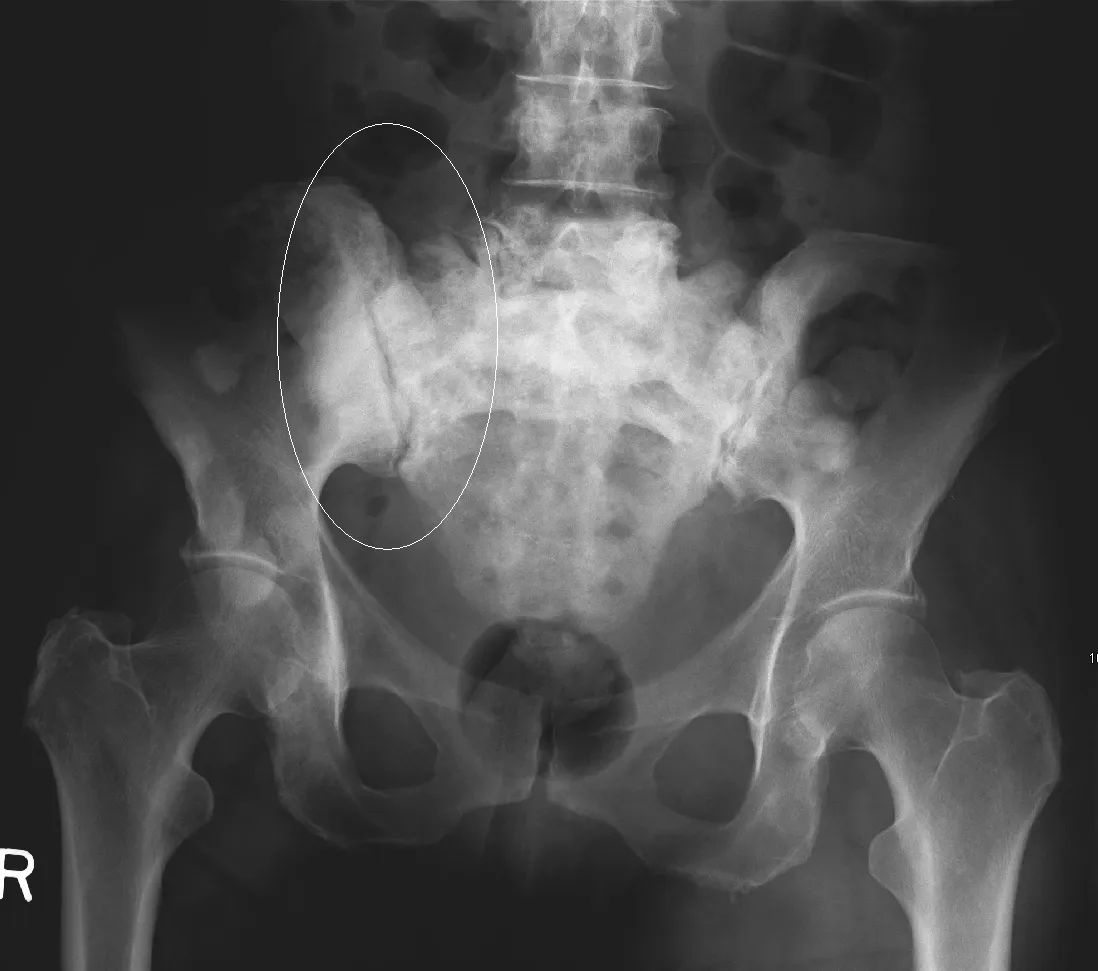
| Pathological fracture | Sudden severe bone pain after minimal trauma, deformity | Plain radiograph, CT; orthopaedic review |
| Bowel obstruction | Colicky pain, vomiting, distension, absolute constipation | Abdominal CT |
| Opioid-induced hyperalgesia or neurotoxicity | Increasing pain and allodynia despite rising doses, myoclonus, delirium | Clinical; check renal function |
| Hypercalcaemia | Diffuse pain, constipation, confusion, polyuria | Adjusted calcium |
| Infection (abscess, osteomyelitis, line infection) | Fever, localised pain, raised inflammatory markers | Cultures, imaging |
| Chemotherapy-induced peripheral neuropathy | Symmetrical glove-and-stocking burning pain after taxanes or platinum | Clinical; duloxetine may help |
| Psychological distress contributing to total pain | Anxiety, depression, spiritual distress amplifying pain | Holistic assessment |
Exam pearls
Guideline
ESMO Clinical Practice Guideline: Management of cancer pain in adults (2018), WHO guidelines for the pharmacological and radiotherapeutic management of cancer pain in adults and adolescents (2018), NICE CG140 Palliative care: strong opioids for pain relief (2012, updated 2016) and ASCO guideline on use of opioids for pain from cancer or its treatment (2023)
References
- Fallon M, Giusti R, Aielli F, et al.. Management of cancer pain in adult patients: ESMO Clinical Practice Guidelines. Ann Oncol 2018.
- World Health Organization. WHO guidelines for the pharmacological and radiotherapeutic management of cancer pain in adults and adolescents. WHO, Geneva 2018.
- National Institute for Health and Care Excellence (NICE). Palliative care for adults: strong opioids for pain relief (CG140). NICE 2012.
- Swarm RA, Paice JA, Anghelescu DL, et al.. Adult cancer pain, version 3.2019, NCCN Clinical Practice Guidelines in Oncology. J Natl Compr Canc Netw 2019.
- Paice JA, Portenoy R, Lacchetti C, et al.. Management of chronic pain in survivors of adult cancers: American Society of Clinical Oncology clinical practice guideline. J Clin Oncol 2016.
- Caraceni A, Hanks G, Kaasa S, et al.. Use of opioid analgesics in the treatment of cancer pain: evidence-based recommendations from the EAPC. Lancet Oncol 2012.
Related topics
By Dr Khalid Seidi (B.Sc., M.D.) · MedEd World Clinical Knowledge library. Original teaching content checked against current guidelines (November 2026); confirm the latest local guidance before clinical use. Not a substitute for clinical judgement.