Clinical Knowledge › Internal medicine › Haematology and oncology › Principles of oncology
Cancer staging (TNM) and performance status
Staging describes how far a cancer has spread at diagnosis; performance status describes how well the patient is. With histology, grade and biomarkers they decide treatment intent, eligibility for surgery, chemotherapy or trials, and prognosis. The TNM system, maintained by the UICC and AJCC, records the extent of the primary tumour (T), regional lymph nodes (N) and distant metastases (M), which are combined into stage groups I–IV. Prefixes show how stage was assigned: c for clinical, p for pathological, y after neoadjuvant therapy, r for recurrence. The 9th UICC edition (2025) refined lung cancer by splitting N2 and M1c. Some cancers use other systems: Lugano (Ann Arbor-based) for lymphoma, FIGO for gynaecological cancers, ISS/R-ISS for myeloma and BCLC for hepatocellular carcinoma. Performance status is scored with the ECOG/WHO 0–5 scale or the Karnofsky 0–100% scale; ECOG 0–1 patients tolerate intensive treatment best, while ECOG 3–4 patients usually benefit most from supportive care. Response to treatment is measured with RECIST 1.1 or, in lymphoma, PET-based Lugano criteria.
Patient case, mechanism, investigations, management, flashcards and exam-style questions.Open the lesson →
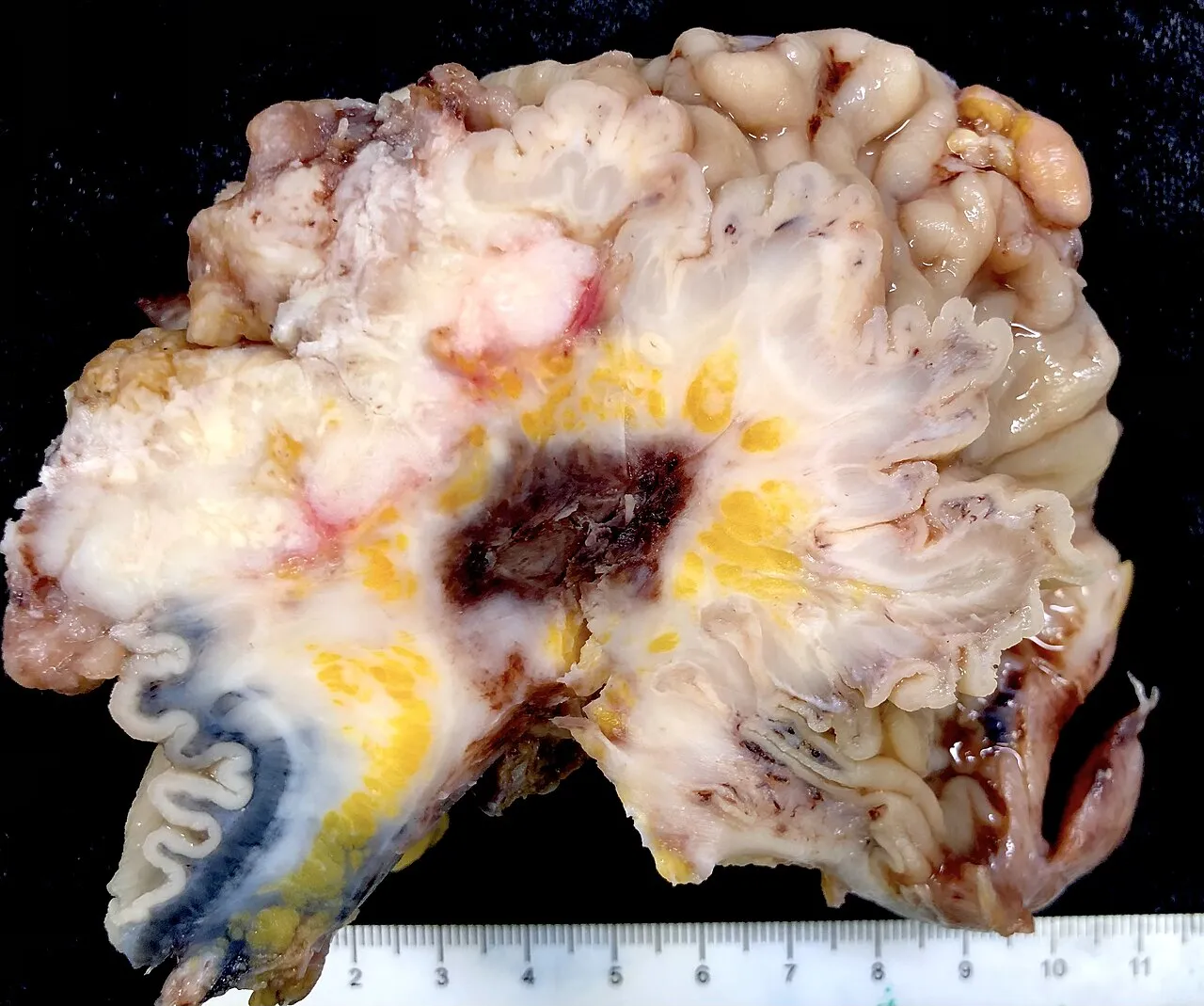
Key facts
- TNM: T = size and local invasion of primary, N = number and site of regional nodes, M = distant metastasis (M0 or M1); grouped into stages 0 (in situ) to IV
- Prefixes: c clinical, p pathological, yp after neoadjuvant therapy, r recurrence, a autopsy; R0/R1/R2 describe residual tumour after surgery
- Stage IV almost always means M1; most stage IV solid cancers are treated with non-curative (palliative) intent, with exceptions such as oligometastatic colorectal liver disease
- UICC TNM 9th edition (2025): lung N2 divided into N2a (single station) and N2b (multiple stations); M1c into M1c1 (one organ system) and M1c2 (several organ systems)
- ECOG/WHO performance status: 0 fully active, 1 restricted in strenuous activity, 2 self-caring but unable to work and up more than 50% of waking hours, 3 in bed or chair more than 50%, 4 completely disabled, 5 dead
- Karnofsky 100% = normal, 50% = needs considerable assistance and frequent medical care, below 40% = disabled; ECOG 2 corresponds roughly to Karnofsky 50–60%
- RECIST 1.1: complete response = disappearance; partial response = 30% or more decrease in sum of diameters; progression = 20% or more (and at least 5 mm) increase from nadir or new lesions
- Lymphoma uses Lugano staging (I–IV) with PET-CT and Deauville 5-point response scoring; myeloma uses R-ISS (β2-microglobulin, albumin, LDH, high-risk cytogenetics)
Differential diagnosis
| Condition | Clues | Key test |
|---|---|---|
| TNM staging | Most solid tumours | Imaging plus histopathology |
| Lugano classification (modified Ann Arbor) | Hodgkin and non-Hodgkin lymphoma; B symptoms for Hodgkin | PET-CT, bone marrow only in selected cases |
| FIGO staging | Cervical, endometrial, ovarian and vulval cancers (FIGO 2023 endometrial adds molecular classes) | Examination, imaging and surgical findings |
| R-ISS / R2-ISS | Multiple myeloma | β2-microglobulin, albumin, LDH, FISH cytogenetics |
| BCLC staging | Hepatocellular carcinoma, combines tumour burden, liver function and performance status | Multiphase CT/MRI, Child–Pugh, ECOG |
| Binet and Rai staging | Chronic lymphocytic leukaemia | Clinical examination and full blood count |
| Gleason/ISUP Grade Group plus PSA | Prostate cancer prognostic groups (AJCC) | Biopsy grade, PSA, MRI, PSMA PET |
| Breslow thickness | Melanoma T category | Excision biopsy thickness in mm and ulceration |
Exam pearls
Guideline
UICC TNM Classification of Malignant Tumours, 9th edition (2025), AJCC Cancer Staging Manual 8th edition (with Version 9 chapter updates), RECIST 1.1 (2009) with iRECIST (2017), and ECOG/WHO performance status
References
- Union for International Cancer Control (UICC). TNM Classification of Malignant Tumours, 9th edition. Wiley-Blackwell, Oxford 2025.
- Brierley JD, Gospodarowicz MK, Wittekind C (eds).. TNM Classification of Malignant Tumours, 8th edition. Wiley-Blackwell, Oxford 2017.
- Amin MB, Edge SB, Greene FL, et al. (eds).. AJCC Cancer Staging Manual, 8th edition. Springer, New York 2017.
- Oken MM, Creech RH, Tormey DC, et al.. Toxicity and response criteria of the Eastern Cooperative Oncology Group. Am J Clin Oncol 1982.
- Rami-Porta R, Nishimura KK, Giroux DJ, et al.. The International Association for the Study of Lung Cancer Lung Cancer Staging Project: proposals for revision of the TNM stage groups in the forthcoming (ninth) edition of the TNM classification for lung cancer. J Thorac Oncol 2024.
- Eisenhauer EA, Therasse P, Bogaerts J, et al.. New response evaluation criteria in solid tumours: revised RECIST guideline (version 1.1). Eur J Cancer 2009.
Related topics
By Dr Khalid Seidi (B.Sc., M.D.) · MedEd World Clinical Knowledge library. Original teaching content checked against current guidelines (November 2026); confirm the latest local guidance before clinical use. Not a substitute for clinical judgement.